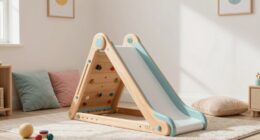
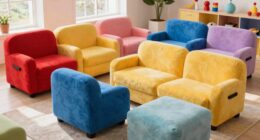
Sensory toys are essential tools to support children with special needs by promoting their sensory, cognitive, and emotional growth. They provide safe, engaging ways to explore sounds, visuals, and textures, helping children develop self-regulation, focus, and coordination. Incorporating music, bright colors, and moving parts can soothe and stimulate at the same time. Keep exploring how these toys can make a difference in your child’s development as you learn more about their benefits.
Key Takeaways
- Sensory toys support skill development, emotional regulation, and self-control in children with special needs.
- They incorporate sound, rhythm, and visual stimuli to enhance auditory and visual processing skills.
- Sensory toys promote calming effects, helping children manage overwhelm and anxiety effectively.
- They foster social interaction, communication, and bonding through shared sensory experiences.
- These toys provide safe, engaging opportunities for exploration, learning, and emotional expression.
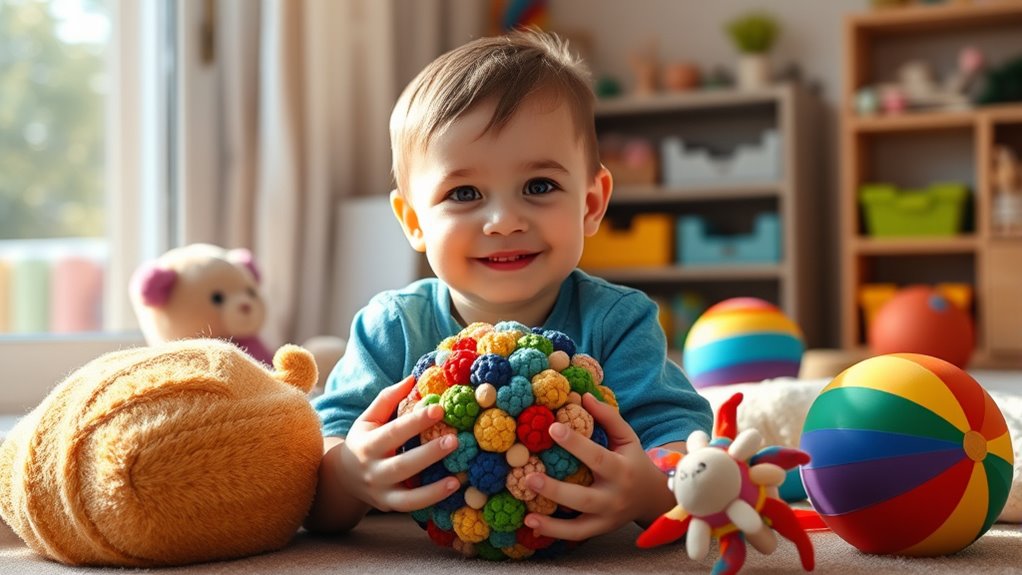
Sensory toys play a pivotal role in supporting children with special needs by helping them develop essential skills and regulate their emotions. These toys provide meaningful opportunities for engagement, helping your child process sensory input in a safe and controlled way. One powerful approach is incorporating music therapy, which uses sound, rhythm, and melodies to stimulate your child’s auditory and emotional senses. Musical instruments like small drums, shakers, or keyboards can encourage your child to explore different sounds, fostering coordination and auditory discrimination. When your child interacts with these toys, they learn to listen attentively, recognize patterns, and express themselves through music, all of which contribute to their cognitive and emotional growth.
Sensory toys foster skills and emotional regulation through engaging music and visual stimuli.
Visual stimulation is another integral aspect of sensory toys that supports children with special needs. Bright colors, contrasting patterns, and moving parts grab your child’s attention, helping to develop their visual tracking and focus. Toys like light-up panels, colorful balls, or visual mobiles can captivate your child’s gaze, encouraging eye-hand coordination and visual processing skills. By providing varied visual stimuli, you help your child interpret their environment more effectively, which is indispensable for their overall development. When selecting sensory toys for visual stimulation, opt for items that change or move, as these keep your child’s interest and promote sustained attention. Additionally, incorporating visual processing activities with sensory toys can further enhance your child’s ability to interpret and respond to visual cues.
Using sensory toys designed for music therapy and visual stimulation can also create a calming effect, helping your child manage feelings of overwhelm or anxiety. Soft, melodic sounds combined with gentle, colorful visuals can soothe your child’s nervous system, making it easier for them to settle down or shift between activities. You might find that incorporating these toys into daily routines, such as during calming activities or therapy sessions, enhances your child’s ability to self-regulate and feel secure. Additionally, engaging your child with music and vibrant visuals encourages social interaction, whether through shared listening or watching, fostering bonding and communication skills.
Ultimately, integrating sensory toys that focus on music therapy and visual stimulation into your child’s environment offers a dynamic way to support their development. These toys not only provide fun but also serve as essential tools for growth, helping your child build skills, express emotions, and better understand their world. As you observe your child’s responses, you’ll gain insight into their preferences and needs, allowing you to tailor their sensory experiences for maximum benefit. In doing so, you empower your child to explore, learn, and thrive in a supportive, stimulating environment.

PairPear Foldable Pikler Triangle Climbing Set for Kids, 7 in 1 Montessori Large Wooden Climbing Toys Indoor Jungle Gym with Rocker Arch, Ramp & Slide for Toddlers 18 Months+
Bigger for Growing Kids: 38" tall XL frame lets siblings climb side-by-side, perfect from 18m to age 6
As an affiliate, we earn on qualifying purchases.
Frequently Asked Questions
How Do I Choose the Right Sensory Toy for My Child’s Specific Needs?
When choosing a sensory toy, consider your child’s developmental stages and sensory preferences. Observe how they respond to different textures, sounds, or visuals, and pick toys that match their current needs. If they’re seeking calmness, opt for soft, soothing items; if they crave stimulation, try more engaging options. Always prioritize safety and durability, and be ready to adjust as your child’s needs evolve over time.
Are There Any Safety Concerns With Certain Sensory Toys?
You might think all toys are safe, but studies suggest material safety and choking hazards are real concerns. Always check for non-toxic, durable materials and avoid small parts that could be swallowed. While some toys claim to be safe, inspecting for loose pieces or sharp edges helps prevent accidents. By choosing carefully, you guarantee your child’s sensory play remains enjoyable and safe, giving you peace of mind.
How Often Should Sensory Toys Be Replaced or Cleaned?
You should regularly check your child’s sensory toys for wear and tear, ensuring proper toy maintenance. Cleaning frequency depends on usage; toys used daily or shared should be cleaned weekly with appropriate disinfectants. Replace any toys showing damage or mold immediately to prevent safety hazards. By staying attentive to cleaning routines and replacing worn toys, you help keep play safe and enjoyable for your child.
Can Sensory Toys Be Used During Therapy Sessions?
Using sensory toys during therapy sessions is like adding vibrant colors to a blank canvas—you enhance sensory integration and motor development. You can definitely incorporate these toys to help children engage more actively, improve focus, and develop skills. Just guarantee the toys are appropriate for the child’s needs and used under guidance. Proper use boosts therapy outcomes, making the experience both fun and beneficial for the child’s growth.
Are There Any Affordable Options for High-Quality Sensory Toys?
If you’re looking for affordable options, you’ll find plenty of high-quality choices that suit your needs. You can explore online stores, local toy shops, or discount outlets for budget-friendly sensory toys. Focus on durability and safety to guarantee you’re choosing high-quality options. Comparing reviews and prices helps you get the best value. With a little research, you can find sensory toys that are both cost-effective and effective for your child’s development.

EDOSTORY 5 in 1 Pikler Triangle Set, Indoor Playground and Gym for Kids, Foldable Wooden Montessori Climbing Set Triangle Ladder Set with Slide and Climbing Ramp, Gift for Boys Girls(Rainbow)
【Designed For Toddlers】Our 5 in 1 Pikler Triangle Toys are specifically designed with toddlers in mind. The size,...
As an affiliate, we earn on qualifying purchases.
Conclusion
By choosing the right sensory toys, you can truly make a difference in your child’s development and happiness. These tools aren’t just toys—they’re gateways to better understanding, calmness, and growth. Remember, when it comes to supporting your child’s needs, it’s often the little things that count the most. With patience and the right resources, you’ll see that every small step can lead to big progress. Sometimes, it’s the quietest efforts that speak the loudest.
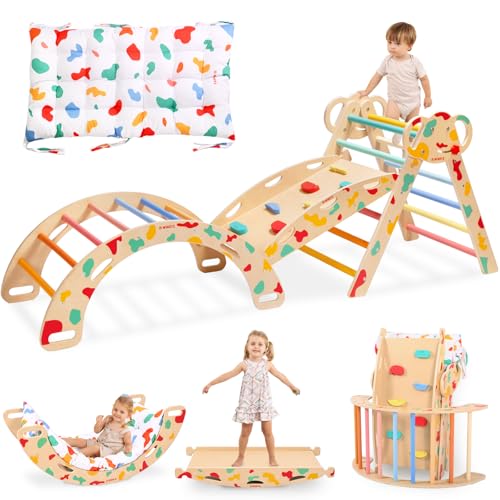
WINGYZ Pikler Triangle Set, Montessori Foldable 8-in-1 Jungle Gym & Reversible Animal Slide, Patent-Protected Climbing Set, Safe 2.35" Gap ASTM F963 Standards for Toddlers 18 Months-7 Years (Rainbow)
PICTURE THIS: YOUR CHILD’S EYES LIGHT UP — Imagine the delight as they discover a rainbow climbing wonderland....
As an affiliate, we earn on qualifying purchases.

bbgroundgrm Pikler Triangle Set Climber 5 in 1, Toddler Climbing Toys Indoor Folding with Ramp & Arch for Montessori Play Gym for Toddlers and Kids (Natural)(99" Wx21 Dx23 H)
【5-IN-1 MONTESSORI TODDLER CLIMBING TOYS INDOOR】Climbing ladder, imitating rock climbing, ladder, arch climber, mat five-in-one, saving space. Improve...
As an affiliate, we earn on qualifying purchases.