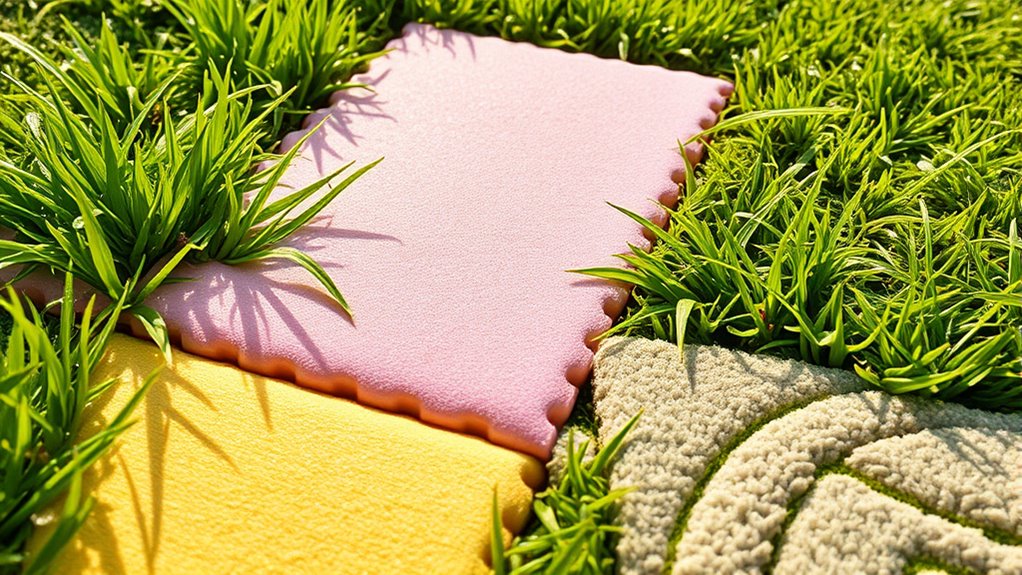

Sensory-safe surfaces like grass, mats, and carpet paths create gentle, textured environments that help with sensory regulation and comfort. Grass offers a natural, calming feel, while artificial options reduce maintenance concerns. Mats provide cushioned, tactile feedback, and carpet paths add warmth and define safe walking zones. These surfaces support relaxation and stability, making spaces more inviting. Keep exploring to discover how selecting the right surface can enhance sensory experiences and promote well-being.
Key Takeaways
- Grass, both natural and artificial, provides a soft, textured surface that promotes calming sensory experiences outdoors.
- Mats in foam or rubber offer cushioned, tactile feedback, enhancing sensory input and safety during activities.
- Carpet paths create warm, noise-reducing walking areas that define spaces and reduce sensory overload indoors.
- Proper maintenance of grass surfaces ensures safety and longevity, supporting consistent sensory benefits.
- Selecting textured or hypoallergenic mats and carpets can enhance tactile exploration and minimize allergen exposure.
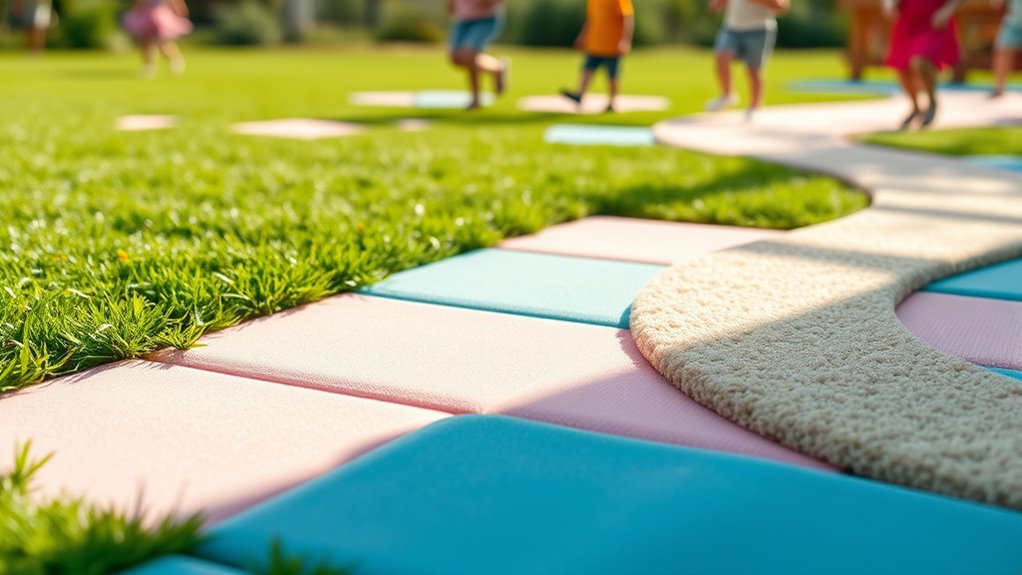
Sensory-safe surfaces are designed to create calm and comfortable environments for individuals with sensory sensitivities. When you choose the right surface, you make it easier for them to navigate spaces without feeling overwhelmed or anxious. Grass, mats, and carpet paths are popular options because they each offer unique benefits that promote comfort and sensory regulation. Understanding how these surfaces work helps you create environments that support sensory needs effectively.
Grass is a natural option that provides a soft, textured surface. Its gentle give underfoot can soothe and relax, making it ideal for outdoor areas or sensory gardens. The natural variability in grass textures and smells can also stimulate sensory processing in a positive way. When you incorporate grass, you give individuals a chance to experience nature’s calming effects while walking or playing. However, keep in mind that real grass can become uneven or muddy, which might pose challenges for some users. To mitigate this, consider using artificial grass that mimics these qualities without the maintenance issues, ensuring a stable and consistent surface that’s gentle on the feet. Additionally, choosing appropriate maintenance can keep the surface safe and inviting over time.
Artificial grass offers a durable, consistent, and sensory-friendly surface for outdoor or sensory garden spaces.
Mats are versatile and come in many forms, from foam to rubber, designed specifically for sensory environments. When you select mats with a soft, cushioned surface, you provide a stable yet forgiving footing that reduces pressure on joints and feet. Mats can also be textured or patterned to offer tactile feedback, which can help individuals develop sensory awareness. You might choose mats with raised patterns or different textures to encourage tactile exploration, or opt for plain, smooth mats for a more uniform feel. They’re easy to install and maintain, making them a practical choice for both indoor and outdoor settings. When you use mats, you control the level of sensory input, which can help individuals feel more grounded and secure.
Carpet paths are another excellent option, especially indoors. They add warmth and softness to a room, making it feel inviting and less sterile. If you select carpets with low pile and dense fibers, you create a cushioned surface that minimizes noise and provides a gentle touch. Carpet paths also help define walking areas, guiding individuals safely through a space without sudden changes in texture or footing. When you choose the right carpet, it can reduce sensory overload by providing a consistent, familiar surface that’s both comfortable and predictable. Additionally, carpets trap dust and allergens less than other surfaces if you pick hypoallergenic options, helping maintain a healthier environment for sensitive individuals.
In all cases, the key is to select surfaces that strike a balance between comfort, safety, and sensory stimulation. By thoughtfully choosing grass, mats, or carpet paths, you support sensory regulation and promote a calming environment where individuals can feel secure and at ease. Your decisions in surface selection directly impact their comfort and ability to engage with their surroundings positively.
Frequently Asked Questions
How Do Sensory-Safe Surfaces Affect Children With Sensory Processing Disorder?
Sensory-safe surfaces help children with sensory processing disorder feel more comfortable and secure by reducing overwhelming stimuli. When you choose grass, mats, or carpet paths, you provide a calming environment that minimizes noise and tactile overload. This allows your child to focus, explore, and play confidently without becoming overwhelmed. By selecting appropriate surfaces, you support their sensory needs and promote positive development and social interaction.
Are Sensory-Safe Surfaces Suitable for Outdoor Playgrounds?
Yes, sensory-safe surfaces are suitable for outdoor playgrounds, offering a gentle contrast to traditional hard ground. You can create a welcoming environment by incorporating grass, mats, or carpet paths that promote comfort and safety. These surfaces help children with sensory processing challenges feel secure while exploring, reducing the risk of injury. By choosing these options, you guarantee the playground is inclusive, engaging, and supportive of all children’s sensory needs.
What Maintenance Is Required for Grass, Mats, and Carpet Paths?
You need to regularly inspect and clean grass, mats, and carpet paths to keep them safe and comfortable. Mow grass often, remove debris, and address any uneven spots. For mats, vacuum or shake out dirt and check for tears or wear. Carpet paths require vacuuming, spot cleaning, and occasional deep cleaning. Keep up with these tasks weekly or after heavy use to make certain the surfaces remain safe and sensory-friendly.
Can Sensory-Safe Surfaces Be Customized for Specific Sensory Needs?
Think of sensory-safe surfaces as a tailored suit—they can be customized to fit your specific sensory needs. You can choose softer mats for gentle touch or textured surfaces for tactile input. Adjust colors, textures, or even add calming features like gentle lighting. By customizing these surfaces, you create a nurturing environment that responds to your unique sensory preferences, making your space more comfortable and supportive for your sensory journey.
How Do Sensory-Safe Surfaces Compare in Cost to Traditional Options?
Sensory-safe surfaces often cost more upfront than traditional options due to their specialized materials and safety features. You’ll find that grass, mats, and carpet paths designed for sensory needs typically require higher investment, but they offer benefits like improved safety and comfort for users. Over time, these surfaces can reduce maintenance costs and enhance overall well-being, making them a worthwhile investment despite the initial expense.
Conclusion
Choosing sensory-safe surfaces like grass, mats, and carpets creates a calming, inviting space for everyone. Some might worry they’re less durable or harder to clean, but with proper maintenance, these surfaces can be just as practical as traditional options. Plus, your loved ones will benefit from a more comfortable environment that supports their sensory needs. By making this simple switch, you’re fostering a safer, more inclusive space where everyone can feel at ease and thrive.