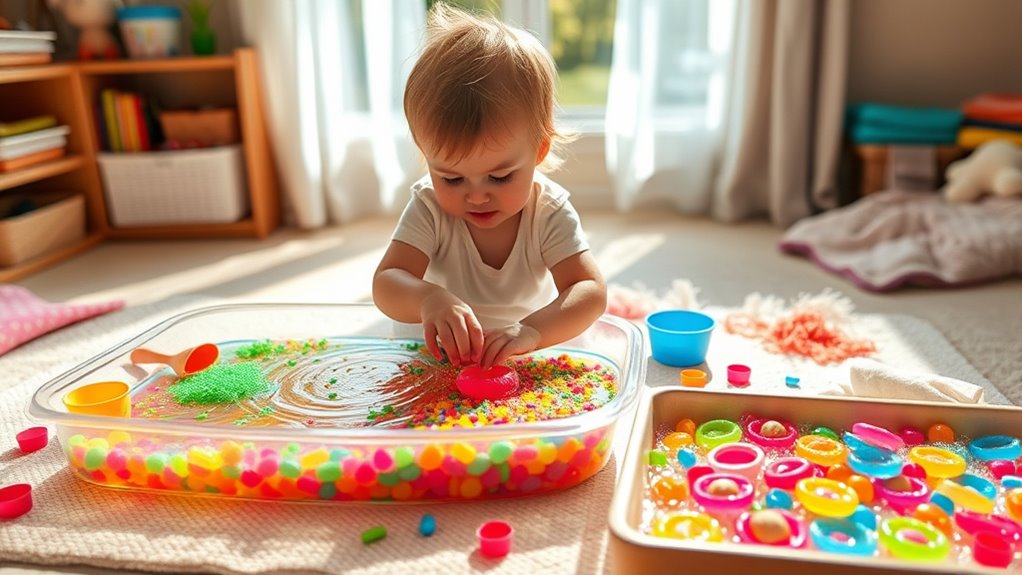

To keep your toddler engaged and support their development, try safe sensory activities like exploring different textures with household items, playing musical instruments to foster auditory skills, and dancing to introduce rhythm and coordination. Incorporate activities such as sensory bins, tactile paths, or exploring soft fabrics and rough sponges. These experiences boost creativity, language, and motor skills while providing fun, calming moments. Keep exploring more ideas ahead to create a rich sensory play environment for your little one.
Key Takeaways
- Incorporate simple instruments like shakers or drums to explore sounds, rhythms, and volume levels safely.
- Use household items such as soft fabrics or rough sponges for tactile discovery and vocabulary building.
- Create sensory boxes with various textured objects to promote touch exploration and cognitive development.
- Combine music and tactile activities, like dancing with scarves or drumming on textured surfaces, for engaging sensory experiences.
- Encourage self-directed exploration with safe, everyday materials to foster curiosity, coordination, and emotional regulation.

Sensory play is an essential part of your toddler’s development, helping them explore the world around them and build important skills. One way to do this is through music exploration, which engages their auditory senses and encourages self-expression. You can introduce simple instruments like shakers, drums, or xylophones to spark their interest. Let them experiment with different sounds, rhythms, and volume levels. Playing music together or dancing to their favorite tunes not only enhances their listening skills but also boosts their coordination and sense of timing. As they manipulate instruments, they become more aware of sound patterns and develop their ability to focus. Music exploration also stimulates their language development, as they learn to imitate sounds and respond to musical cues. Additionally, selecting instruments with high sound quality can further enrich their auditory experience.
Texture discovery is another crucial aspect of sensory play that helps your toddler understand different materials and their properties. Gather a variety of safe, household items such as soft fabrics, rough sponges, smooth stones, or squishy toys. Encourage your child to touch, squeeze, and explore these textures with their hands. Describe what they’re feeling: “This fabric is soft,” or “That sponge is rough.” This not only broadens their vocabulary but also sharpens their tactile awareness. You can create simple activities like a sensory box filled with different textured objects or a tactile path where they walk barefoot over various surfaces. As they explore, they learn to differentiate textures, which supports their cognitive development and fine motor skills. Texture discovery also offers comfort and calmness, especially when they’re feeling overwhelmed, because it provides a grounding sensory experience.
kids sensory play toys
As an affiliate, we earn on qualifying purchases.
As an affiliate, we earn on qualifying purchases.
Frequently Asked Questions
How Can I Ensure Sensory Activities Are Allergy-Safe for Toddlers?
To guarantee sensory activities are allergy-safe for toddlers, start by choosing hypoallergenic materials and avoid common allergens like nuts, latex, and certain dyes. Always check labels for allergy warnings and test small patches beforehand. Make your activities allergy-aware by asking parents about their child’s allergies and opting for natural, non-toxic supplies. This way, you create a safe environment where your little one can explore and enjoy sensory play without worry.
What Are Budget-Friendly Sensory Play Options for Young Children?
You can find budget-friendly sensory play options by using DIY materials and household items. Fill a bin with rice, pasta, or beans for tactile fun, or use water and soap for sensory exploration. Old containers, sponges, or textured fabrics also work well. These options are inexpensive, safe, and easily accessible, giving your toddler engaging activities without breaking the bank. Just make certain all items are clean and age-appropriate.
How Do I Modify Sensory Activities for Children With Sensory Processing Disorder?
When modifying sensory activities for children with sensory processing disorder, you should focus on sensory integration principles and adaptive strategies. Observe their responses, then tailor activities by reducing overstimulation and providing calming inputs. Use softer textures, controlled lighting, or gentle movements. Incorporate weighted items or noise-canceling headphones if needed. These adjustments help your child engage comfortably, supporting their sensory regulation and making play both safe and enjoyable.
Are There Specific Sensory Play Activities Suitable for Outdoor Use?
Did you know that outdoor play boosts sensory development by 50%? You can create engaging outdoor sensory stations using items like sandboxes, water tables, or nature exploration activities. These activities encourage your toddler to explore textures, sounds, and sights in nature, making learning fun. Setting up simple stations with natural elements, such as leaves or rocks, makes sensory play safe, stimulating, and perfect for outdoor environments.
How Can I Introduce Sensory Play to Shy or Hesitant Toddlers?
To introduce sensory play to shy or hesitant toddlers, start with gradual exposure, offering activities in familiar, comfortable settings. Begin with simple, soft textures and gentle sounds, giving them time to explore at their own pace. Focus on comfort building by staying close, offering reassurance, and allowing them to lead. This approach helps them feel safe and confident, encouraging curiosity and positive experiences with sensory activities.

Kids Musical Instruments, 33Pcs 18 Types Wooden Percussion Instruments Tambourine Xylophone Toys for Kids Children, Preschool Education Early Learning Musical Toy for Boys and Girls
[A Complete Kids Musical Instrument Set] – Including 33pcs 18 types shaking, tapping, beating and blowing instruments. Better…
As an affiliate, we earn on qualifying purchases.
As an affiliate, we earn on qualifying purchases.
Conclusion
So, there you have it—your foolproof list of sensory play ideas to keep your toddler happily busy and maybe even get a minute to breathe. Who knew that a handful of rice or a blob of paint could transform your little one into a mini scientist? Just remember, chaos is part of the fun, so embrace the mess. After all, the more sensory adventures, the fewer tantrums—at least, that’s the plan!

Creativity for Kids Sensory Bin: Construction Zone Playset – Preschool Learning Activities, Excavator Toys for Boys Ages 3-5+, Outdoor Toys and Gifts for Kids
DIG INTO CONSTRUCTION FUN: Build your own mini construction site with this interactive sensory bin, perfect for kids…
As an affiliate, we earn on qualifying purchases.
As an affiliate, we earn on qualifying purchases.

Squishy Sensory Toys for Kids Toddlers: Super Soft & Textured Sensory Fidget Toy for Autistic Children Special Needs | Stress Calming Toys for Kids | Baby Stocking Stuffers Fidget Toy for Autism, ADHD
【6 Textures Sensory Fidget Toys】Our textured, extra durable, bright, stretchy, calming sensory toys provide a unique tactile experience…
As an affiliate, we earn on qualifying purchases.
As an affiliate, we earn on qualifying purchases.