
Fun science experiments for preschoolers are perfect for sparking curiosity and teaching basic concepts through hands-on activities. Activities like creating a volcano eruption with baking soda and vinegar or separating colors with chromatography help kids see chemical reactions and color science in action. These simple experiments use common household materials, making learning fun and accessible. Keep exploring these engaging activities, and you’ll discover even more ways to nurture curiosity and understanding in young learners.
Key Takeaways
- Fun science experiments like volcano eruptions and rainbow chromatography captivate preschoolers and introduce basic scientific concepts visually and interactively.
- These activities demonstrate cause-and-effect relationships, helping children understand chemical reactions and color separation through simple, safe materials.
- The experiments use household items such as baking soda, vinegar, and coffee filters, making them accessible and easy to set up for caregivers and educators.
- Hands-on activities promote critical thinking, prediction, and observation skills, fostering curiosity and foundational scientific understanding in young learners.
- Visual excitement and interactive experiences reinforce learning, making abstract concepts like molecules and pigments engaging and memorable for preschoolers.

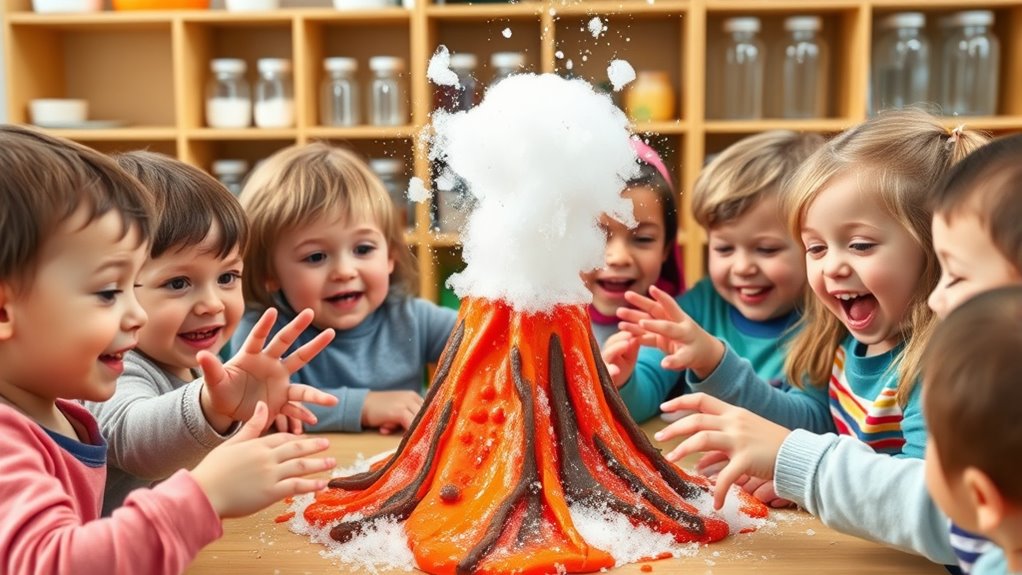
Introducing fun science experiments for preschoolers is a great way to spark their curiosity and encourage hands-on learning. When you set up a volcano eruption, you’re not just creating a dramatic display; you’re teaching kids about chemical reactions. To do this, you can craft a simple volcano using clay or paper mache, then pour a mixture of baking soda and vinegar inside. As the vinegar reacts with the baking soda, it produces carbon dioxide gas, causing the “eruption” of foam and bubbles that spill over the edges. This visual cue helps children grasp the concept of chemical reactions in a fun, memorable way. They’ll love seeing the fizzing explosion, and you’ll enjoy watching their faces light up with wonder.
Another exciting experiment to introduce is rainbow chromatography. This activity involves separating colors in a way that reveals the hidden spectrum within markers or colored pens. You can do this by placing a strip of coffee filter paper into a small cup with a bit of water, then adding a few drops of different colored ink at the bottom of the strip. As the water moves upward, it carries the ink with it, causing the colors to split into their individual components. Your preschoolers will be fascinated to see how a single color can break apart into multiple shades, illustrating the science of how colors are made up of different pigments. It’s a simple experiment that makes abstract ideas about color and molecules tangible.
Both activities are perfect for young learners because they combine visual excitement with fundamental scientific principles. When you demonstrate a volcano eruption, you’re helping kids understand chemical reactions and cause-and-effect relationships. With rainbow chromatography, you’re showing them how science reveals the hidden layers of everyday objects. These experiments are not only engaging but also build critical thinking skills as children predict what will happen and observe the outcomes. Plus, they’re easy to set up with common household materials, making science accessible and stress-free for you and your preschoolers. Additionally, incorporating educational apps can enhance their understanding and make science more interactive and fun.
Frequently Asked Questions
How Can I Ensure Safety During Science Experiments?
To guarantee safety during science experiments, always follow supervision guidelines closely and stay engaged with what your preschooler is doing. Make sure they wear protective gear like goggles and aprons to prevent accidents. Keep hazardous materials out of reach, and explain safety rules clearly. Constant supervision helps you spot potential issues early, creating a safe environment where your child can explore and learn confidently without unnecessary risks.
What Age Is Appropriate for Starting Science Experiments?
When it comes to age appropriateness for starting science experiments, you should focus on early exploration, curiosity, and safety. Typically, preschoolers around ages 3 to 5 are ready to begin simple experiments that foster discovery and learning. You can encourage their natural curiosity by choosing age-appropriate activities, providing supervision, and ensuring safe materials, so they can confidently explore the wonders of science while having fun and staying safe.
How Do I Explain Scientific Concepts to Preschoolers?
When explaining scientific concepts to preschoolers, you should simplify science vocabulary and use experiment storytelling. Break down complex ideas into easy-to-understand language, using familiar words. Engage their imagination by turning experiments into stories, making the learning fun and memorable. Ask questions to encourage curiosity, and relate concepts to everyday life. This approach helps young children grasp basic science ideas while fostering a love for discovery.
What Household Items Are Best for Safe Experiments?
When choosing household items for safe experiments, you want simple, non-toxic materials. For a DIY volcano, use baking soda, vinegar, and dish soap. For color-changing liquids, try water with food coloring and lemon juice or baking soda. These items are safe, easy to find, and perfect for engaging preschoolers in fun science activities. Always supervise closely and confirm that all materials are child-friendly and non-harmful.
How Can I Make Science Fun and Engaging for Preschoolers?
You can make science fun and engaging for preschoolers by encouraging creative play and sensory exploration. Use everyday household items to create simple, hands-on activities that spark curiosity. Let them experiment freely, observe changes, and ask questions. Incorporate colorful materials, textures, and sounds to make learning sensory-rich. Keep activities light-hearted, interactive, and tailored to their interests, helping them discover the wonders of science while having a great time.
Conclusion
By trying these fun science experiments, you turn everyday moments into extraordinary adventures that spark your preschooler’s curiosity and imagination. Remember, each tiny experiment isn’t just a simple activity — it’s a gateway to a universe of endless discovery and wonder. When you nurture their love for science now, you’re shaping future inventors, explorers, and thinkers who could change the world. So go ahead, release that playful scientist inside you and watch magic happen!

Mila, a gifted writer with a heart brimming with enthusiasm for child development and playful learning, is the creative force behind the enchanting narratives and insightful articles that grace Toddler Ride On Toys. With a background in early childhood education and a genuine passion for nurturing young minds, Mila weaves words that captivate, educate, and inspire parents, caregivers, and educators.