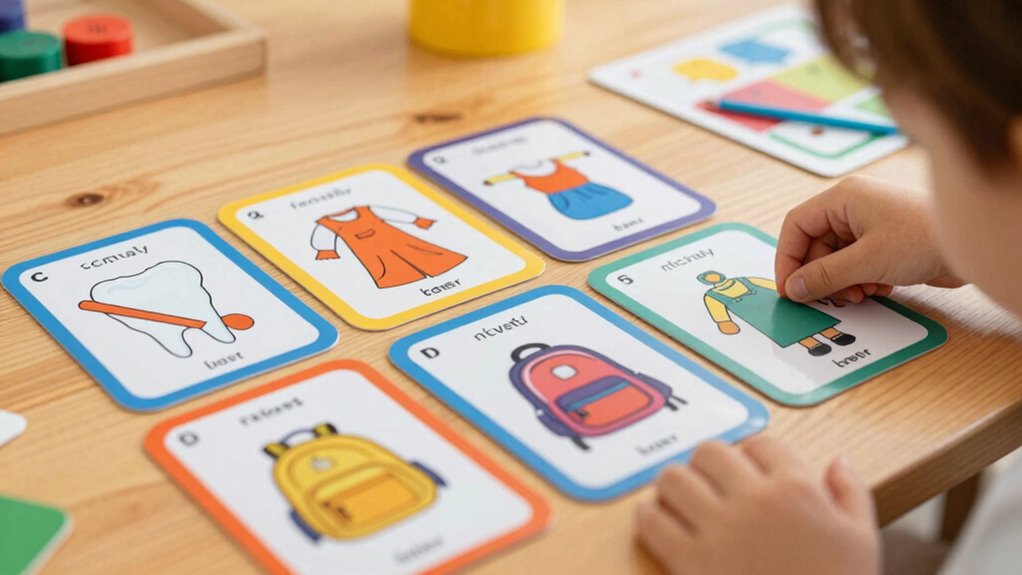

Using route cards inspired by Montessori principles helps you foster independence in children by providing visual step-by-step guidance for routines. These cards promote confidence, responsibility, and mastery of skills as children follow clear, simple cues tailored to their learning level. They also create an organized environment that encourages autonomy and reduces adult intervention. By incorporating route cards, you support your child’s development of sequencing skills and self-reliance. Continue exploring to discover how to effectively implement these tools in your setting.

Turn the school run and nap time into listening time
- Thousands of audiobooks, podcasts and originals
- Listen on your phone, tablet or Echo — also offline
- Cancel anytime
Key Takeaways
- Route cards visually guide children through routines, fostering independence and understanding of multi-step tasks.
- They support sequencing skills and help children internalize routines with minimal adult assistance.
- Designed with simple pictures or words, aligning with Montessori’s emphasis on visual learning.
- Using route cards reduces disruptions and encourages children to take ownership of their daily activities.
- Over time, route cards can be phased out as children develop confidence and mastery in routines.
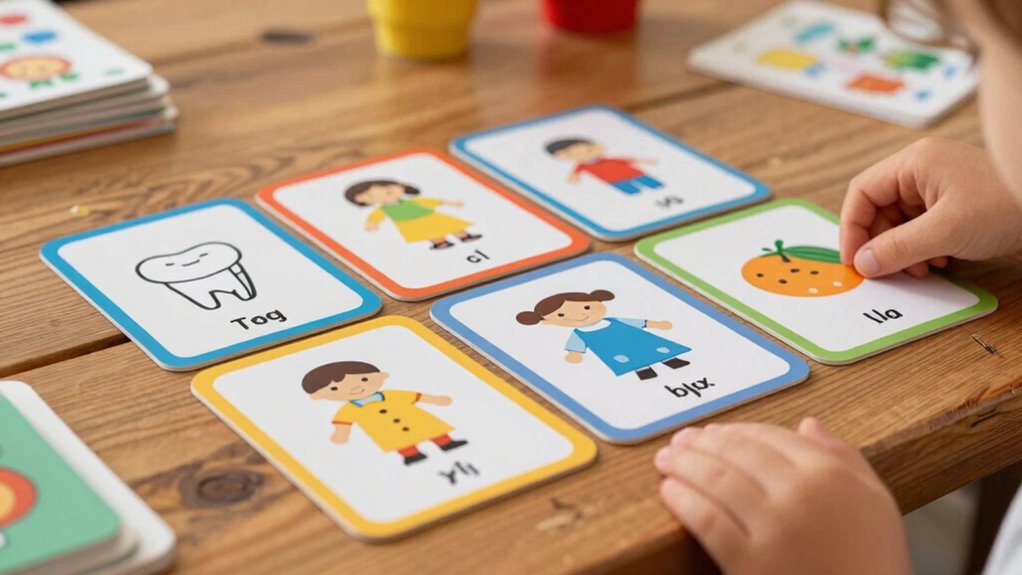
Have you ever wondered how to navigate the path toward independence effectively? When you’re working with children, fostering their independence is a key part of their overall development. It’s not just about letting them do things on their own but guiding them through the process of mastering skills that will serve them for a lifetime. One simple yet powerful tool inspired by Montessori principles is the use of route cards. These cards act as visual guides, helping children understand and complete daily tasks independently. They support child development by building confidence, responsibility, and fine motor skills, all while encouraging a sense of autonomy.
In a well-organized classroom, every element plays a role in promoting independence, and classroom organization is essential for this. When you arrange materials and routines thoughtfully, you create an environment where children can easily access what they need and follow clear, visual cues. Route cards fit perfectly into this setup because they serve as visual instructions that children can refer to without constant adult intervention. This reduces dependence on teachers and allows kids to move through their routines smoothly, whether it’s tidying up, preparing for a lesson, or shifting between activities. The effectiveness of route cards is supported by research on visual learning, which highlights how children retain information better when it is presented visually. Incorporating visual learning strategies into your classroom can significantly enhance children’s understanding and independence.
Using route cards is straightforward. You can create small, durable cards that depict each step of a task, such as washing hands, setting the table, or organizing supplies. For example, a card for handwashing might show images of turning on the tap, lathering soap, rinsing, and drying. Each step can be illustrated with simple pictures or words, depending on the child’s reading level. When children see the card, they follow the sequence independently, gaining a sense of accomplishment that encourages them to take ownership of their responsibilities. These cards also help children develop sequencing skills and improve their ability to follow multi-step instructions.
Integrating route cards into your classroom encourages children to become active participants in their own routines. It reduces interruptions, because children can refer to the cards whenever they need guidance, freeing up your time to focus on more individualized support. Over time, children internalize these routines, which enhances their confidence and sense of mastery. As they grow more capable, you can gradually fade the use of the cards, trusting that they’ve developed the necessary skills for independence. Additionally, incorporating visual cues like route cards aligns with the scientific breakthroughs that emphasize the importance of visual learning in child development. These breakthroughs demonstrate how visual aids can enhance cognition and retention, making route cards an effective tool for fostering independence. Ultimately, route cards are a simple, Montessori-inspired idea that supports child development and classroom organization, empowering children to become confident, self-directed learners.
Montessori visual routine cards for children
As an affiliate, we earn on qualifying purchases.
As an affiliate, we earn on qualifying purchases.
Frequently Asked Questions
How Do Route Cards Support Different Learning Styles?
You see, route cards support different learning styles by offering multisensory engagement through visual aids, kinesthetic activities, and auditory cues. Visual learners benefit from clear images and step-by-step instructions, while tactile learners engage with hands-on tasks. Auditory learners can listen to explanations or cues. This variety guarantees each student interacts with the material in a way that suits their preferred learning style, making learning more effective and enjoyable.
What Materials Are Best for Creating Durable Route Cards?
You should choose sturdy materials like laminated cardstock or plastic to guarantee material durability for your route cards. These options withstand frequent handling and spills, making them ideal for classroom use. Additionally, consider card customization by adding velcro, labels, or symbols to personalize and enhance their functionality. Durable materials combined with thoughtful customization help your route cards last longer, support independence, and cater to various learning needs.
How Can I Personalize Route Cards for Individual Children?
You can personalize route cards by incorporating child preferences through colorful visuals, favorite themes, or personalized labels. Use personalization techniques like adding their name, choosing images that reflect their interests, or adapting steps to suit their skill level. To make it engaging, involve the child in decorating or selecting elements, ensuring the cards resonate with their unique personality. This boosts motivation and fosters a sense of ownership and independence.
When Should I Introduce Route Cards to My Child?
Think of introducing route cards as opening a map to your child’s independence journey. You should introduce them once your child shows readiness, typically around 3-4 years old, when they’re enthusiastic to explore safely. Use travel safety principles and visual cues to guide them, helping build confidence. Start with simple routes, and gradually add complexity as they become more comfortable, ensuring each step is clear and engaging.
How Do I Assess Progress Using Route Cards?
To assess progress using route cards, observe how confidently your child completes each task, noting improvements over time. Use simple assessment techniques like checklists or progress charts to track their independence and skill development. Keep an eye on consistency and speed, and ask your child for feedback to gauge understanding. Regularly reviewing these observations helps you tailor activities, ensuring continuous growth and fostering a sense of achievement.
Conclusion
Using route cards is like planting seeds of independence in your child’s mind—they grow stronger with each step, guiding them confidently along their journey. By offering clear directions in a Montessori-inspired way, you help your child navigate daily tasks with independence and joy. Remember, just as a compass points true north, route cards steer your little one toward self-reliance, turning everyday moments into opportunities for growth and discovery.
Halloween Picks
halloween
As an affiliate, we earn on qualifying purchases.