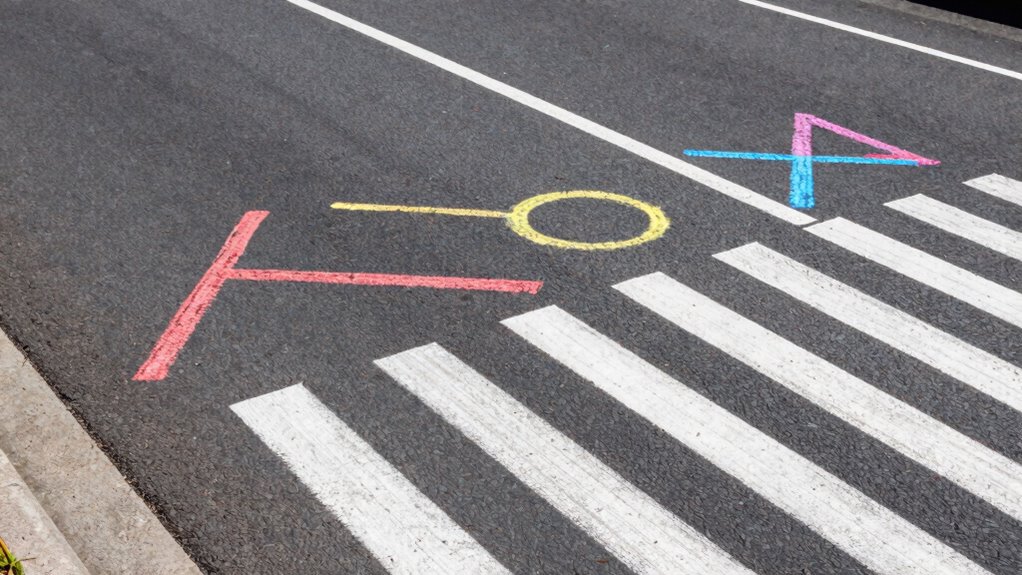

Using road marks and chalk lines outdoors can boost your child’s early writing skills by making practice fun and engaging. When they trace or draw on these surfaces, they improve fine motor control, hand strength, and letter formation. These activities also teach safety lessons while building spatial awareness. Plus, the outdoor environment makes learning more comfortable and motivating. Keep exploring how these simple tools can create rich, hands-on learning experiences that foster both literacy and safety skills.

Turn the school run and nap time into listening time
- Thousands of audiobooks, podcasts and originals
- Listen on your phone, tablet or Echo — also offline
- Cancel anytime
Key Takeaways
- Drawing on road marks and chalk lines enhances fine motor skills essential for early writing development.
- Tracing around markings improves hand control and letter formation.
- Outdoor activities with chalk lines make practicing writing engaging and enjoyable.
- Creating large shapes and letters helps develop proper stroke order and grip.
- Using road marks for safety lessons reinforces spatial awareness and early literacy skills.

You might be surprised to learn that simple activities like drawing on road marks or chalk lines can effectively support early writing skills in children. These activities turn everyday outdoor spaces into engaging learning environments, making it easier for kids to develop their fine motor skills and letter formation. When children trace around road markings or chalk lines, they practice controlling their hand movements, which is a foundational step toward writing. Plus, these activities naturally integrate into outdoor learning, where kids can enjoy the fresh air while honing essential skills.
Focusing on traffic safety, you can use road marks as a way to teach children about pedestrian rules and safety signals. While they draw or trace, you can talk about the importance of crossing at crosswalks or obeying traffic lights. This reinforces safety awareness in a practical, hands-on way, making lessons memorable. When children see and interact with real-world markings, they learn to recognize symbols and understand their significance, which supports their visual perception and cognitive development. This connection between outdoor activities and traffic safety creates a meaningful context for learning that extends beyond the classroom.
Using road marks to teach traffic safety makes learning practical, memorable, and connects outdoor play with important pedestrian rules.
Chalk lines on pavement or playground surfaces offer a versatile platform for early writing practice. You can draw large letters, shapes, or lines that children imitate and trace, helping them develop proper grip and stroke order. The tactile experience of using chalk on rough surfaces strengthens hand muscles, contributing to better control when writing on paper later. Because kids are actively involved in creating their own learning space, they tend to be more engaged and motivated. This hands-on approach makes the process fun and less intimidating, encouraging children to experiment with forming letters and shapes without the pressure of perfection. Incorporating sensory experiences can further enhance their fine motor development and engagement during these activities.
Outdoor learning through these activities also promotes social skills and collaboration. Children often work together to trace or design patterns, which fosters teamwork and communication. Plus, being outside reduces the anxiety some children feel in traditional classroom settings, making them more willing to participate and try new skills. As they move and explore, they build confidence in their abilities. Incorporating road marks and chalk lines into early literacy activities bridges physical movement with cognitive development, creating a dynamic learning experience that emphasizes both fun and skill-building. In addition, understanding the significance of traffic safety signals helps children connect their outdoor activities to real-world safety practices, reinforcing valuable lessons. In the process, children not only improve their handwriting but also develop an awareness of safety and spatial concepts, all while enjoying the benefits of outdoor learning.
As an affiliate, we earn on qualifying purchases.
Frequently Asked Questions
How Can Parents Incorporate Road Marks Into Daily Learning Routines?
You can incorporate road marks into daily learning routines by turning outdoor play into fun learning activities. Use sidewalk chalk or tape to create roads and lines, encouraging your child to trace, draw, and follow them. This hands-on approach promotes fine motor skills and early writing practice while keeping play engaging. During outdoor play, guide them to practice writing letters or numbers along the road marks, making learning both active and enjoyable.
What Safety Considerations Should Be Taken When Using Chalk Lines Outdoors?
When using chalk lines outdoors, prioritize traffic safety by choosing a safe, low-traffic area away from streets. Always supervise your child closely to prevent accidents and guarantee they don’t run into the street. Use non-toxic, washable chalk, and check the ground for hazards like sharp objects or uneven surfaces. Keeping an eye on your child and maintaining outdoor supervision helps make the activity safe and enjoyable for early writing practice.
Are There Specific Colors or Types of Chalk More Effective for Early Writing?
You should choose chalk colors with high contrast, like bright white or yellow, to make writing easier for young children to see and distinguish. Opt for chalk that’s durable enough to withstand outdoor use, so it doesn’t break easily or fade quickly. These choices help children focus on forming letters clearly, making the learning process smoother and more engaging. Color contrast and chalk durability are key for effective early writing activities.
How Do Road Marks Help Children Develop Fine Motor Skills?
Imagine guiding a tiny ship along shimmering, winding roads—these lines help children develop fine motor skills. As they trace and follow the marks, they sharpen visual perception and hand-eye coordination, like steering through a maze with purpose. The act of staying within lines encourages precise movements, strengthening muscles and control. This playful journey builds a strong foundation for early writing, turning simple lines into pathways of learning and expression.
Can These Activities Be Adapted for Children With Special Needs?
Yes, you can adapt these activities for children with special needs by implementing adaptation strategies and sensory accommodations. For example, use textured chalk or materials with different sensory qualities to engage their senses. Adjust the activity’s difficulty or duration to suit their individual needs, and provide visual or tactile cues to guide them. These modifications help make the activities inclusive, supporting their development in a comfortable and accessible way.
Conclusion
By incorporating simple tools like road marks and chalk lines, you’ll gently guide young learners toward developing their early writing skills. These playful activities create a supportive environment where kids can confidently explore strokes and shapes without feeling overwhelmed. As they practice, you’ll notice their confidence growing, paving the way for more complex writing tasks. Embrace these fun, subtle methods—they’re like gentle nudges that help children blossom into confident writers, one playful step at a time.
Halloween Picks
halloween
As an affiliate, we earn on qualifying purchases.