Transform ordinary ride-on play into vivid adventures by creating imaginative worlds on wheels. Use descriptive environments, props, and engaging scenarios to spark your child’s creativity, turning their toy into a vessel for exploration. Ask questions, encourage their ideas, and make storytelling a shared experience. This approach not only makes playtime more fun but also boosts language, problem-solving, and confidence. Keep exploring to discover more tips on turning ride-on toys into magical storytelling tools.
Key Takeaways
- Transform ride-on toys into adventure vehicles by setting imaginative scenes like jungles, space, or cities.
- Use storytelling prompts and questions to involve children actively in creating their on-the-go adventures.
- Incorporate props, costumes, or themed accessories to deepen immersion and spark creativity during play.
- Switch scenarios regularly to keep playtime engaging and introduce new vocabulary and concepts naturally.
- Encourage caregiver involvement to support storytelling, problem-solving, and confidence-building in imaginative play.
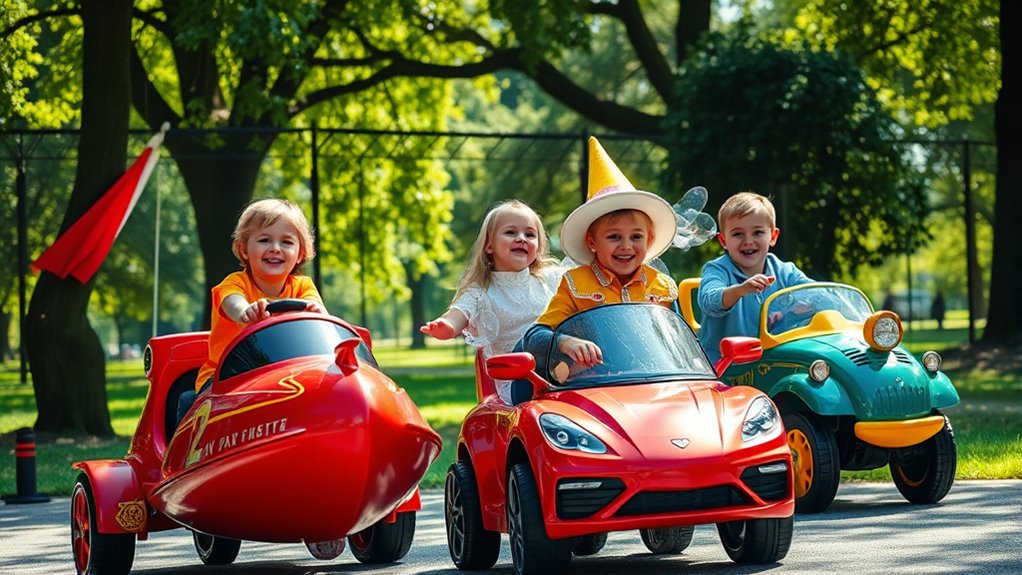
Storytelling games with ride-on toys turn playtime into an exciting adventure that sparks your child’s imagination. When you combine a ride-on toy with a story, you create a dynamic experience that encourages your kid to think creatively and engage deeply with their surroundings. Instead of passive play, your child becomes an active participant, transforming a simple ride into a journey through magical worlds, daring rescue missions, or epic quests. As they pedal, scoot, or push, they’re not just moving—they’re exploring a universe filled with characters, challenges, and stories they develop on the spot.
You can start by setting a scene that captures your child’s interest. Perhaps they’re a brave explorer in a jungle, a speedy race car driver racing through a bustling city, or a space adventurer navigating distant planets. As they sit on or hold onto their ride-on toy, describe the environment around them, adding details that ignite their imagination. For example, “You’re racing past towering trees, dodging branches as you chase the mischievous monkeys,” or “You’re zooming through the starry night, dodging asteroids on a mission to save the galaxy.” These narratives provide context and make the toy more than just a vehicle; it becomes a vessel for adventure.
Encourage your child to contribute to the story. Ask questions like, “What happens next?” or “Who do you meet on your journey?” This interactive approach helps them feel ownership over the game, boosting their storytelling skills and confidence. You can also introduce props or costumes—like a pirate hat or a superhero cape—to enhance the experience and deepen the immersion. For instance, a simple scarf can become a superhero’s cape, turning a ride into a daring rescue mission, or a toy telescope can be a spyglass for a secret agent on a mission.
To keep the storytelling fresh and engaging, switch up the scenarios regularly. Create themes around their favorite books, movies, or upcoming holidays. If your child loves dinosaurs, turn their ride into an expedition to find ancient fossils. If they’re into pirates, imagine a treasure hunt across the high seas. These themed stories make playtime not only fun but also educational, as they introduce new concepts and vocabulary naturally.
Most importantly, let your child’s imagination lead the way. Your role is to support and enrich their ideas, making playtime a collaborative storytelling adventure. By turning ride-on toys into storytelling tools, you help develop their creativity, language skills, and problem-solving abilities—all while having a blast together. It’s a simple, joyful way to make every ride an extraordinary journey into their limitless imagination.
ride-on toy adventure accessories
As an affiliate, we earn on qualifying purchases.
As an affiliate, we earn on qualifying purchases.
Frequently Asked Questions
What Safety Precautions Are Recommended for Storytelling Games With Ride-On Toys?
You’ll want to treat ride-on toys like a delicate treasure chest. Always supervise your child, ensuring they wear helmets and pads to protect their adventure. Check the toy’s brakes, wheels, and stability before playtime—think of it as tuning a race car. Keep play areas clear of obstacles, and set clear boundaries. By doing so, you create a safe playground where imagination can soar without the risk of crashes or injuries.
How Can Parents Encourage Creativity During Ride-On Toy Storytelling Sessions?
You can encourage creativity during ride-on toy storytelling sessions by asking your child open-ended questions about their adventure, prompting them to invent new characters or plot twists. Provide props or costumes to inspire different scenarios, and praise their ideas to boost confidence. You might also set up themed environments or challenges that invite imaginative thinking. Most importantly, stay enthusiastic and engaged to make the experience fun and inspiring.
Are There Age-Appropriate Ride-On Toys Suitable for All Children’s Storytelling Games?
Imagine a colorful bridge connecting worlds; the right ride-on toy acts as that bridge, making storytelling accessible for all kids. Yes, there are age-appropriate options designed to suit various developmental stages, from sturdy, smaller models for toddlers to more complex bikes for older children. These toys serve as symbols of adventure and imagination, encouraging every child to participate confidently in storytelling games that spark creativity and build confidence.
How Do Storytelling Games Benefit Children’s Social Development?
Storytelling games help you develop children’s social skills by encouraging them to share ideas, listen actively, and collaborate. When kids take turns and create stories together, they learn patience and respect for others’ viewpoints. These games boost confidence as kids express themselves and build friendships through shared creativity. Overall, storytelling games foster empathy, communication, and teamwork, all essential for healthy social development.
Can Ride-On Toys Be Used for Outdoor Storytelling Adventures?
Yes, you can turn ride-on toys into outdoor storytelling adventures. Think of it as hitting two birds with one stone—kids get active while sparking their imagination. You can create stories around their rides, make up adventures, or pretend the toys are characters on a quest. This not only keeps children engaged but also encourages creativity and social interaction, making outdoor play both fun and educational.
storytelling props for ride-on toys
As an affiliate, we earn on qualifying purchases.
As an affiliate, we earn on qualifying purchases.
Conclusion
So, next time your kid hops into their ride-on toy, remember—you’re not just witnessing a miniature racecar or spaceship. Nope, you’re secretly funding a future novelist’s empire of imaginary worlds, one squeaky wheel at a time. Who knew that endless storytelling on wheels could be the ultimate parenting hack? So go ahead, embrace the chaos, and let those tiny adventurers steer their way to literary greatness—because nothing says “imagination” like a honking, squealing ride-on coup.
themed ride-on toys for imaginative play
As an affiliate, we earn on qualifying purchases.
As an affiliate, we earn on qualifying purchases.
ride-on toy costumes and costumes accessories
As an affiliate, we earn on qualifying purchases.
As an affiliate, we earn on qualifying purchases.