
When your child falls or makes a mistake while playing, stay calm and offer reassurance. Show empathy by asking if they’re okay, and validate their feelings to help reduce embarrassment. Praise their effort and encourage persistence, focusing on growth rather than perfection. Use calm words and modeling emotional regulation to teach resilience. Creating a supportive, safe environment helps your child bounce back quickly and develop confidence. Keep watching to discover more ways to foster their emotional strength.

Turn the school run and nap time into listening time
- Thousands of audiobooks, podcasts and originals
- Listen on your phone, tablet or Echo — also offline
- Cancel anytime
Key Takeaways
- Respond calmly and reassure the child, emphasizing that minor falls are normal and part of learning.
- Acknowledge their feelings, asking “Are you okay?” to validate their experience.
- Praise their effort and persistence, encouraging them to try again without focusing solely on the mistake.
- Help children manage emotions with calming phrases and relaxation techniques.
- Create a supportive environment that reassures safety and promotes resilience through positive reinforcement.

When children fall or make play mistakes, it’s important to respond in a way that helps them recover quickly and build resilience. Your reaction can influence how they handle setbacks in the future. Offering calm, supportive parental reassurance shows your child that mistakes and minor falls aren’t the end of the world. This kind of reassurance helps foster emotional resilience, teaching your child that they can bounce back from small setbacks and keep trying. Instead of overreacting or expressing frustration, stay composed and gentle. Your calmness models how they can manage their emotions when things don’t go as planned.
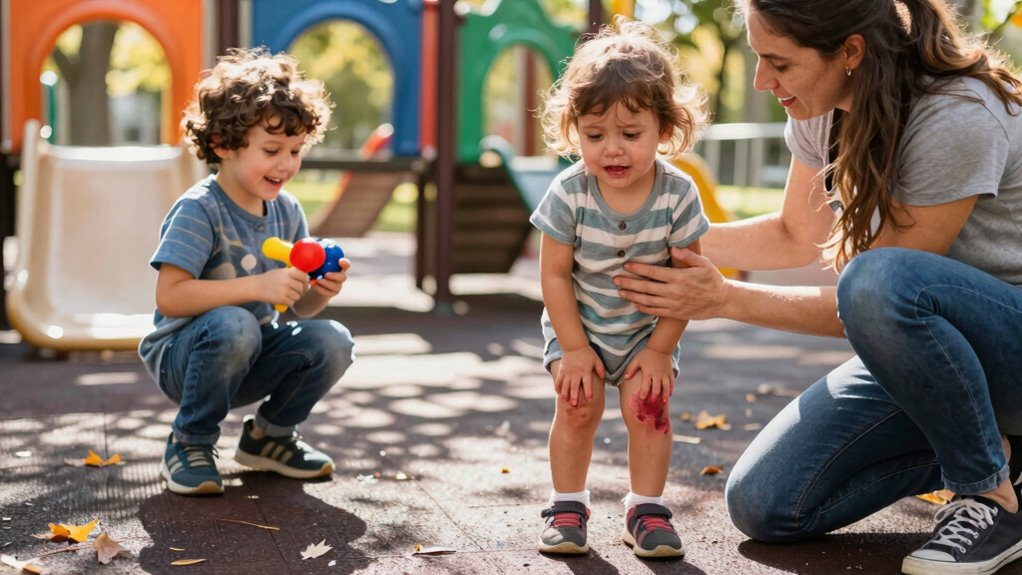
Stay calm and gentle after your child’s fall to model resilience and emotional regulation.
When your child trips or gets a scrape, acknowledge their feelings first. Say something like, “That looks painful, are you okay?” This shows empathy and validates their experience. Avoid dismissing their feelings or rushing to fix the situation. Instead, give them a moment to process what happened, then guide them through the recovery. When you reassure them that it’s normal to fall or make mistakes, you help reduce any feelings of embarrassment or fear. This reassurance builds their confidence and teaches them that setbacks are part of learning and growing.
Encouraging your child to try again after a fall or mistake is crucial. Praise their effort rather than just the outcome. For example, “I’m proud of you for trying again,” reinforces their resilience and willingness to face challenges. When you focus on effort, your child learns that persistence matters more than perfection, which strengthens their emotional resilience over time. Remember, children learn best when they feel supported, not judged. Your reassurance creates a safe space for them to explore, take risks, and develop their problem-solving skills. Additionally, understanding the importance of a growth mindset can further motivate children to continue trying despite setbacks.
Sometimes, children may get upset or frustrated after a fall or mistake. In these moments, your role is to help them manage their emotions. You might say, “It’s okay to feel upset, but you can handle this,” or help them take deep breaths. Your calm presence encourages emotional regulation and shows them how to cope with disappointment. Over time, this consistent support helps your child develop a resilient mindset, where setbacks are seen as opportunities for growth rather than failures. Understanding the importance of emotional resilience can further enhance your approach to guiding them through these experiences.
In short, your response after small falls or play mistakes plays a vital role in nurturing emotional resilience. Parental reassurance reassures your child that they are safe and capable, helping them bounce back stronger each time. Your calm, supportive attitude teaches them that mistakes are just part of the journey, not the end of it.
children's emotional resilience books
As an affiliate, we earn on qualifying purchases.
As an affiliate, we earn on qualifying purchases.
Frequently Asked Questions
How Can Parents Prevent Future Falls During Play?
To prevent future falls during play, you should prioritize playground safety by choosing age-appropriate equipment and regularly inspecting it for hazards. Use supervision tips like staying close and attentive, guiding your child on safe play behaviors, and teaching them how to navigate equipment properly. Encouraging cautious play and setting clear boundaries help minimize risks. Your active involvement guarantees your child’s safety and promotes confidence during playtime.
When Should a Child See a Doctor After a Fall?
You should take your child to a doctor immediately if there’s concern about injury assessment or if you notice emergency signs. Watch for symptoms like loss of consciousness, severe headache, vomiting, dizziness, or bleeding. Also, if your child can’t move a limb, seems unusually drowsy, or complains of persistent pain, seek medical help promptly. Trust your instincts—when in doubt, consult a healthcare professional to guarantee your child’s safety.
How Do I Boost My Child’s Confidence After a Fall?
Did you know that children who face small setbacks with support tend to develop stronger resilience? To boost your child’s confidence after a fall, focus on encouraging resilience and building trust. Praise their efforts, celebrate progress, and remind them that everyone makes mistakes. Show empathy and stay calm, so they feel safe. Trust your support to help them understand setbacks are just part of learning and growing.
Are There Specific Toys That Reduce Fall Risks?
Yes, certain fall prevention toys can help reduce risks during play. Look for safe toy selection options like soft, cushioned ride-ons, stability balls, and balance beams designed for young children. These fall prevention toys promote stability and coordination, decreasing the chance of falls. Always supervise play, and make certain toys are age-appropriate and in good condition to maximize safety. Incorporating these toys can help your child play confidently while minimizing fall risks.
How Can Caregivers Handle a Child’s Fear of Falling Again?
Think of yourself as a gentle guide, like a wise owl, helping your child face fears. You can handle their fear of falling again through emotional reassurance, reminding them it’s okay to feel scared. Use gradual exposure—start with small, safe activities—and celebrate their bravery. This approach builds trust and confidence, showing them they’re capable of overcoming setbacks. Your support makes all the difference in their recovery journey.
Conclusion
Remember, every fall or mistake is a chance for growth and resilience. By offering reassurance and gentle guidance, you help your child build confidence and learn valuable lessons. Some might worry that quick comfort encourages dependency, but in reality, your calm response fosters independence and emotional strength. With patience and love, you’ll see your child bounce back stronger, ready to explore and learn from life’s little tumbles, turning setbacks into stepping stones.
Fall Picks
fall essentials
As an affiliate, we earn on qualifying purchases.