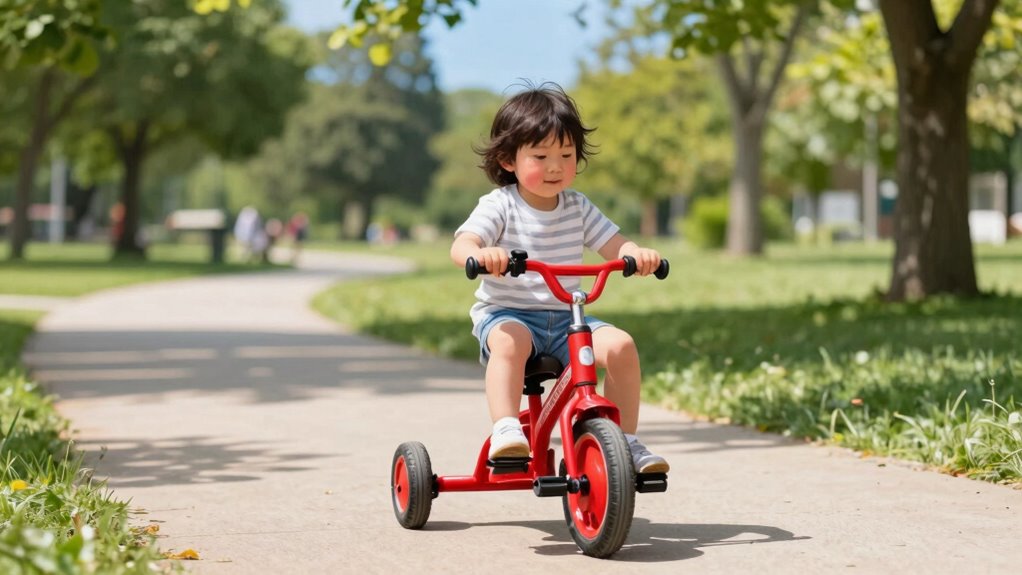

Encouraging small skills like pedaling, steering, and balancing on a push trike helps build your child’s independence and confidence. These activities improve motor coordination, decision-making, and social interactions, laying a strong foundation for future growth. As they master turning or riding solo, they gain trust in their abilities and enjoy a sense of achievement. Keep exploring how these simple steps can make a lasting impact on their development and self-reliance.

Turn the school run and nap time into listening time
- Thousands of audiobooks, podcasts and originals
- Listen on your phone, tablet or Echo — also offline
- Cancel anytime
Key Takeaways
- Pedaling and steering foster decision-making, boosting a child’s sense of independence and control.
- Developing balance and coordination builds confidence to explore new environments autonomously.
- Successfully navigating obstacles encourages problem-solving and self-reliance skills.
- Achieving small milestones, like turning or riding longer distances, reinforces independence.
- Supportive environments and positive reinforcement nurture self-esteem and autonomous activity.

For many children, riding a push trike marks the first step toward independence and self-confidence. When you watch a child pedal away on their trike, you’re witnessing more than just a fun activity—you’re observing a crucial moment in their development. Riding a push trike helps improve motor skills as kids learn to coordinate their legs and steer, developing their balance and strength with each ride. These fundamental skills lay the groundwork for more complex movements later in life, and as your child gains better control, you’ll notice their confidence growing along with their abilities.
Riding a push trike boosts motor skills, balance, and confidence, laying the foundation for future growth and independence.
Encouraging your child to ride their trike outdoors also opens up opportunities for social interaction. When they join other children in the park or neighborhood, they learn important social cues like sharing space, taking turns, and communicating their needs. These interactions boost their social skills and help them build friendships. As they navigate riding alongside peers, they also become more aware of their surroundings and develop a sense of spatial awareness, which is vital for safe social play.
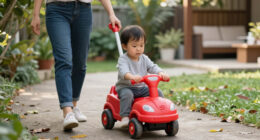
Riding a push trike isn’t just about physical development—it’s also about fostering independence. When your child pedals away from you, they’re making a conscious choice to explore, learn, and experience new things on their own. This independence encourages them to make decisions, solve problems (like how to turn or stop), and trust their own abilities. As they become more comfortable on their trike, they’ll start to seek out new adventures, giving them a sense of freedom and accomplishment that boosts their self-esteem.
You can support this growth by providing safe, open spaces for your child to ride freely. Watching them learn to balance, steer, and pedal builds their confidence, and your encouragement reinforces their efforts. Celebrate their small victories, like mastering a turn or riding a short distance without help. These achievements, while seemingly minor, have a lasting impact on their overall development, reinforcing their belief in their own capabilities.
Ultimately, pushing a trike may seem like a simple activity, but it’s a powerful tool for nurturing essential skills. It supports motor development, nurtures social interaction, and promotes independence—all of which are critical for your child’s growth. By encouraging your child to ride their push trike, you’re helping them take those first confident steps toward becoming a capable and self-assured individual.
kids push trike with pedals and steering
As an affiliate, we earn on qualifying purchases.
As an affiliate, we earn on qualifying purchases.
Frequently Asked Questions
At What Age Should Children Start Using Push Trikes?
You can start introducing push trikes when your child is around 18 months old. At this age, they begin developing basic motor skills and balance building, which are essential for riding. Using a push trike helps boost their confidence and coordination while encouraging independence. Keep an eye on their ability to steer and push, and choose a lightweight, age-appropriate trike to support their growing motor skills effectively.
How Do Push Trikes Support Overall Child Development?
Imagine your child’s tiny hands gripping a push trike, the wheels turning, and their confidence building with each ride. Push trikes support overall child development by enhancing motor skills, like balance and coordination, while also fostering independence. As they navigate their world, they gain self-assurance, encouraging exploration. You see their progress firsthand, and their newfound confidence motivates them to try even more, laying a foundation for future skills.
Are There Safety Concerns With Push Trikes?
Yes, there are safety concerns with push trikes. You should make certain your child wears safety gear like a helmet that fits properly to protect against falls. Always supervise your child closely during play, especially on uneven surfaces or near traffic. Regularly check the trike for loose parts or damage. Teaching your child safe riding habits and choosing age-appropriate, sturdy trikes also helps minimize risks and keeps playtime safe.
How to Choose the Right Size of Push Trike for a Child?
To choose the right size of push trike, focus on your child’s balancing skills and pedal mechanics. Guarantee the trike’s seat allows them to sit comfortably with feet flat on the ground for stability. They should be able to reach the handlebars without straining. Opt for a size where your child can easily control and maneuver the trike, helping build their confidence and coordination as they develop their skills.
Can Push Trikes Be Used Indoors Safely?
You can safely use push trikes indoors if your space is ample and free of obstacles. Picture your child zooming around a spacious living room or playroom, their laughter filling the air. To guarantee safety, set clear boundaries, supervise closely, and avoid slippery or cluttered areas. Using safety precautions like soft mats and keeping a watchful eye helps prevent accidents, making indoor riding both fun and secure.
Conclusion
Encouraging your child on a push trike isn’t just about riding; it’s about planting seeds of independence. Each pedal forward symbolizes their growing confidence, like a tiny boat setting sail into a vast, open sea. As they navigate new terrains, they learn resilience and self-trust—tools that will steer them through life’s adventures. Celebrate these small victories, for they’re the compass guiding your little explorer toward a future of limitless horizons.
Cold & flu season Picks
humidifiers
As an affiliate, we earn on qualifying purchases.