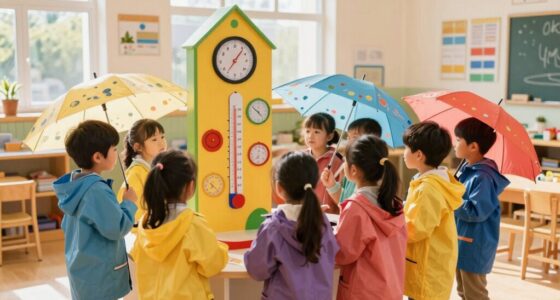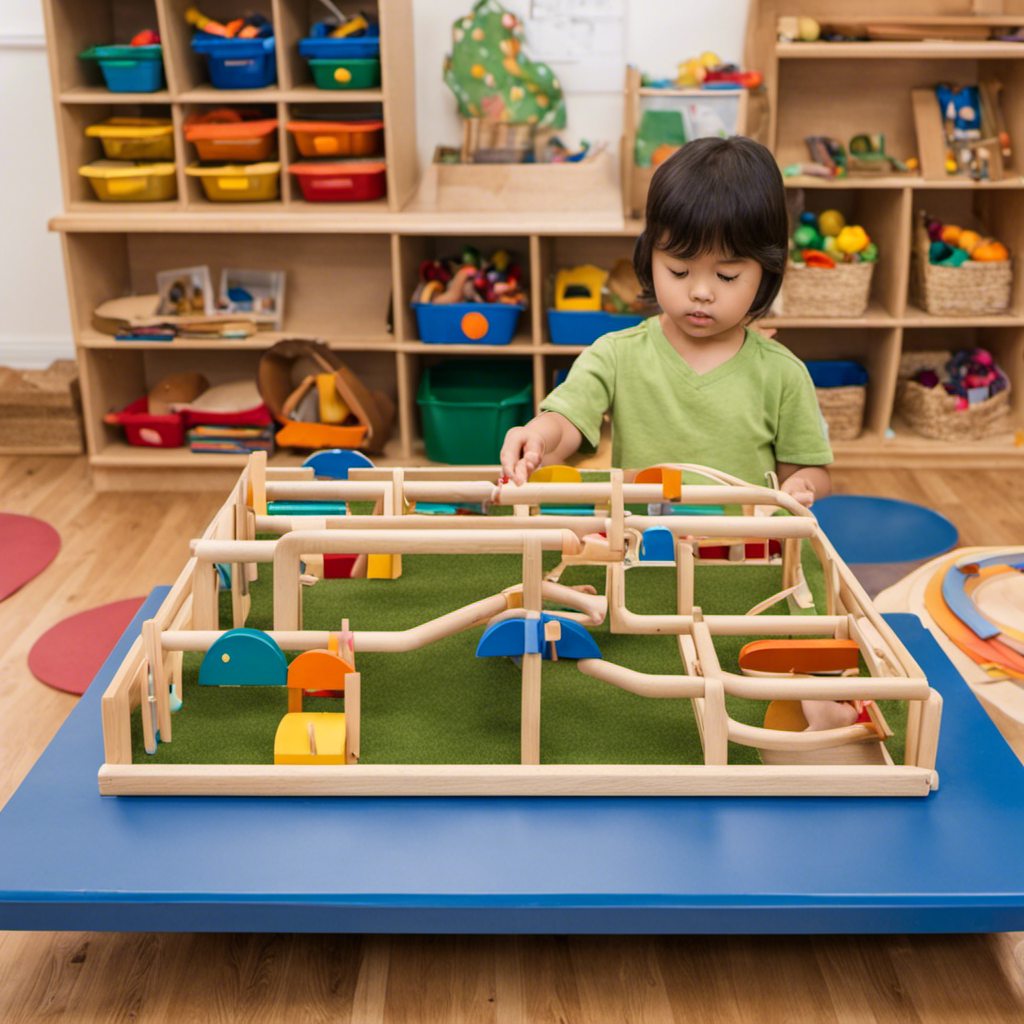

To use movement the smart way in preschool shifts, incorporate simple gross motor activities like stretching, hopping, or marching in place to help kids stay focused and feel more in control. Use sensory cues such as textured mats or carrying soft objects to support sensory regulation. Designate movement zones for quick activity resets, reducing frustration and hyperactivity. Consistent cues and personalized routines create predictability, making shifts smoother. Keep exploring for more ideas to make these routines even more effective.

Turn the school run and nap time into listening time
- Thousands of audiobooks, podcasts and originals
- Listen on your phone, tablet or Echo — also offline
- Cancel anytime
Key Takeaways
- Incorporate simple gross motor activities like marching or stretching to signal transitions and keep children engaged.
- Use textured mats, soft objects, or rhythmic cues as sensory signals to prepare children for routines.
- Designate movement zones with activities like crawling or jumping to help reset and regulate children’s sensory systems.
- Implement consistent movement-based cues, such as clapping or stomping, to create predictable transition signals.
- Personalize routines with sensory input tailored to each child’s needs to promote smoother, more secure transitions.
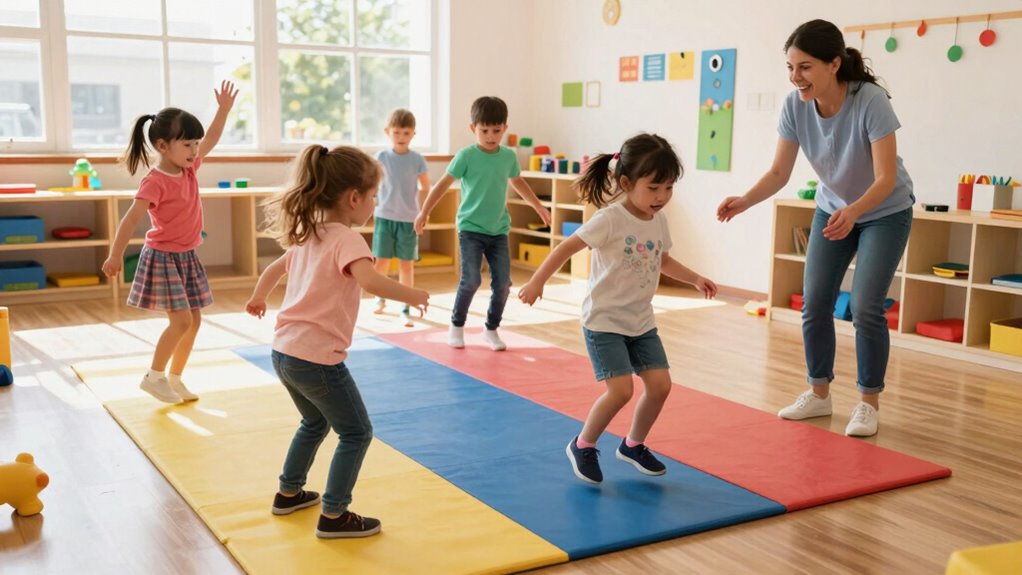
Moving from one preschool activity to another can be smooth and engaging when you incorporate movement into routine. When you design transition routines that include movement, you help children stay focused while also supporting their sensory integration needs. Sensory integration is vital for children to process sensory input effectively, which can reduce feelings of overwhelm and improve their ability to transition seamlessly. By integrating gross motor activities into these routines, you give children a chance to channel their energy positively, making transitions less chaotic and more controlled.
Incorporating movement into routines helps children stay focused and supports smooth, sensory-friendly transitions.
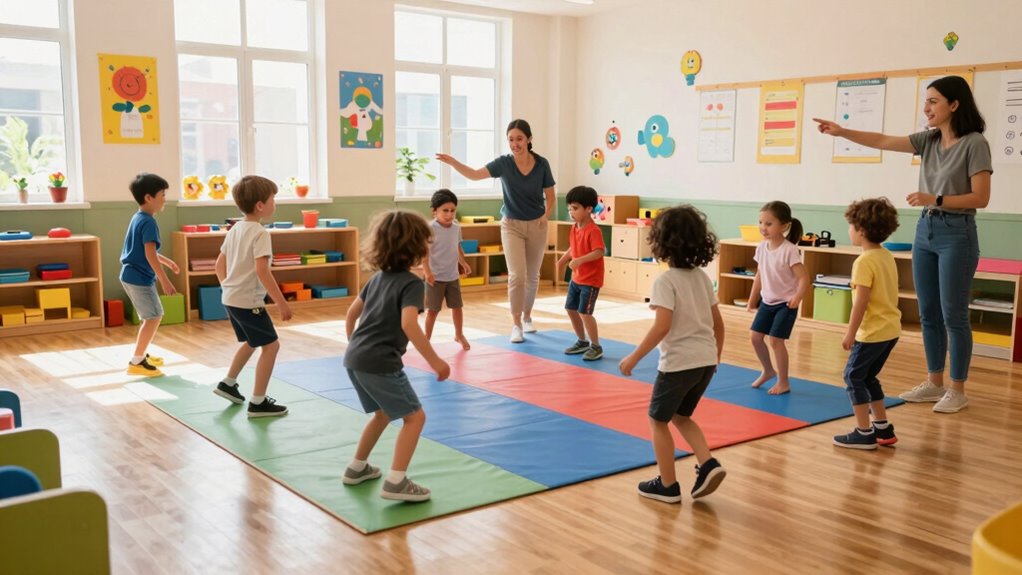
Think about using simple, active gestures that children can perform as they move between activities. For instance, asking them to stretch their arms overhead, hop on one foot, or march in place can serve as quick, effective transition moves. These gross motor activities not only keep children physically engaged but also help regulate their sensory systems, preparing them mentally and physically for the next task. When children are allowed to move their bodies during transitions, they often feel more in control and less anxious about the change, which makes the whole routine smoother.
You can also create transition cues that combine movement with sensory input. For example, you might have kids walk along a textured mat or carry a soft ball from one area to another. These activities incorporate sensory integration by stimulating tactile or proprioceptive senses, helping children stay present and focused. Incorporating rhythmic movements like clapping or stomping can also serve as auditory and proprioceptive cues, signaling that a transition is happening. This consistency helps children anticipate what’s next and feel more secure during these changes. Additionally, using sensory strategies during transitions can further support children who need extra sensory input to remain calm and attentive.
Another effective approach is to set up designated movement zones within the classroom. When children need to transition, they can visit these zones for a quick gross motor activity—like jumping over a low bar or crawling through a tunnel—before settling into their new activity. These movement breaks give children a chance to reset, helping to reduce frustration or hyperactivity. It’s especially helpful for children who need extra sensory input to stay regulated. Incorporating sensory integration strategies into routine transitions can greatly enhance a child’s ability to adapt to change and maintain focus. Furthermore, providing consistent cues can help children develop predictable routines, which fosters a sense of security and stability. Moreover, gross motor activities can be tailored to individual needs, providing personalized sensory input that fosters self-regulation.
Products Worth Considering

Nanit Smart Baby Video Monitor System with Floor Stand and 8-Inch Display

LEGO Star Wars Imperial Star Destroyer 75394 Building Set

Graco Ultra Cordless Airless Handheld Paint Sprayer 17M363
As an affiliate, we earn on qualifying purchases.
Frequently Asked Questions
How Can Movement Routines Be Adapted for Children With Special Needs?
You can adapt movement routines by incorporating sensory integration techniques, ensuring activities meet each child’s sensory needs. Use adaptive activities like weighted vests or textured mats to promote calmness and focus. Incorporate gentle, predictable movements to help children with special needs shift smoothly. By customizing routines with sensory-focused tools and adaptive movements, you create an inclusive environment that supports every child’s unique shift process.
What Safety Precautions Should Be Taken During Active Transition Routines?
You should always guarantee safety gear is used when necessary, like helmets or pads, to prevent injuries during active routines. Follow strict supervision protocols, keeping a close eye on children at all times to quickly address any risky behavior. Clear boundaries and consistent rules help maintain safety, while regular checks of the environment make sure no hazards are present. Prioritizing these precautions creates a secure space for energetic shifts.
How Much Time Should Be Allocated for Movement-Based Transitions?
Time flies when you’re having fun, so allocate about 5 to 10 minutes for movement-based shifts. This allows kids to engage in creative activities that energize them for learning. Proper classroom organization helps streamline these routines, ensuring smooth changes without chaos. Keep transitions lively but efficient, giving children space to move while maintaining structure. This balance boosts focus and makes transitions enjoyable for everyone involved.
Are There Specific Types of Movement More Effective for Certain Age Groups?
You’ll find that dance games work best for younger preschoolers, helping them develop rhythm and coordination while having fun. Balance activities are more effective for slightly older children, enhancing their stability and motor skills. By tailoring movement types like dance games for early ages and balance activities for older preschoolers, you support their developmental needs while making shifts lively and engaging. This approach keeps kids motivated and ready for the next activity.
How Do Movement Routines Support Emotional Readiness During Transitions?
Movement routines act as a calming bridge over turbulent waters, helping children navigate changes smoothly. You support emotional regulation and sensory integration by incorporating activities like gentle stretching or dancing, which help kids manage feelings and process sensory input. These routines turn transitions into moments of connection and confidence, empowering children to face change with a sense of control and resilience, much like a steady ship in choppy seas.
Conclusion
As you incorporate movement into your preschool changeover routines, you’ll notice children smoothly shifting from one activity to the next, almost like a gentle breeze guiding leaves along a path. These routines become a dance you both share—each step natural and effortless. Before long, you’ll see the classroom come alive with confident, enthusiastic learners ready to embrace each new moment. It’s a dance where movement and learning seamlessly intertwine, creating a joyful rhythm in your day.