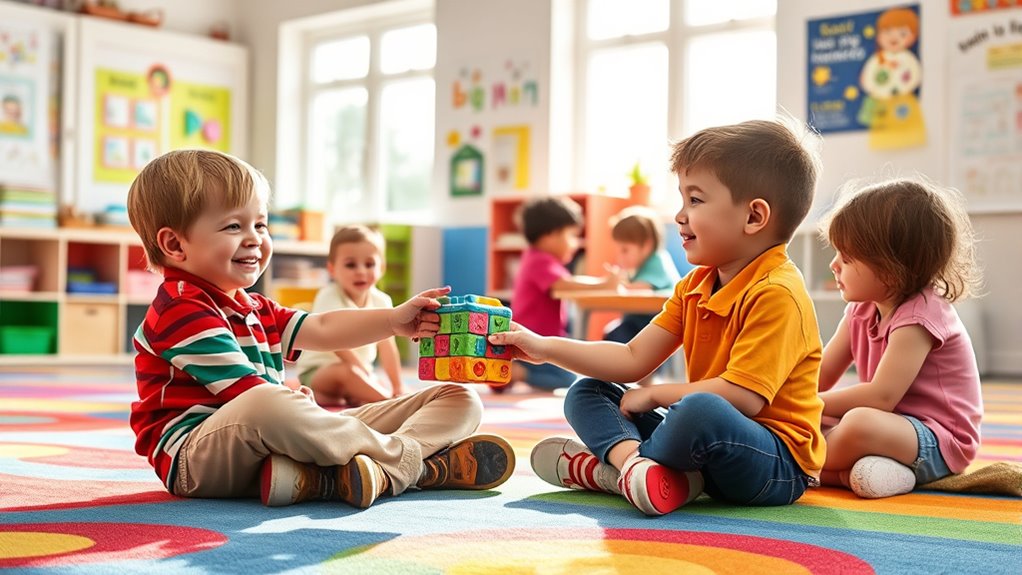

Playing with peers is a natural way to teach your child sharing and cooperation. During play, they learn to negotiate, take turns, and work toward common goals. Such interactions help them understand social cues and develop empathy, while guiding them gently through conflicts reinforces positive behaviors. These social skills built through play set a strong foundation for lifelong relationships. If you explore further, you’ll discover more ways to support your child’s social development through play.
Key Takeaways
- Play provides a natural context for children to practice sharing and taking turns with peers.
- Engaging in cooperative play encourages negotiation, role assignment, and respecting others’ ideas.
- Caregivers can model and praise sharing behaviors during play to reinforce positive social skills.
- Conflict resolution during play helps children learn patience, compromise, and effective communication.
- Diverse play activities foster teamwork, problem-solving, and the development of lifelong cooperation skills.
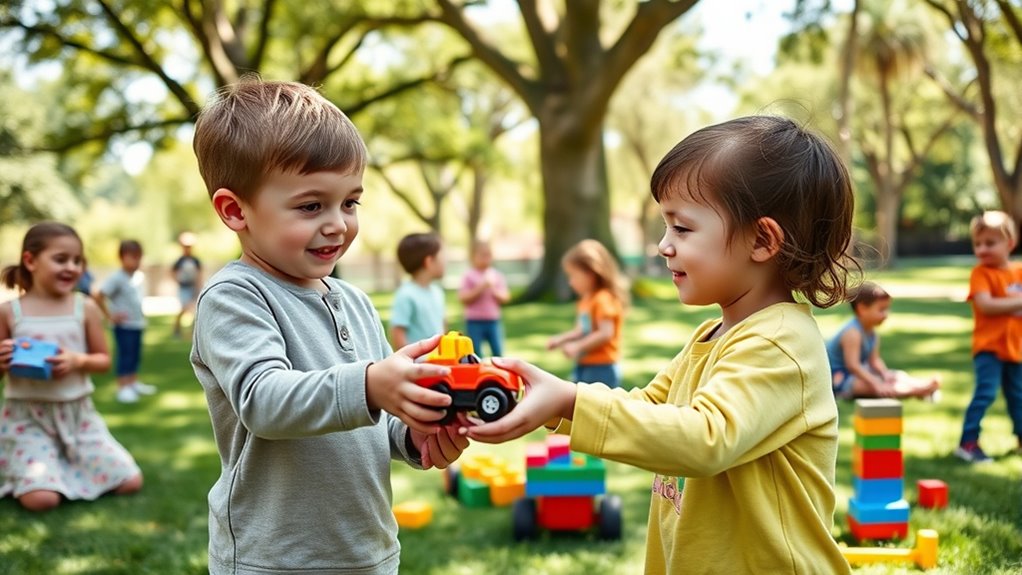
Have you ever wondered how play influences a child’s ability to develop social skills? When you observe children playing together, you’re witnessing a powerful process that shapes their ability to interact with others. Play offers a natural setting for peer interaction, where children learn how to communicate, negotiate, and build relationships. Through these interactions, they gain insights into social norms and develop essential skills like sharing, cooperation, and empathy. As they navigate play scenarios, they practice emotional regulation, which is essential for managing their feelings and responding appropriately to others. For example, when two children want the same toy, they learn to take turns and express their desires calmly, rather than through frustration or aggression. This process helps them understand their emotions and develop self-control, which are key components of emotional regulation.
Engaging in play with peers also teaches children how to read social cues and respond accordingly. They become more attuned to facial expressions, tone of voice, and body language, which helps them interpret what others are feeling. This awareness fosters empathy, making it easier for children to form meaningful connections. As they experience both success and disappointment during play, children learn resilience and how to cope with emotional ups and downs. These emotional regulation skills are essential because they influence how children handle conflicts, frustrations, or disagreements in social settings. When you guide children during play, encouraging them to express their feelings and listen to others, you’re helping them build a toolkit of emotional skills that will serve them throughout life. Additionally, participating in diverse types of play environments, such as outdoor and structured activities, broadens their social experiences and adaptability.
Furthermore, play provides opportunities for children to practice cooperation by working towards shared goals, whether building a block tower or playing a pretend game. They learn to negotiate roles, compromise, and respect each other’s ideas. These experiences foster patience, turn-taking, and problem-solving abilities. When children successfully collaborate, they feel a sense of accomplishment, which reinforces positive social behavior. As a caregiver or educator, your role is to create a safe, engaging environment where children can experiment with these social skills without fear of judgment. Praise their efforts to share and cooperate, and gently guide them when conflicts arise. In doing so, you help children internalize these skills, making social interactions more natural and enjoyable. Ultimately, play acts as an essential tool in teaching children how to connect with others, regulate their emotions, and develop the social competence they need for lifelong success. Recognizing the importance of natural peer interactions in play can significantly enhance their social development.

Garvee 12V Kids Ride On Truck Car with Remote Control - Electric Ride On Toys for Toddlers, Spring Suspension, 3 Speeds, LED Lights, Bluetooth Music & Parent Safety Brake
✅ Dual Protection Safety System: Parent-controlled remote with 300 ft range instantly stops this ride-on truck via brake...
As an affiliate, we earn on qualifying purchases.
Frequently Asked Questions
How Can I Encourage Shy Children to Participate in Group Play?
To encourage shy children to participate in group play, focus on creating a welcoming environment. Use trust-building exercises to help them feel safe and comfortable. Offer gentle encouragement by praising small efforts and providing positive reinforcement. Break activities into manageable steps, and gradually increase their involvement. Be patient and consistent, showing understanding and support. Over time, this approach helps shy children build confidence and enjoy group play more fully.
What Are Effective Strategies for Managing Conflicts During Playtime?
Managing conflicts during playtime is like steering rough waters—you need steady hands and clear direction. You should encourage children to use conflict resolution strategies, such as taking turns, sharing feelings, and listening actively. Promote emotional regulation by helping them recognize their emotions and calm down before resolving issues. By modeling these skills and guiding children through problem-solving, you foster a positive environment where conflicts become opportunities for learning and growth.
How Does Play Influence Long-Term Social Development?
You might not realize it, but play considerably influences your long-term social development. Through play, you learn emotional regulation and how to navigate peer relationships, building trust and empathy. These experiences help you develop essential social skills, like cooperation and conflict resolution, which shape your ability to form healthy connections in the future. Engaging in diverse play activities now sets a strong foundation for positive social interactions later in life.
What Activities Best Promote Sharing Among Toddlers?
You can promote sharing among toddlers by integrating sharing activities and cooperative games into their routine. Activities like taking turns with toys, group art projects, or simple team games encourage kids to practice sharing and cooperation. These interactions help them learn patience and empathy while having fun. Consistently engaging in such activities nurtures their social skills, making it easier for them to collaborate and share naturally as they grow.
How Can Parents Reinforce Social Skills Learned Through Play at Home?
Imagine transforming your home into a social skills powerhouse! You can do this by consistently using positive reinforcement, like praising your child when they share or cooperate. Be a role model by demonstrating kind and respectful behavior yourself. When you catch them practicing these skills, celebrate loudly! These small but powerful actions reinforce good habits and help your child internalize important social skills, making your home a nurturing environment for growth.
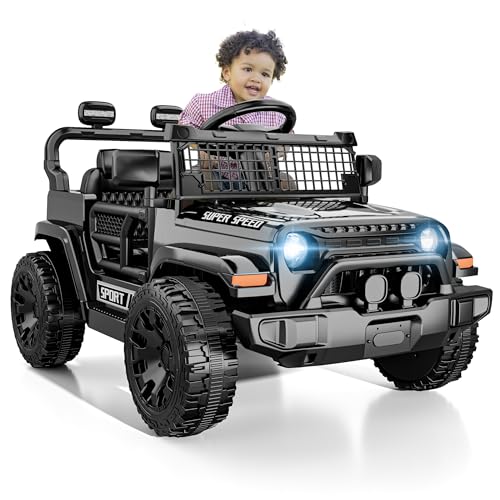
TRINEAR 12V Ride on Car with Parent Remote Control, Toddler Electric Car with Spring Suspension, LED Lights & Music Player - Safe Battery Toy for Kids, Christmas & Birthday Gift, Black
Unleash Endless Fun with Our 12V Ride On Truck Car: Designed for electric car for kids enthusiasts aged...
As an affiliate, we earn on qualifying purchases.
Conclusion
By encouraging sharing and cooperation during play, you help children develop essential social skills that will serve them throughout life. When you create opportunities for them to work together and take turns, you’re fostering empathy and understanding. Isn’t it worth asking yourself how these small moments can shape their future relationships? Remember, every shared toy and cooperative game builds a foundation for confident, compassionate individuals who know how to connect with others.

Hotsolo 12V Ride on Car Truck, Power Wheels with Parent Remote Control, Shock Absorbers, Bluetooth, Music, Led Lights, Ride on Toy for Kids Ages 3-8, Blue UTV for Boys
[No More Bumps & Bruises!] Built tough for adventure, this kids ride on car features a full roll...
As an affiliate, we earn on qualifying purchases.

Best Choice Products Kids 12V Electric Ride On UTV Car and Trailer w/Parent Control, LED Lights, 2 Speeds, Bluetooth - Red
DETACHABLE TRAILER: Kids can easily pack and haul their favorite toys and games with a high-capacity bed that's...
As an affiliate, we earn on qualifying purchases.