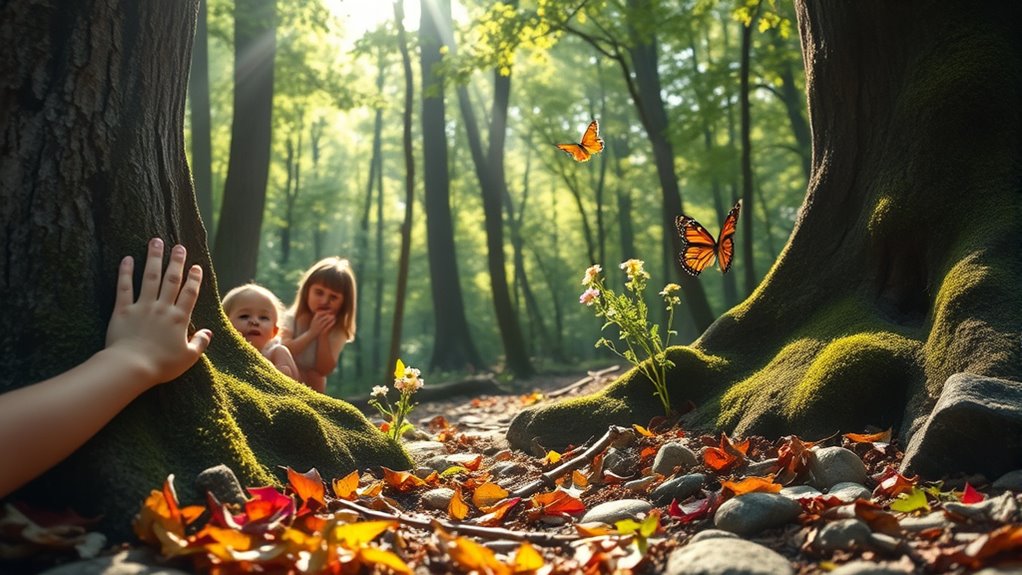

Transform your outdoor space into a sensory playground by engaging all your senses through simple activities. Observe and identify plants, feel their textures, smell their fragrances, and listen to natural sounds like bird songs or rustling leaves. Notice weather changes, colors in the sky, and how different environments influence your perceptions. You can even taste fresh herbs or fruits for added sensory delight. Keep exploring, and you’ll discover how nature sparks your senses in surprising ways.
Key Takeaways
- Engage senses by observing, touching, smelling, and listening to diverse plants, animals, and environmental elements during outdoor exploration.
- Practice plant identification and texture exploration to deepen awareness of nature’s variety and sensory details.
- Notice weather changes—warmth, breezes, rain, cloud patterns—and how they influence sensory perceptions.
- Use environmental cues like sky colors and sounds to enhance understanding of natural patterns and weather effects.
- Incorporate activities such as listening to bird songs, feeling textures, smelling earthy scents, and safely tasting edible plants.
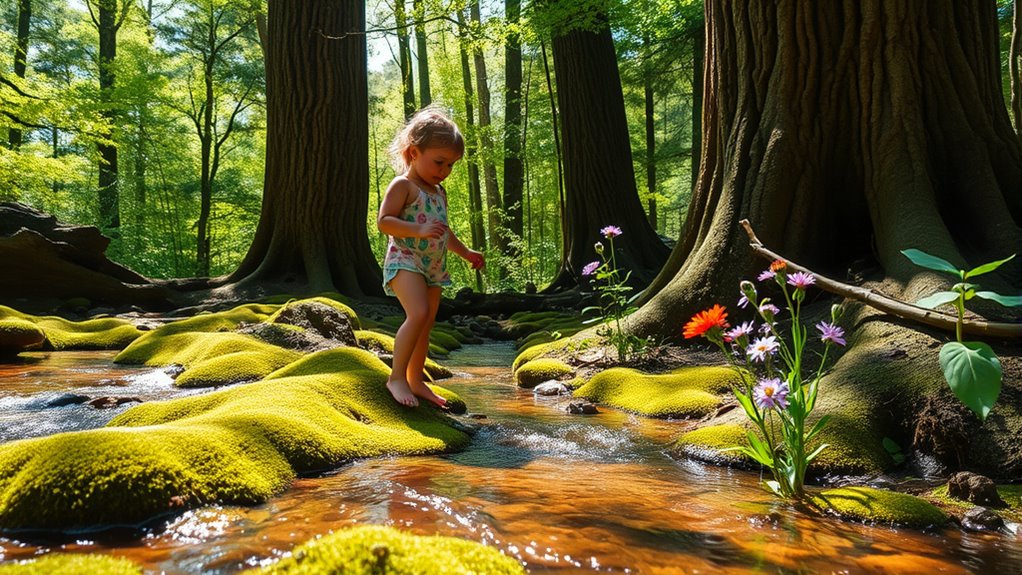
Have you ever stopped to truly experience the world around you? When you take a moment to observe your surroundings, you open yourself to a rich sensory adventure that nature offers. One way to deepen this experience is through plant identification. As you walk through a park or forest, challenge yourself to recognize different plants, trees, and flowers. Touch the leaves to feel their textures—smooth, rough, velvety, or prickly—and notice their shapes and colors. Listen to the rustling sounds they make in the breeze and smell their distinct fragrances. This practice sharpens your awareness of nature’s diversity and helps you connect more deeply with your environment. Plant identification isn’t just about cataloging species; it’s about engaging your senses to appreciate the intricate details of the natural world.
Alongside plant identification, weather exploration offers another exciting way to immerse yourself in sensory experiences. Pay attention to how the weather changes your surroundings—notice the warmth of the sun on your skin or the coolness of a breeze. Observe the patterns of clouds drifting overhead and try to identify different types, like cumulus or cirrus. Feel the raindrops as they land on your face or the humidity in the air during a humid afternoon. Weather exploration invites you to tune into the subtle shifts in your environment, heightening your sensory awareness. It’s fascinating to see how weather influences the sounds, sights, and smells around you, turning a simple walk into an interactive exploration of nature’s moods. Recognizing changing weather patterns can deepen your understanding of environmental cues and improve your sensory perception.
As you venture outdoors, take deliberate steps to engage all your senses. Listen for the chorus of birds, insects, or the gentle hum of wind through trees. Smell the earthy scent after a rain or the fragrance of blooming flowers. Feel the textures of bark, rocks, or soil beneath your fingertips. Watching the sky change colors at sunset or sunrise can evoke a powerful visual response. These activities not only ground you in the present moment but also cultivate a sense of curiosity and wonder. Nature becomes your playground for sensory discovery, where every sight, sound, smell, touch, and even taste (like tasting edible herbs or fruits safely) contributes to a richer understanding and appreciation of the natural world.

Carolart Ocean Sensory Table with Sands, Bin with Lid, Indoor Outdoor Use, Sand Art Kit for Boys and Girls, Toys for Toddlers Age 3-5, 17×11.5×10.2 Inches
MULTI-FUNCTIONAL KIDS SENSORY TABLE: Our table contains Table(17×11.5×10.2 inches),removable legs, Sensory Sand,Sensory Foam,Trees,6 Sea Molds,Scoop,Roller,Tongs,Sand Sifter,8 Sea Animals,Gold…
As an affiliate, we earn on qualifying purchases.
As an affiliate, we earn on qualifying purchases.
Frequently Asked Questions
How Can Sensory Activities Benefit Children With Sensory Processing Disorders?
You might wonder how sensory activities help children with sensory processing disorders. These activities promote sensory integration, helping kids better interpret and respond to sensory information. By engaging in targeted sensory experiences, they gain developmental benefits like improved motor skills, emotional regulation, and focus. Incorporating outdoor sensory activities can be especially effective, offering natural stimuli that support their overall growth and help them feel more confident and comfortable in their environment.
What Safety Precautions Should Be Taken During Outdoor Sensory Play?
When planning outdoor sensory play, you should focus on safety precautions such as conducting a risk assessment of the area to identify hazards. Always supervise children closely, using effective supervision strategies to guarantee they stay safe. Check the environment for sharp objects, toxic plants, or uneven surfaces, and ensure equipment is secure. By staying vigilant and prepared, you help children enjoy sensory activities safely and confidently.
How Can Adults Incorporate Sensory Activities Into Their Outdoor Routines?
You can incorporate sensory activities into your outdoor routines by practicing mindful observation and engaging in nature journaling. Take time to notice textures, sounds, and smells around you, fully experiencing each sensation. Bring a journal to record your observations, helping you stay present and connected with nature. These activities not only enhance your sensory awareness but also promote relaxation and mindfulness during your outdoor time.
Are There Specific Seasons Best Suited for Outdoor Sensory Experiences?
You might wonder if certain seasons are better for outdoor sensory experiences. Seasonal variations and weather considerations play a big role. Spring and fall often offer mild temperatures and diverse sights, sounds, and scents, making them ideal. Summer can be great too, but stay mindful of heat and sun exposure. Winter can be enjoyable with proper gear, offering unique textures and sights. Choose your season based on comfort and sensory richness.
How Does Outdoor Sensory Play Support Emotional Well-Being?
Outdoor sensory play supports your emotional well-being by reducing stress and boosting your mood. When you engage with nature’s sights, sounds, and textures, you activate your senses in a calming way that helps you unwind. This natural interaction encourages mindfulness, decreases anxiety, and promotes a positive outlook. So, making time for outdoor sensory activities can be a simple yet powerful way to enhance your emotional health and overall happiness.

Plant Identification Terminology: An Illustrated Glossary
Taxonomy, Glossary, Plant Identification
As an affiliate, we earn on qualifying purchases.
As an affiliate, we earn on qualifying purchases.
Conclusion
As you step back outside, it’s no surprise how nature’s surprises unfold around you. The gentle rustle of leaves, the warm scent of earth, and the cool touch of a breeze all seem to align perfectly, creating a sensory symphony. You realize that by simply engaging with these natural moments, you’re reconnecting with a hidden playground, where every breath and touch feels like a coincidence designed just for you. Embrace it, and let nature awaken your senses.

Magicteam White Noise Machine with 20 Non Looping Natural Soothing Sounds Memory Function 32 Levels of Volume Powered by AC or USB and Sleep Sound Timer Therapy for Baby Kids Adults Black
❤20 Non-Looping Sleep Sounds: White noise ,Brown noise, pink noise, blue noise, fan,brook, rain, ocean,bird and Bonfire,suitable for…
As an affiliate, we earn on qualifying purchases.
As an affiliate, we earn on qualifying purchases.

Weather Observation Log: A Weather Watching Journal to Track and Record Daily Weather Conditions | Weather Geek Gifts
As an affiliate, we earn on qualifying purchases.
As an affiliate, we earn on qualifying purchases.