TL;DR

Turn the school run and nap time into listening time
- Thousands of audiobooks, podcasts and originals
- Listen on your phone, tablet or Echo — also offline
- Cancel anytime
A Motherly first-person essay published Oct. 21, 2026, describes a mother who found herself coordinating her son’s eighth birthday instead of enjoying it with him. The writer says sharing planning with her husband, making tasks visible and letting go of some extras have helped her be more present, though she still sometimes slips into managing events.
A mother’s effort to give her son a memorable eighth birthday left her coordinating food, cake, photos and cleanup instead of spending time with him, according to a first-person essay published by Motherly on Oct. 21, 2026. The writer says the experience prompted her family to share more of the planning work, highlighting how the mental load behind family traditions can keep parents from enjoying the moments they organize.
The writer says Oliver’s birthday plans were familiar family rituals rather than an extravagant event: breakfast in bed with balloons, presents, time with grandparents, his favorite dinner and a round-table exchange of things family members loved about him. In the weeks beforehand, she handled tasks including choosing food, shopping, wrapping gifts, coordinating with relatives, ordering the cake and remembering a special cereal he had requested.
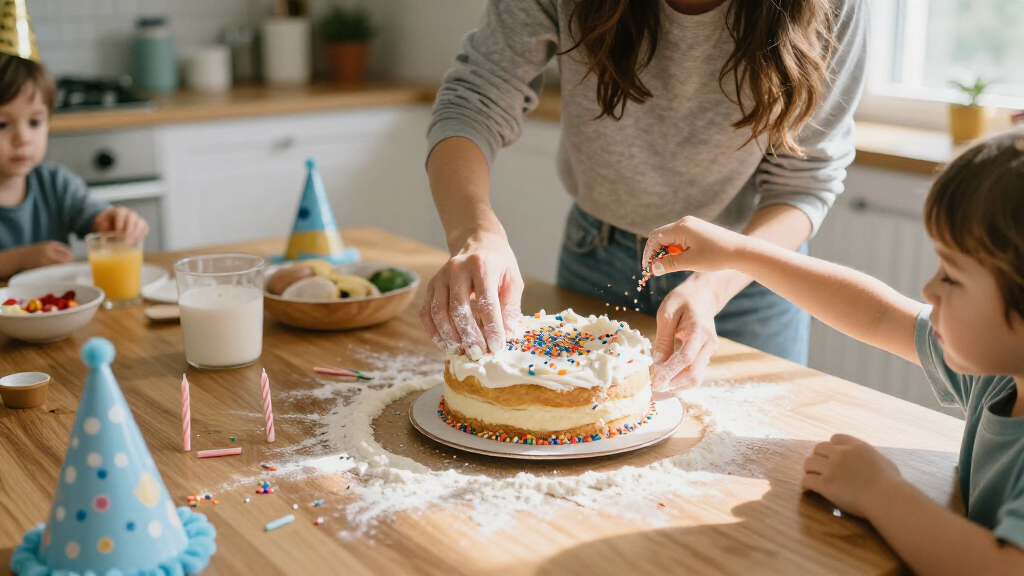
The celebration went mostly as planned, and the writer says Oliver was thrilled. But when she saw the children playing with their grandparents, she wanted to join them and instead began thinking about the schedule. She cleared dinner, set up dessert, found candles, gathered everyone, took photos and later dealt with the dishes, wrapping paper and bedtime for three tired children.
Looking at the photographs later, she recognized the happy scene she had hoped to create but could not recall feeling present during the evening. She says similar patterns affected holidays, vacations and outings: while with her children, she could be thinking about sunscreen, groceries or work and activity-related messages. The essay is personal testimony, not a survey of parents or a measured study of how common the experience is.
The Work Behind Family Traditions
The account describes a tension between creating meaningful family experiences and being able to take part in them. Organizing a birthday or outing involves more than the event itself: someone has to anticipate needs, track timing and supplies, and make sure each part happens. When one parent carries most of those responsibilities, that parent may spend the occasion directing it rather than sharing it.
The writer does not argue that parents should stop making traditions or that every task can be avoided. She says she enjoys adding special touches, but found that the work did not all need to belong to her. That distinction matters for readers who value family rituals but feel pressure to manage every detail: the essay frames participation and shared responsibility, rather than perfection, as ways to make the experience more enjoyable.
Her suggestions are practical but grounded in one family’s experience. The essay does not establish that a shared calendar, delegation or outsourcing will work for every household, or that those changes resolve the broader pressures of family care and employment.
As an affiliate, we earn on qualifying purchases.
How the Family Changed Its Planning
The writer says it took years to build new habits, and that she still sometimes falls into what she calls “cruise-director mode.” She identifies herself as the founder of Jam, an app for family calendars and organization. That connection is relevant to the article’s discussion of making tasks visible, but it also means the essay’s recommendation of a shared digital hub comes from someone with a professional connection to that type of product.
Her family’s approach includes splitting work according to interests and skills: she prefers decorating and cooking, while her husband takes on gift research and shopping. They discuss who is doing what before busy days, and involve their older children in those conversations. She also describes asking others to bring food, ordering meals or dropping optional tasks when they add work without improving the occasion.
The essay’s final point broadens the idea of family memories beyond planned celebrations. The writer says some moments she values most—a slow Sunday, extra cuddles at bedtime or an ice cream cone at the end of summer—need little or no preparation. The source excerpt ends while describing those everyday moments, so it does not provide the rest of that passage.
What One Family’s Account Shows
The essay provides one parent’s account; it does not include interviews with other families, outside research or data showing how often parents experience the same problem. The source does not quantify how much time the writer spent planning, or measure whether changes to the division of work improved her ability to be present.
It is also unclear how much the family’s organization app contributed to the changes compared with conversations, task-sharing, help from relatives or dropping optional plans. The writer identifies herself as the app’s founder and describes using it, but the essay is not independent evidence of the product’s effects. The account does not address how the recommendations might differ for single parents, families with limited support or households with different schedules and resources.
The writer describes ongoing changes rather than a single fix: she and her husband plan together, make responsibilities visible and decide which details can be delegated or left out. Their children now join some planning conversations as they get older. She also acknowledges that she still sometimes returns to managing events from behind the scenes.
The essay does not announce a new policy, study or product feature, and it gives no future milestone to track. Its next steps are household practices: decide who owns each task before the event, make the schedule known to everyone involved, accept help where available and weigh whether an extra detail improves the occasion or only adds work. The writer’s account leaves open how those changes will work for other families, but makes clear that her own effort to be present remains an ongoing process.
Key Questions
What happened at the birthday celebration?
The writer says her son Oliver’s eighth birthday went mostly as planned and that he was thrilled. She spent much of the evening managing food, cake, photos and cleanup, and later realized she could not recall feeling present with him during the celebration.
What changes did the writer make?
She says she and her husband began sharing planning earlier, dividing tasks according to their interests, reviewing the schedule together and involving their older children. They also sometimes ask others to contribute or drop optional details.
Does the essay say parents should stop planning family traditions?
No. The writer says she enjoys creating special moments and did not want to give that up. Her point is that the work can be shared and that not every extra task needs to happen.
Is the account based on research about parents generally?
No. It is a first-person essay published by Motherly. It does not report a survey, study or broader data on how common this experience is.
What does the writer say about using a family organization app?
She says a shared family hub helps make schedules and tasks visible, and identifies herself as the founder of Jam. The essay does not provide independent evidence that the app itself produces a particular outcome.
Source: rss
Cold & flu season Picks
humidifiers
As an affiliate, we earn on qualifying purchases.