Ride-on play helps your child develop important pre-literacy skills by boosting their motor coordination, balance, and confidence—foundations that support early writing and reading. It also sparks imagination and storytelling, allowing them to use new words and create narratives that build vocabulary and language comprehension. When combined with social play and role-sharing, these activities foster communication skills. Keep exploring to discover how integrating motor and imaginative play truly boosts your child’s early literacy journey.
Key Takeaways
- Ride-on toys enhance motor skills, building physical confidence that supports early literacy tasks like writing and letter recognition.
- Imaginative ride-on play promotes storytelling, vocabulary development, and understanding of language in context.
- Combining physical action with storytelling links words to actions, deepening language comprehension and expressive skills.
- Ride-on play encourages social interaction and cooperative storytelling, strengthening communication and early literacy abilities.
- Integrating motor skill development with imaginative play creates a comprehensive environment that fosters early literacy growth.

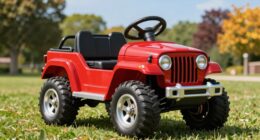
Play is a fundamental way young children develop essential pre-literacy skills, and Ride-On toys offer a unique opportunity to support this growth. As you encourage your child to hop onto a ride-on vehicle, you’re helping them build crucial motor skills that serve as a foundation for later literacy. Maneuvering a ride-on toy requires coordination, balance, and control, which strengthen their gross motor muscles. These physical skills are vital because they directly influence a child’s ability to hold a pencil, trace shapes, and perform other fine motor tasks involved in writing and reading. When your child pushes, steers, or pedals, they’re not just having fun—they’re developing the physical confidence needed for early literacy success.
Beyond physical development, ride-on toys also spark your child’s imagination and promote imaginative storytelling. As they zoom around, you’ll notice them creating stories about their adventures—pretending their ride-on vehicle is a racecar, a spaceship, or a rescue vehicle. This type of imaginative storytelling is essential for language development because it encourages your child to use new words, formulate sentences, and express their ideas. When they narrate their journeys or describe their surroundings, they’re practicing storytelling skills that will later translate into writing and reading comprehension. You can support this by joining in their stories or asking open-ended questions about their imaginary scenarios, which reinforces vocabulary and narrative skills.
Furthermore, the act of pretending while riding helps your child understand the connection between language and actions. For example, if they say, “I’m rescuing a kitten,” they’re linking words to a story, which deepens their understanding of language structure and meaning. Ride-on toys also create opportunities for social play, where children can share stories, negotiate roles, and collaborate on adventures, further enriching their language and communication skills. Incorporating motor skill development into play routines can significantly enhance their overall early literacy journey. This combination of physical activity and imaginative play creates a rich environment for early literacy development.

EDOSTORY 5 in 1 Pikler Triangle Set, Indoor Playground and Gym for Kids, Foldable Wooden Montessori Climbing Set Triangle Ladder Set with Slide and Climbing Ramp, Gift for Boys Girls(Rainbow)
【Designed For Toddlers】Our 5 in 1 Pikler Triangle Toys are specifically designed with toddlers in mind. The size,...
As an affiliate, we earn on qualifying purchases.
Frequently Asked Questions
How Does Ride-On Play Specifically Enhance Early Vocabulary Development?
Ride-on play boosts early vocabulary development by encouraging you to describe actions, objects, and directions, which builds language skills. As you navigate and interact with others, your motor skills improve, making physical activities more confident. Social interaction during ride-on play also provides opportunities to hear and use new words in context. This active engagement helps expand your vocabulary naturally while strengthening both language and motor skills.
What Are the Best Ride-On Toys for Promoting Literacy Skills?
You should choose ride-on toys that include musical features and sensory stations to boost literacy skills. Look for options with built-in musical toys that encourage children to sing along, develop rhythm, and expand vocabulary. Sensory stations, like textured surfaces or interactive buttons, foster exploration and language development. These engaging elements make ride-on play more educational, helping kids connect sounds and words while having fun.
How Can Parents Incorporate Storytelling Into Ride-On Play?
You can incorporate storytelling into ride-on play by encouraging your child to create imaginative narratives during their rides. Use storytelling techniques like asking open-ended questions, prompting them to describe their adventures, or inventing characters and scenarios together. As they explore, guide them to narrate their journey, fostering language development and creativity. This approach makes playtime engaging while strengthening their pre-literacy skills through active, imaginative storytelling.
Are There Age-Appropriate Guidelines for Integrating Ride-On Play With Literacy Activities?
Did you know that 80% of brain growth happens before age three? For ride-on play, you should follow age-appropriate and safety guidelines to foster literacy development. Stay close to supervise, choose equipment suited for your child’s age, and incorporate storytelling during play. This helps your child develop pre-literacy skills while ensuring safety and fun. Always prioritize safety guidelines to make ride-on play both educational and secure.
What Are Common Challenges Children Face When Linking Ride-On Play to Literacy Development?
You might notice children face motor skill challenges or safety concerns when linking ride-on play to literacy development. They may struggle with coordination or controlling the ride-on, making it hard to focus on literacy activities. Additionally, safety worries can limit how freely they explore, affecting engagement. To overcome these, make certain of proper supervision, start with simple tasks, and gradually build their confidence and skills for smoother integration of play and learning.

KidsBuddy Pikler Triangle Set with Cushion 9 in 1 Climbing Toys for Toddlers 1-3 Indoor Baby Climbing Gym Toddler Montessori Toys Wooden Toy with Maze Toy, Shape Sorter, Dinosaur Car
Patented Dinosaur Design: Our Pikler Triangle Set features a patented dinosaur design with a unique frame, detailed cushion,...
As an affiliate, we earn on qualifying purchases.
Conclusion
By incorporating ride-on play into your child’s daily routine, you’re helping boost their pre-literacy skills in a fun, engaging way. Studies show that children who engage in active play develop stronger language and cognitive abilities earlier on. So, next time your little one zooms around, remember that those moments aren’t just play—they’re building blocks for their future reading success. Keep encouraging active, imaginative play, and watch their early literacy skills flourish!
Amazon Product B0F6B5N5JF
As an affiliate, we earn on qualifying purchases.

Tiny Land Pikler Triangle Set,7-in-1 Foldable Montessori Toddler Climbing Toys Indoor, Wooden Playground Jungle Gym for Kids, Climber Gift for Boys & Girls Toddler Climbing Toys (Morandi)
Tiny Land New Design Montessori Climbing Set: Crafted with a focus on both safety and aesthetics, this Montessori...
As an affiliate, we earn on qualifying purchases.