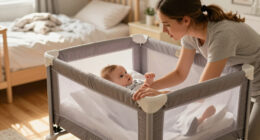
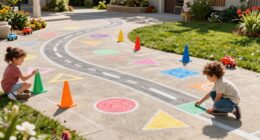
Learning to judge corners, edges, and space is a major developmental milestone. It helps you explore safely and boosts confidence in moving around different environments. As you improve your spatial awareness, you’ll better recognize boundaries, navigate tight spots, and avoid bumps or falls. This skill supports overall motor development and independence. By understanding how visual cues guide your movements, you’re building a strong foundation for even more complex skills. Keep exploring to discover how to support this growth further.

Turn the school run and nap time into listening time
- Thousands of audiobooks, podcasts and originals
- Listen on your phone, tablet or Echo — also offline
- Cancel anytime
Key Takeaways
- Developing spatial judgment helps children navigate environments safely and confidently.
- Recognizing edges and corners is a milestone indicating progress in visual-motor integration.
- Improved spatial skills reduce bumps, falls, and enhance overall physical independence.
- Engaging in play and exploration fosters natural development of spatial awareness.
- Mastery of space judgment forms a foundation for more complex motor and cognitive skills.
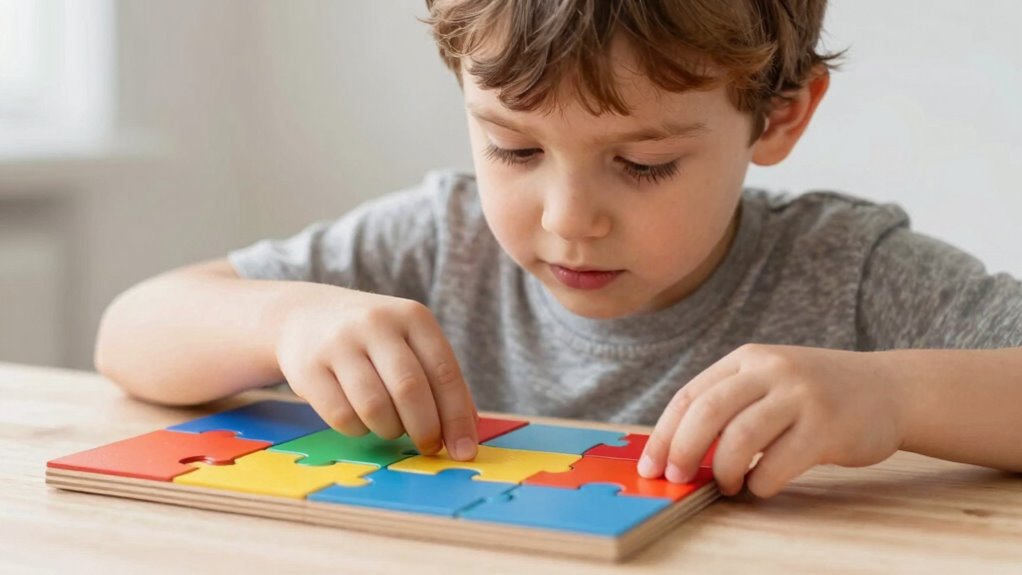
Have you ever wondered how children learn to navigate their environment with confidence? It’s a fascinating process, and a big part of it involves developing the ability to judge corners, edges, and space. When children start to recognize and respond to these spatial features, they’re making a significant leap in their motor skill development and spatial awareness. These skills aren’t just about physical movement; they form the foundation for safe exploration and independence. As children grow, they learn to interpret the boundaries of objects around them, which helps them avoid bumps and falls, and even navigate complex environments like playgrounds or crowded rooms.
This learning process begins subtly, often through play and exploration. When your child reaches for a toy on a shelf or steps carefully around a puddle, they’re honing their sense of space and mastering how to judge distances and edges. Motor skill development isn’t just about strength or coordination; it’s also about understanding where their body ends and the world begins. For example, as they learn to crawl or walk, they start to develop an internal map of their surroundings, which enhances their spatial awareness. They become better at gauging how close they are to furniture, walls, or other objects, allowing them to move more confidently and precisely. Recognizing these spatial cues is closely linked to visual cues, which are essential for accurate spatial judgment.
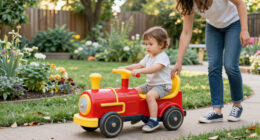
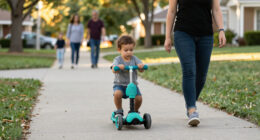
Paying attention to how your child interacts with their environment can reveal a lot about their progress. If they’re able to navigate a room without constantly bumping into things, it’s a sign they’re improving in spatial awareness. If they’re able to squeeze through narrow doorways or climb onto a low step without hesitation, that means their judgment of corners and edges is developing well. These milestones indicate that their brain is effectively integrating visual cues with motor actions, a vital aspect of overall growth. Developing spatial awareness is essential for children to interpret and respond to their environment accurately, and it supports their ability to learn new skills. Introducing appropriate toys and activities can help reinforce these skills, making learning engaging and effective. Creating an environment rich in spatial cues can further enhance their ability to judge space effectively.
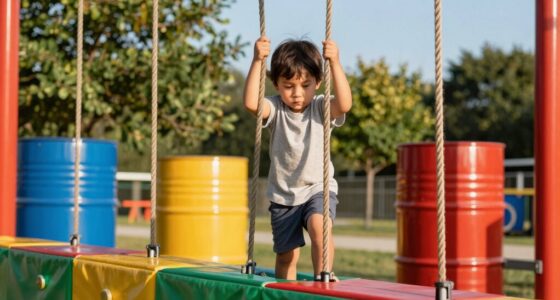
Encouraging your child’s exploration in safe environments helps foster these skills naturally. Toys, obstacle courses, or even simple activities like playing hide-and-seek can boost their ability to judge space and edges. As they practice, they become more confident in their movements and develop a stronger sense of their physical boundaries. Incorporating sensory experiences into play can also help children refine their understanding of spatial relationships and improve their judgment of edges and corners. Ultimately, learning to judge corners, edges, and space isn’t just a developmental step; it’s a big win that sets the stage for more complex skills and safe independence. You’ll see it in their growing confidence and their ability to navigate the world around them with ease.
children's spatial awareness toys
As an affiliate, we earn on qualifying purchases.
As an affiliate, we earn on qualifying purchases.
Frequently Asked Questions
How Can Parents Support This Developmental Milestone at Home?
You can support this milestone by creating a stimulating home environment filled with safe, accessible toys that encourage exploration. Offer parental guidance by setting up activities like shape sorters or building blocks to help your child practice judging corners and edges. Encourage their curiosity, praise their efforts, and give them plenty of time to experiment and learn through play. Your involvement boosts their confidence and skill development in understanding space.
What Age Do Children Typically Master Judging Corners and Edges?
Children typically master judging corners and edges between ages 3 and 4, as their motor skills and visual perception improve. During this time, you’ll notice them accurately maneuvering around objects and fitting shapes into matching spaces. To support this, encourage activities like puzzles and building blocks, which enhance their spatial awareness. Your guidance and practice help refine their visual perception and motor skills, making these skills become more natural over time.
Are There Common Challenges Children Face When Developing This Skill?
You might find that your child faces hurdles with visual perception, like struggling to judge space accurately, and fine motor skills, making precise movements tough. These challenges can seem as intimidating as climbing a mountain, but with patience, they gradually improve. Kids often need extra practice to refine their ability to navigate corners and edges, strengthening their spatial awareness and motor control, paving the way for confident, coordinated actions.
How Does This Ability Impact Other Areas of Development?
This ability greatly influences your child’s visual perception and cognitive growth. When they judge corners, edges, and space well, they can better interpret their environment, enhancing their problem-solving skills. It also supports their ability to develop spatial awareness, which is vital for activities like reading, writing, and moving through their surroundings. As they improve, you’ll notice increased confidence in new tasks, fostering overall developmental progress and making everyday interactions smoother.
What Toys or Activities Best Promote Learning in This Area?
You can promote learning in this area with interactive puzzles and building blocks. These toys challenge your child to fit pieces into specific spaces, helping them judge corners, edges, and space accurately. As they manipulate the pieces, they develop spatial awareness and problem-solving skills. Encourage exploration by offering various shapes and sizes, and watch their confidence grow as they master these skills through engaging, hands-on activities.
Conclusion
Just like a skilled sailor navigates tricky waters using landmarks, your child learns to judge corners, edges, and space to navigate their world confidently. When you watch them grasp a puzzle piece or step carefully around a toy, you see those early wins. These skills aren’t just about play—they’re the compass guiding their independence and confidence. Celebrate each small victory, knowing they’re steering toward a future of exploration and growth.
Halloween Picks
halloween
As an affiliate, we earn on qualifying purchases.