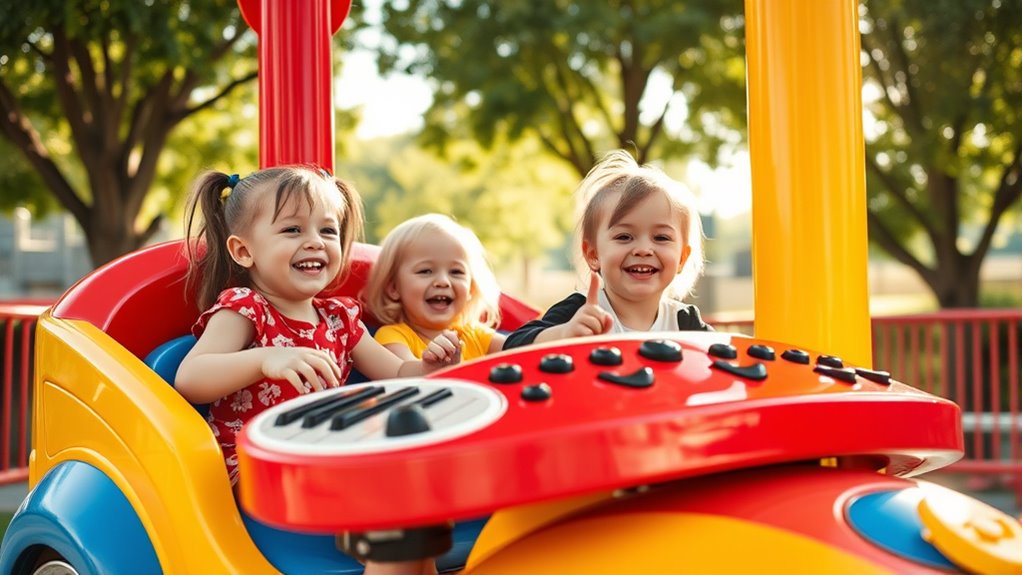

By integrating music and singing into ride-on play, you can make activities more engaging and help develop your child’s sensory, motor, and language skills. Use musical instruments, sing simple songs like “The Wheels on the Bus,” or create musical scavenger hunts along their route. These playful methods encourage coordination, active listening, social interaction, and curiosity. Keep exploring different ways to combine sound and movement to boost your child’s fun and learning even further.
Key Takeaways
- Incorporate musical instruments like shakers or drums into ride-on activities to enhance multisensory engagement and coordination.
- Use simple singing games such as “The Wheels on the Bus” to promote language skills and lively interaction during rides.
- Create musical scavenger hunts with hidden instruments or sound clues to develop listening and problem-solving skills.
- Integrate rhythm patterns or melodies for children to imitate, fostering musical memory and active participation.
- Use singing and instrument play as bonding activities that support social, emotional, and sensory development during ride-on play.
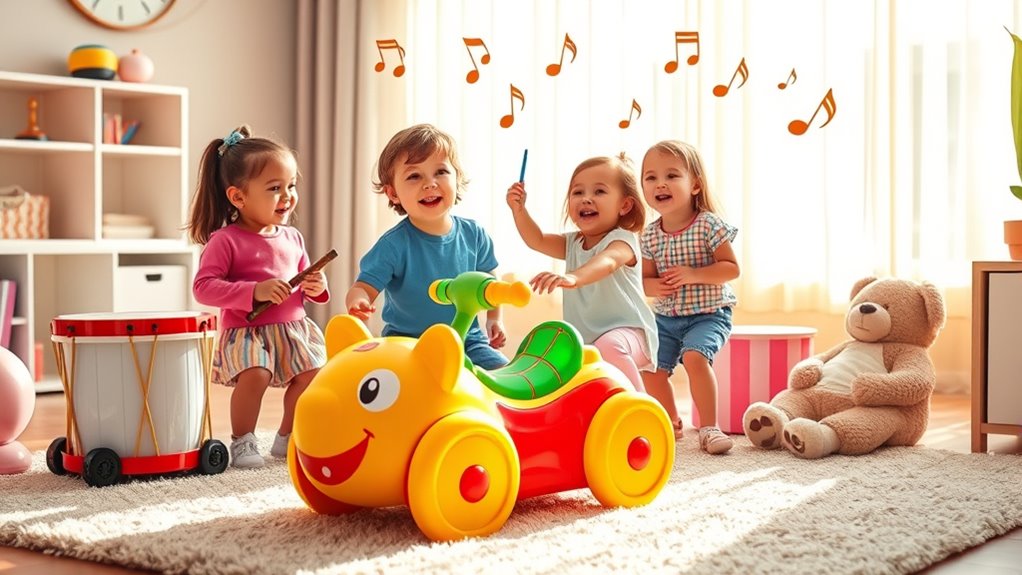
Incorporating music and singing into ride-on play transforms ordinary activities into engaging, multisensory experiences that boost your child’s development. When you add musical instruments and singing games to their ride-on adventures, you’re creating an environment that encourages exploration, coordination, and social skills. Musical instruments like tambourines, shakers, or small drums can be easily integrated into playtime, allowing your child to produce sounds as they ride or stop at different spots. This not only makes the activity more fun but also helps develop their sense of rhythm, hand-eye coordination, and fine motor skills. As they experiment with different sounds, they start to understand cause and effect, and their auditory discrimination improves.
Singing games are another fantastic way to enhance ride-on play. You can sing simple songs together, encouraging your child to join in as they pedal or steer. Songs with repetitive lyrics and catchy melodies make it easy for them to learn and participate actively. For example, singing “The Wheels on the Bus” while they ride can turn a routine trip into a lively concert, fostering language development and memory. Incorporating call-and-response singing games can also boost social interaction, as your child learns to listen, respond, and take turns. These games can be adapted to fit the theme of their ride or environment, making each session fresh and exciting.
You might also consider creating a musical scavenger hunt during ride-on play. Hide small instruments or musical clues along the route, prompting your child to find and play them as they go. This not only makes the activity more interactive but also sharpens their problem-solving skills and encourages active listening. To deepen the experience, you can introduce rhythm patterns or simple melodies for your child to imitate, helping them develop musical memory and timing. Engaging in activities that incorporate music and rhythm can also enhance their overall coordination and sensory processing. Singing and playing instruments together also provides a wonderful bonding opportunity, as they mirror your actions and learn new sounds through imitation.
As an affiliate, we earn on qualifying purchases.
Frequently Asked Questions
How Does Music Enhance Ride-On Play Safety?
Music enhances ride-on play safety by promoting sound localization, helping children identify where sounds come from, which improves their awareness of surroundings. It also supports music therapy principles, calming kids and reducing anxiety during play. When you incorporate engaging tunes, children stay more attentive and responsive, making them more cautious and aware of potential hazards. This combination of auditory cues and calming effects creates a safer, more enjoyable ride-on experience.
Can Songs Be Customized for Different Ride-On Toys?
Imagine turning a regular ride-on into a personalized adventure—yes, you can customize songs for different toys. Using personalized soundtracks and themed playlists, you make each ride unique and engaging. For instance, a pirate-themed car might feature sea shanties, transforming the ride into a storytelling voyage. Customizing songs not only sparks imagination but also helps children associate music with specific play experiences, enriching their overall fun.
What Are the Best Musical Activities for Specific Age Groups?
You should choose age-appropriate musical activities like musical storytelling for preschoolers, which spark imagination and language skills, and rhythm-based games for school-aged children that improve coordination and timing. For toddlers, simple sing-alongs help develop listening skills. Tailor activities to your child’s abilities, ensuring they stay engaged and have fun. Incorporating these activities into ride-on play makes learning music interactive and exciting for every age group.
How Does Music Impact Children’s Motor Skill Development During Ride-On Play?
You notice that music enhances children’s motor skill development during ride-on play by boosting musical memory and rhythm coordination. When you incorporate rhythmic songs or melodies, children naturally sync their movements, improving coordination and timing. This active engagement encourages them to develop better control and balance, making play more fun and beneficial. Over time, this integration helps strengthen their overall motor skills through repeated, rhythm-based activities.
Are There Recommended Volume Levels to Prevent Hearing Damage?
You should keep the volume at or below 85 decibels to guarantee volume safety and prevent hearing damage. Use a sound level meter or check device labels to monitor volume. Encourage hearing protection, especially for prolonged exposure or loud music. Regularly lower the volume, take breaks, and avoid placing speakers close to children’s ears. Following these guidelines helps safeguard their hearing during ride-on play with music.
Conclusion
As you introduce music and singing into ride-on play, you’re revealing a world where imagination takes flight. Think of it like turning a simple toy car into a magical chariot, transporting children to joyful adventures. Studies show that combining play and music boosts creativity and emotional development. Just like a child’s laughter ringing out during a sing-along, your efforts create moments of pure delight that stay with them forever. Keep blending play and melody—you’re shaping bright, happy futures.