Incorporating sound and music into ride-on play makes toys more engaging and immersive. You can add realistic engine noises, horns, or musical buttons that stimulate your child’s senses and encourage creativity. These sounds help set scenes, spark imagination, and develop coordination. When you balance volume and choose high-quality effects, you create a fun, comfortable environment. Keep exploring ways to enhance play, and you’ll discover even more ideas to boost their sensory experience.
Key Takeaways
- Integrate theme-specific sound effects like sirens or engine noises to boost realism.
- Add musical instruments such as mini keyboards or drums for creative exploration.
- Use synchronized sounds to enhance storytelling and create immersive play scenarios.
- Include volume controls to manage sound levels, ensuring a comfortable environment.
- Incorporate interactive buttons and taps to promote cause-and-effect learning and motor skills.
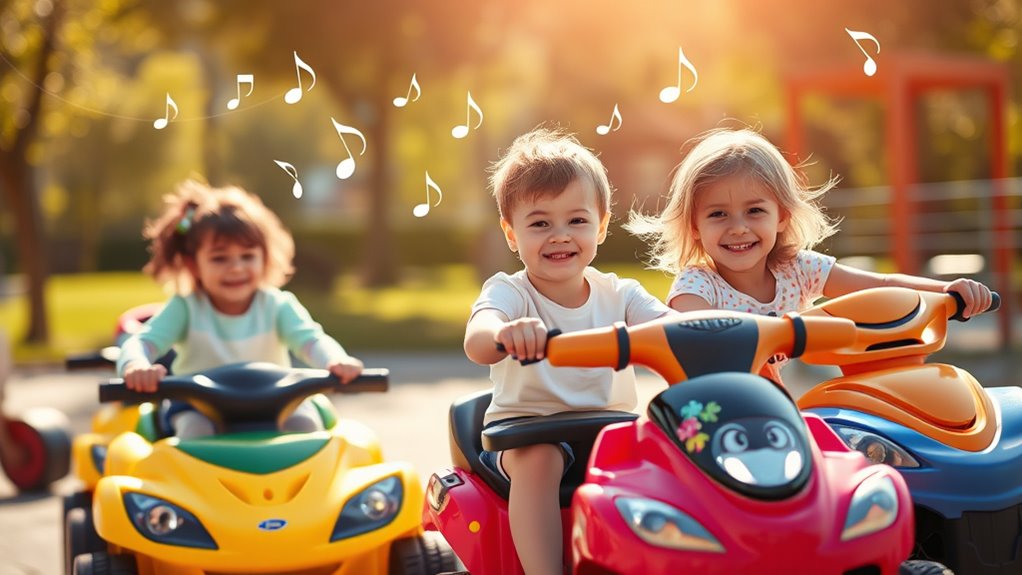
Sound and music play an essential role in ride-on play, transforming simple vehicles into immersive experiences that enchant children. When you incorporate thoughtful sound design, you’re creating an environment where kids feel more engaged and inspired to explore. Good sound design isn’t just about adding noise; it’s about crafting sounds that complement the vehicle’s theme and encourage imaginative play. For example, if you have a toy fire truck, including sirens, water hose sounds, and engine revs elevates the realism. These sounds make the experience more authentic, helping children immerse themselves fully in their role as a firefighter or hero.
Thoughtful sound design enhances ride-on play, making vehicles more realistic and immersive for children.
Using musical instruments as part of the ride-on experience can add a layer of joy and creativity. Small, portable instruments like mini keyboards, drums, or electronic sound modules can be integrated into the vehicle or used during play sessions. When children press buttons or tap on musical instruments built into the ride-on, they learn cause-and-effect relationships while developing their motor skills and musical awareness. Incorporating melody and rhythm into the play encourages children to experiment with sound patterns, fostering their musical curiosity and coordination.
You can also think about how sound design enhances storytelling. By adding different sound effects—such as engine noises, horns, or animal sounds—you help set a scene or tell a story that sparks your child’s imagination. For instance, turning a simple ride-on into a jungle safari with animal calls or into a race car with revving engines makes the play more dynamic and memorable. When you carefully select and synchronize these sounds, they create a seamless narrative that pulls children into their imaginative worlds.
Keep in mind that balance is key. The sounds should be engaging but not overwhelming. Use volume controls or switches so children can easily turn sounds on or off, giving them control over their experience. This also teaches them about managing noise levels and respecting others nearby. When you choose high-quality sound design, the sounds feel more realistic and immersive, making the ride-on more appealing and fun.
Incorporating musical instruments into ride-on play is an excellent way to blend entertainment with developmental benefits. It encourages children to explore different sounds, develop their sense of rhythm, and express themselves creatively. Whether you’re adding sound effects that mimic real-world noises or integrating simple musical instruments, your goal should be to make the experience interactive and lively. Thoughtful sound design transforms a basic toy into a captivating adventure, turning ordinary ride-on vehicles into multisensory playgrounds where children learn, imagine, and have endless fun. Additionally, selecting appropriate textiles and accessories can enhance the sensory experience and comfort during play.

ENYOPRO 2 Seater Ride On Car for Kids, 24V Licensed Ford Bronco Raptor Electric Power Ride On Truck Toy with Remote Control, 4 Wheels Shock Absorption, Soft Start, Bluetooth, Radio, 3 Speed - Blue
[Excellent Power & Longer Drive] - The ENYOPRO 24V 2 seater battery powered car for kids boasts dual...
As an affiliate, we earn on qualifying purchases.
Frequently Asked Questions
How Do Sound and Music Enhance Children’s Learning During Ride-On Play?
Sound and music boost children’s learning during ride-on play by enhancing auditory development and emotional engagement. You help kids recognize different sounds, which sharpens their listening skills and vocabulary. Music also creates a fun, immersive environment, encouraging kids to explore and express emotions. When you include varied sounds and tunes, you make playtime more stimulating, fostering cognitive growth and emotional connections that support overall development.
What Safety Considerations Are Involved in Integrating Sound Into Ride-On Toys?
When integrating sound into ride-on toys, you must prioritize safety. Guarantee battery safety by using high-quality, certified batteries and preventing overheating. Include volume control to protect kids’ hearing and avoid noise-induced discomfort. Regularly check wiring and speakers for damage, and remind children not to play with controls roughly. These precautions help create a fun, safe environment, letting kids enjoy sound features without risking harm or safety issues.
How Can Parents Customize Sounds and Music in Ride-On Play Devices?
You can customize sounds and music on ride-on devices by exploring their built-in settings for sound customization. Use the volume control to keep the noise at a safe, comfortable level. Many toys have buttons or apps that let you upload your favorite tunes or select different sound effects. Regularly adjust the volume to prevent hearing damage and make certain of a fun, safe experience for your child.
Are There Age-Appropriate Sound Features for Different Developmental Stages?
You’ll find that age-appropriate sound features support your child’s sound development and align with their auditory milestones. For infants, soft sounds and gentle melodies help nurture listening skills, while toddlers benefit from interactive noises that promote exploration. As children grow, more complex sounds encourage auditory discrimination. Tailoring these features to developmental stages guarantees your child engages meaningfully with ride-on play, fostering their overall sensory and cognitive growth.
What Are the Environmental Impacts of Electronic Sound and Music in Ride-On Toys?
You should consider the environmental impacts of electronic sound and music in ride-on toys, especially regarding noise pollution and battery recycling. Excessive noise can disturb nearby communities and wildlife, while batteries may pose pollution risks if not properly recycled. Opt for toys with eco-friendly batteries and volume controls to reduce noise pollution. Regularly recycling batteries minimizes environmental harm, helping you enjoy ride-on play responsibly and sustainably.

24V Ride On Car for Kids w/Remote Control, JOYRACER Battery Powered Off-Road UTV, 4x150W Motors,4 Shock Absorbers, 4.5 Mph Max Speed, Bluetooth, MP3, Lights, Electric Car for Big Kids
Powerful and Stable Engines -- Powerful, stable, and low noise! This 24V kids UTV boasts four 150W motors...
As an affiliate, we earn on qualifying purchases.
Conclusion
By incorporating sound and music into ride-on play, you create a compelling, immersive experience that sparks imagination and joy. Imagine a child pretending to be a race car driver, hearing engine roars and cheering crowds, making their adventure feel real. This emotional connection enhances their play, fostering creativity and confidence. So, when you add thoughtful sound elements, you’re not just entertaining — you’re helping kids develop essential skills while creating unforgettable memories.

Hikiddo 24V 10Ah Electric Police Car Ride on Toy for Big Kids, 4WD 2 Seater Kids Ride on Car SUV w/Remote Control, 4x200W Motors - Black
POWERFUL PERFORMANCE: Equipped with 24V 10AH battery and upgraded 4x200W motors, Hikiddo 2 seater police car ride on...
As an affiliate, we earn on qualifying purchases.

Hikiddo 2 Seater Electric Ride on Car Truck, 24V 4x4 Ride on Toy for Kids 4-8 with Remote Control, EVA Tires - Purple
PREMIUM PERFORMANCE: The kids 2 seater ride on car with remote control is powered by 4×200W motors for...
As an affiliate, we earn on qualifying purchases.