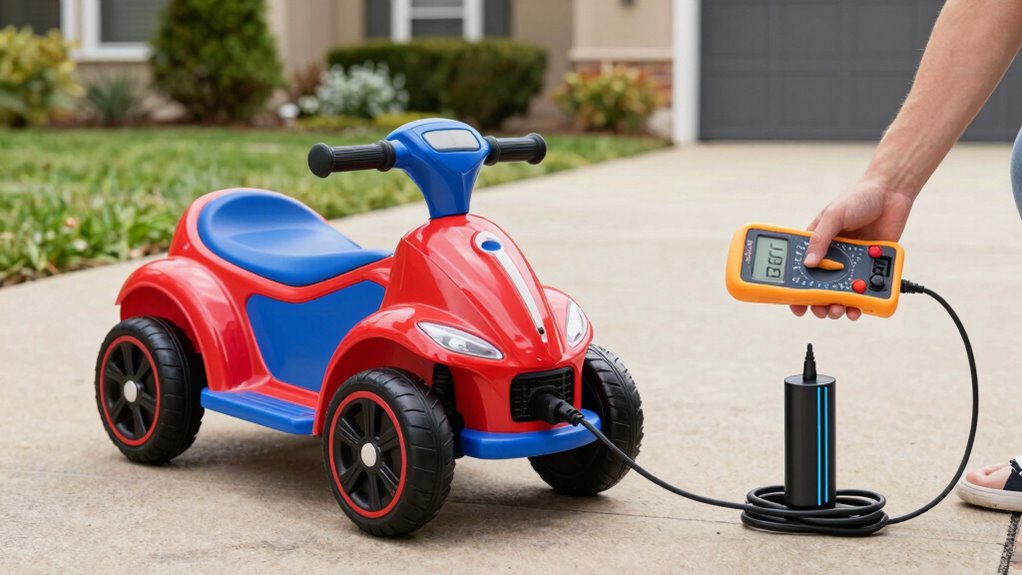

To safely charge your kid’s ride-on battery, aim for about 8-12 hours, following the manufacturer’s instructions. Avoid overcharging by unplugging once fully charged, and check for signs like overheating or swelling. Using the correct charger and monitoring the battery’s temperature helps prevent damage. Regularly inspecting terminals and understanding charging indicators ensures a long-lasting battery. Keep these tips in mind, and you’ll find how best to safeguard the battery’s health over time.

Turn the school run and nap time into listening time
- Thousands of audiobooks, podcasts and originals
- Listen on your phone, tablet or Echo — also offline
- Cancel anytime
Key Takeaways
- Most kids’ ride-on batteries require 8-12 hours of charging for full capacity.
- Avoid overcharging; unplug the charger once the indicator shows full charge.
- Use only the recommended charger matching your ride-on’s voltage and capacity.
- Monitor battery temperature during charging; stop if overheating or swelling occurs.
- Check for signs of proper charging, such as consistent ride time and normal motor performance.
As an affiliate, we earn on qualifying purchases.
Why Proper Charging Habits Help Your Kids’ Ride-On Battery Last Longer
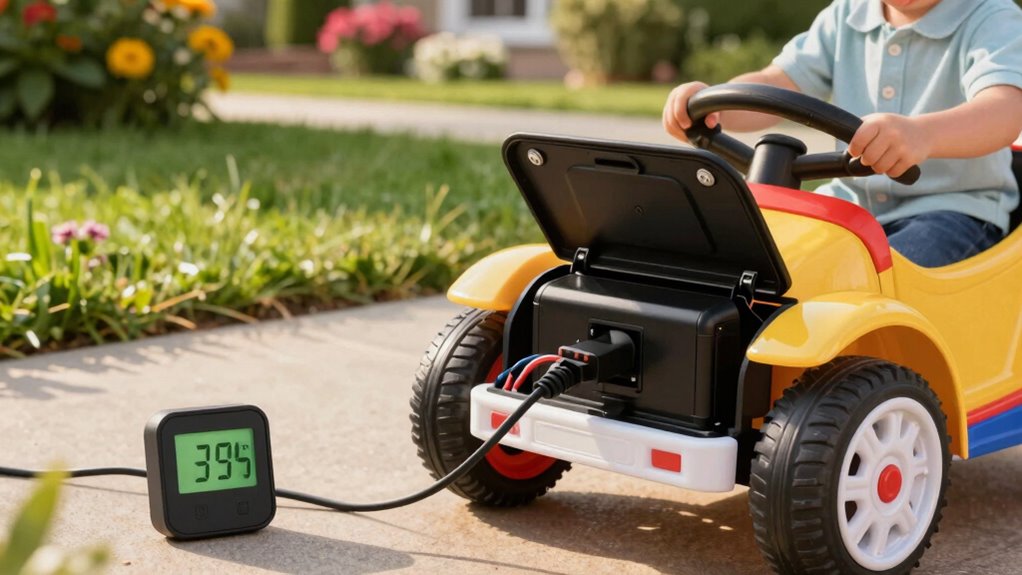
Proper charging habits are essential because they directly impact the lifespan of your kids’ ride-on battery. Good battery maintenance ensures that the battery stays in peak condition, preventing premature failure. Always use the recommended charger and avoid overcharging, which can damage internal components. Charging safety is equally important—never leave the battery unattended while charging, and keep it in a well-ventilated area to prevent overheating. Regularly inspecting the battery for signs of damage or corrosion helps catch issues early. Implementing a consistent charging routine can help maintain optimal battery health and performance. Understanding battery capacity and how it affects charging time can help you optimize battery longevity. Proper charging routines also reduce the risk of overheating or damaging the battery cells. Additionally, understanding the importance of proper storage can further extend your battery’s lifespan, especially during periods of non-use. Taking these steps not only prolongs the battery’s life but also keeps your child’s ride-on safe to use. Developing consistent charging routines ensures the battery remains reliable, saving you money on replacements and repairs over time. Additionally, following proper battery maintenance practices can significantly enhance overall performance and longevity.
How Long Should You Charge a Kids’ Ride-On Battery?
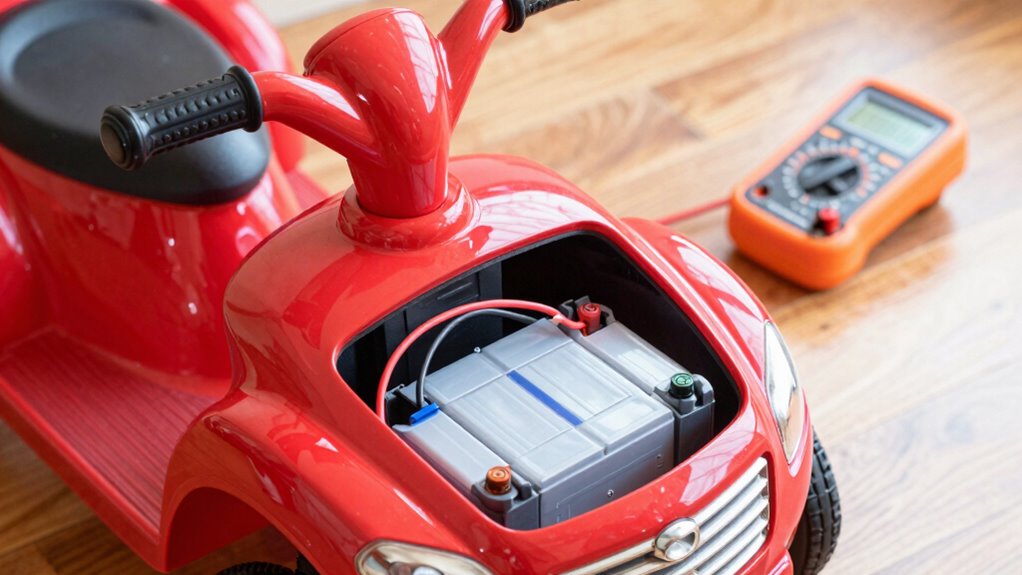
Knowing the right charging time for your kid’s ride-on battery helps prevent damage and extends its life. Typically, there’s a suitable duration you should aim for, but overcharging can cause issues. Watch for signs like overheating or swelling to avoid harming the battery. Proper charger settings and adhering to the recommended low-voltage cutoff are also crucial for maintaining battery health. Additionally, understanding battery capacity can help you determine the appropriate charging duration based on the watt-hours needed. Ensuring the charger matches the battery voltage specifications can further protect the battery from potential harm during charging. Being aware of the charging cycle can also improve the longevity of the battery by preventing unnecessary wear. Moreover, keeping the contrast ratio balanced in your setup can help monitor the overall performance of your charging environment.
Optimal Charging Duration
Determining the right charging time for a kids’ ride-on battery is essential to guarantee safety and maximize battery life. Generally, most batteries need about 8-12 hours of charging to reach full capacity. Overcharging can lead to reduced battery lifespan, so it’s important to follow manufacturer guidelines. Always check charger compatibility to ensure it matches your ride-on’s battery specifications; using the wrong charger can cause damage or shorten battery life. If your battery needs frequent replacement, it’s a sign you might be overcharging or not charging correctly. To avoid this, stick to recommended charging durations and avoid leaving the battery plugged in overnight. Proper charging habits help preserve your battery’s longevity and keep your child’s ride-on running smoothly. Additionally, understanding battery maintenance best practices can further extend the life of your ride-on’s power source. Regularly monitoring the battery’s temperature during charging can prevent overheating and potential damage. Being aware of Glycolic Acid benefits and application tips can also be beneficial for maintaining healthy skin, especially when exposed to environmental factors that may cause skin issues.
Signs of Overcharging
Overcharging a kids’ ride-on battery can cause more harm than good, leading to reduced battery life and potential safety hazards. Signs of overcharging include the battery becoming excessively hot during or after charging, which indicates strain on its components. You might also notice the charger’s indicator light staying green or on continuously, signaling that the battery is still drawing power beyond its capacity. Swelling or bulging of the battery case is another warning sign, risking leaks or failure. To maintain proper battery health, always follow recommended charging times and avoid leaving it plugged in overnight. Proper battery maintenance and charging safety practices extend the lifespan of your ride-on’s battery and ensure safe, reliable operation for your kids.
How Can You Tell When Your Kid’s Ride-On Needs More or Less Charging?
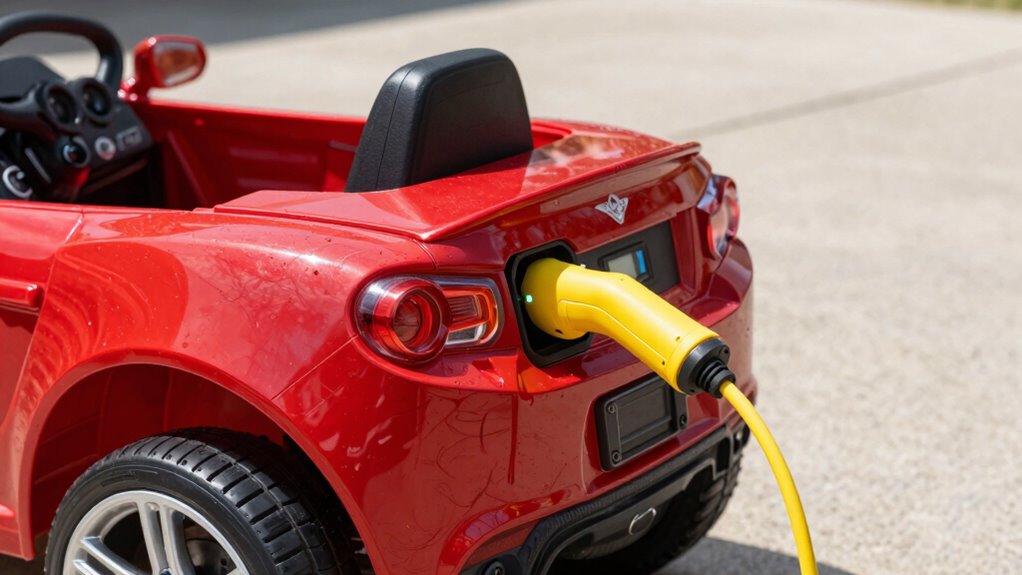
You can tell your kid’s ride-on needs more or less charging by checking the battery voltage indicators or watching how it performs. If the motor runs sluggish or stops early, it might need a longer charge. Conversely, if it runs smoothly and lasts longer than usual, it could be overcharged or ready to go. Monitoring battery health regularly helps maintain optimal performance and prolongs the lifespan of the ride-on. Additionally, understanding the charging cycle and how it affects the battery can help prevent overcharging and ensure the ride-on operates safely and efficiently. Being aware of the timing of charges can also prevent premature battery wear and extend overall usage time. Recognizing proper charging practices can further optimize the battery’s longevity. Knowing the conversion between units can also assist in estimating remaining battery capacity when dealing with large numbers.
Battery Voltage Indicators
Ever wonder how to tell if your kid’s ride-on is fully charged or needs a boost? Checking the battery voltage is your best bet. A healthy battery maintains voltage stability, meaning it stays consistent under load. If you notice the voltage drops considerably during operation, it could indicate declining battery health. Many ride-ons have built-in voltage indicators—LED lights or digital displays—that show the current voltage level. A fully charged battery typically reads around 12.6 volts for a 12V system. If the voltage is much lower, it signals that the battery needs more charging or might be aging. Regularly monitoring voltage helps you avoid undercharging or overcharging, both of which can harm the battery’s longevity and performance. Proper battery maintenance practices can also help in maintaining the overall health of your device’s storage system. Keep an eye on these indicators for ideal ride-on operation.
Motor Performance Clues
When the ride-on’s motor isn’t performing as smoothly as it normally does, it often signals that the battery may need more or less charging. You can gauge this by paying attention to motor performance clues.
- If the motor struggles to start or hesitates, it could indicate low battery voltage, which affects motor efficiency and shortens battery longevity.
- If the ride-on slows down considerably or stalls under normal load, it suggests the battery isn’t delivering enough power.
- If you notice increased noise or vibrations, it might be a sign that the motor is working harder due to insufficient charge, risking damage over time. Monitoring these signs helps verify proper charging habits, safeguarding both motor performance and battery longevity. Proper battery maintenance techniques can also extend the overall lifespan of the ride-on’s power system.
- Additionally, proper maintenance techniques can help ensure the battery stays in optimal condition and prevents premature wear, especially by avoiding overcharging which can harm the battery’s health.
Charging Duration Signs
Monitoring how long a ride-on runs on a single charge offers clear clues about whether the battery has enough power or needs charging. If your child’s ride-on stops sooner than usual, it might indicate the battery’s battery lifespan is shortening or it’s nearing the end of its charging cycles. Conversely, longer run times suggest the battery is healthy. Keep an eye on these signs to avoid overcharging, which can harm the battery. Use this table to identify the signs:
| Run Time | Battery Health | What to Do |
|---|---|---|
| Shorter than usual | Reduced battery lifespan | Charge it fully, check for issues |
| Consistent & long | Good battery condition | Continue regular charging |
| Sudden drops | Fewer charging cycles | Consider replacing the battery |
Regular monitoring helps extend your ride-on’s battery lifespan.
Tips for Charging Your Kids’ Ride-On to Maximize Battery Life
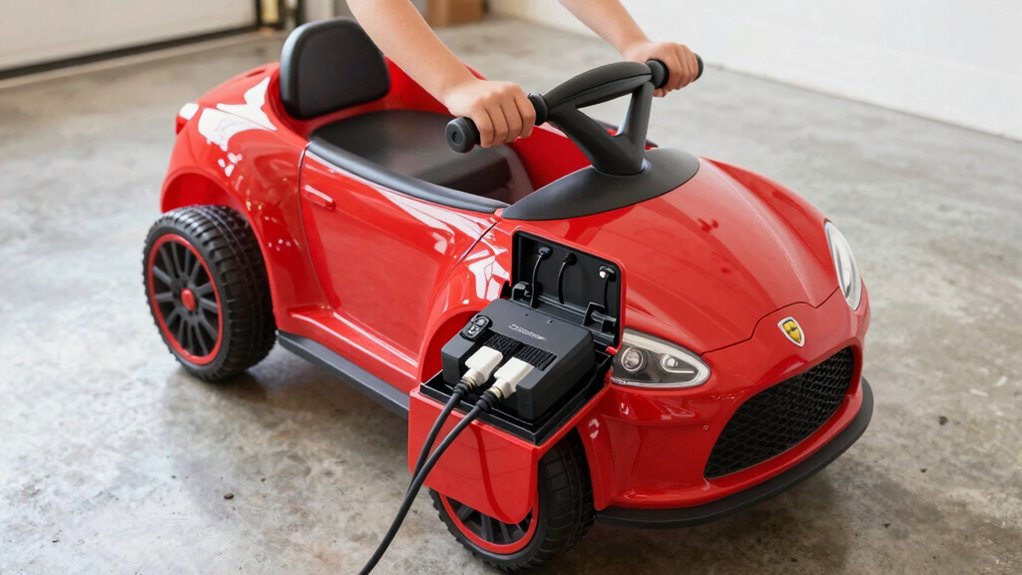
To keep your kids’ ride-on vehicle running smoothly for longer periods, proper battery maintenance is essential. First, always use the recommended charging accessories to ensure compatibility and prevent damage. Second, avoid overcharging by unplugging the battery once it’s fully charged; this prolongs battery life. Third, regularly check the battery’s condition and clean terminals with a dry cloth to maintain peak performance. Proper storage also matters: keep the vehicle in a cool, dry place and avoid extreme temperatures. Consistent, careful charging practices prevent unnecessary wear and extend the overall lifespan of the battery. By following these simple tips, you’ll maximize your ride-on’s battery life and keep your child happily riding for longer.
Common Mistakes That Can Damage Your Ride-On Battery
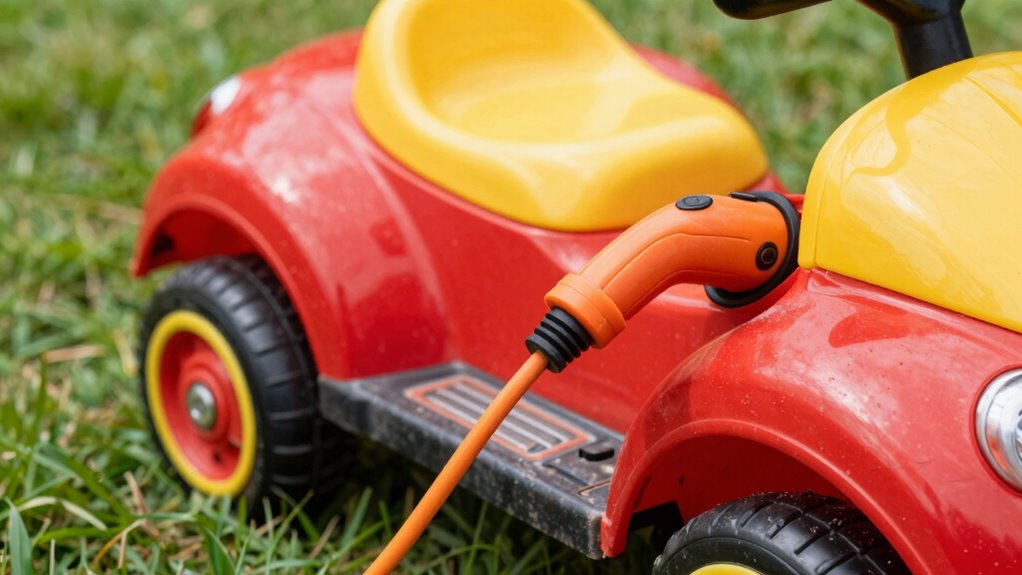
Avoiding common mistakes is essential to preserving your ride-on battery’s health. Charging improperly can shorten its battery lifespan and compromise safety. One mistake is overcharging—leaving the battery plugged in after full charge damages the cells. Using incompatible chargers can also harm the battery or pose safety risks. Additionally, letting the battery completely drain repeatedly wears it out faster. To help, here’s a quick guide:
| Mistake | Effect | Solution |
|---|---|---|
| Overcharging | Reduces battery lifespan | Unplug once fully charged |
| Using incompatible chargers | Damages battery, safety risk | Use manufacturer-recommended chargers |
| Deep discharges | Accelerates wear | Charge before fully draining |
| Ignoring charging safety tips | Risks safety hazards | Follow safety guidelines |
Avoid these mistakes for longer-lasting, safer rides.
Setting Up a Safe and Effective Charging Routine
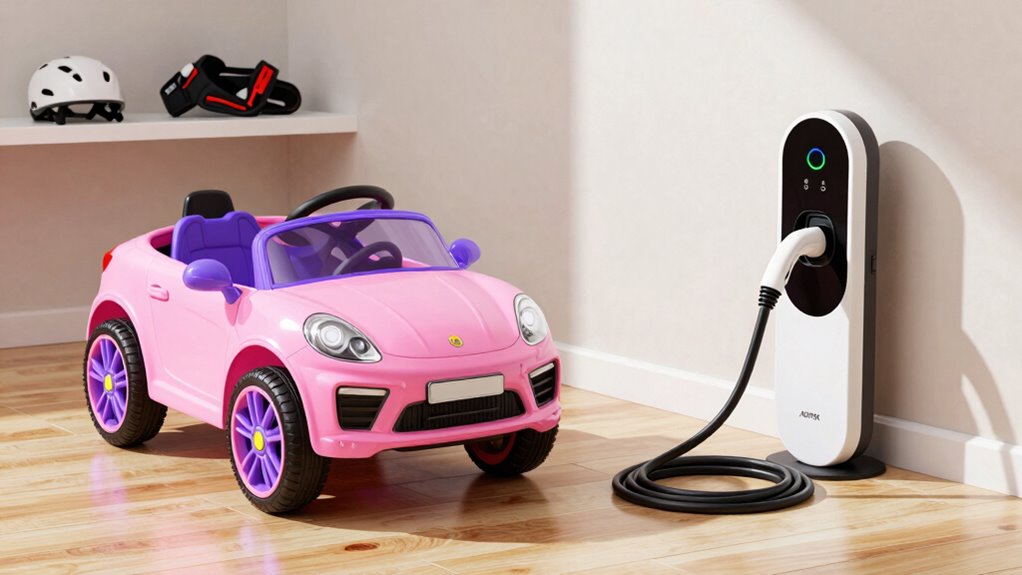
Establishing a safe and effective charging routine is vital to prolong your ride-on battery’s life and guarantee safe operation. To maximize battery longevity and assure charging safety, follow these steps:
- Set a consistent schedule, charging the battery only when needed and avoiding overcharging.
- Use the charger provided by the manufacturer to prevent damage and ensure proper voltage.
- Monitor the charging process closely, unplugging once the battery reaches full capacity to prevent overheating and damage.
Troubleshooting Charging Problems: What to Do When Your Ride-On Won’t Charge
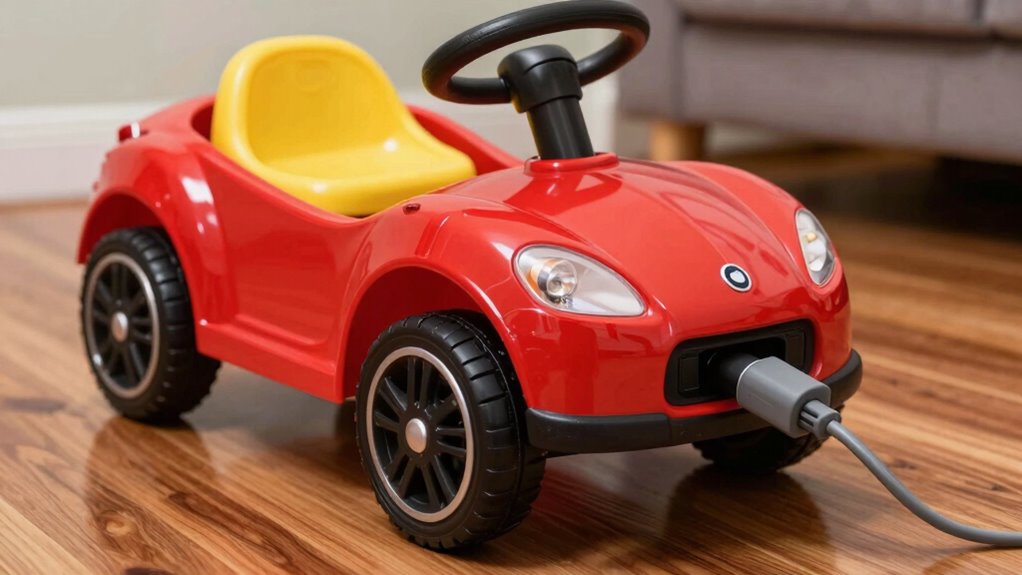
When your ride-on vehicle won’t charge, it can be frustrating, but troubleshooting the problem step by step can help you identify and resolve the issue quickly. Start by checking the charging frequency; if you’re charging too often or not enough, the battery may not hold a charge. Confirm the charger is plugged in correctly and the outlet works. Inspect the battery for signs of wear or corrosion—proper battery maintenance is key to longevity. If the battery appears damaged, it may need replacing. Also, verify the charger itself isn’t faulty by testing it with another device. Regularly maintaining the battery’s health and following recommended charging routines can prevent future issues and keep your ride-on running smoothly.
Frequently Asked Questions
Can Overcharging Harm My Kid’s Ride-On Battery?
Yes, overcharging can harm your kid’s ride-on battery. It shortens the battery lifespan and impacts charging safety. To avoid this, unplug the battery once it’s fully charged, usually after 8-12 hours. Using the correct charger and following manufacturer instructions help prevent overcharging. Regularly monitoring the charging process guarantees safety and keeps the battery in good condition, giving your child longer-lasting, safer fun.
How Often Should I Fully Discharge and Recharge the Battery?
Think of your kid’s ride-on battery as a delicate plant that needs just the right care. You should aim to fully discharge and recharge it every 20-30 charging cycles to maximize battery lifespan. Avoid frequent deep discharges, as they can shorten the battery’s life. Regularly maintaining proper charge levels helps make sure the battery stays healthy and performs well over time, keeping your child’s fun ride running smoothly.
Is It Safe to Leave the Battery on the Charger Overnight?
It’s generally safe to leave the battery on the charger overnight if you follow proper battery maintenance and charging safety. Most chargers have automatic shut-off features that prevent overcharging, protecting the battery from damage. However, always check your ride-on’s manual for specific instructions. Keeping an eye on the charging process guarantees you avoid potential risks, prolongs battery life, and keeps your child’s ride-on in good working condition.
What Temperature Conditions Affect Charging Efficiency?
You should keep your kids ride-on battery in a temperature-controlled environment because extreme temperatures, especially cold or hot weather, impact charging efficiency. When battery storage is exposed to high heat, it risks damage and reduced lifespan, while cold temperatures can slow down charging and decrease performance. To guarantee ideal charging, store and charge your ride-on in a moderate temperature setting, typically between 50°F and 77°F, for the best battery health.
Are There Specific Chargers Recommended for Different Ride-On Models?
You should check the manufacturer’s guidelines for charger compatibility to guarantee you use the right one for your ride-on. Many brands recommend specific chargers designed for their models to prevent damage and ensure safe charging. Stick to brand recommendations or compatible chargers with the correct voltage and connectors. Avoid third-party chargers unless confirmed compatible, as using the wrong charger can harm your ride-on’s battery and reduce its lifespan.
Conclusion
By following these charging tips, you’ll keep your child’s ride-on battery in great shape for years to come. Don’t worry about forgetting to unplug it—you’ll notice the gentle beep signaling it’s ready, making maintenance simple. Imagine your kid happily zooming around, knowing their ride-on is always charged securely and efficiently. With just a little care, you’ll ensure endless, worry-free fun, and your kid’s adventurous rides will stay powerful and safe every time.
Halloween Picks
halloween
As an affiliate, we earn on qualifying purchases.