
Ride-on toys boost your child’s gross motor skills by encouraging active play that develops their balance, coordination, and core strength. As they push, steer, and glide, they improve body stability and muscle control, which supports overall physical growth. These toys also refine motor planning and spatial awareness, building confidence with every movement. Keep exploring, and you’ll discover more ways ride-on toys help your child strengthen essential skills for life.
Key Takeaways
- Ride-on toys promote balance and stability, enhancing overall gross motor skills through active body engagement.
- They strengthen core muscles essential for maintaining posture and supporting movement development.
- Using ride-on toys improves coordination by involving pushing, steering, and maneuvering actions.
- Regular play encourages exploration of movement, boosting motor control and physical endurance.
- Confidence gained from riding supports further motor skill development and active participation in physical activities.
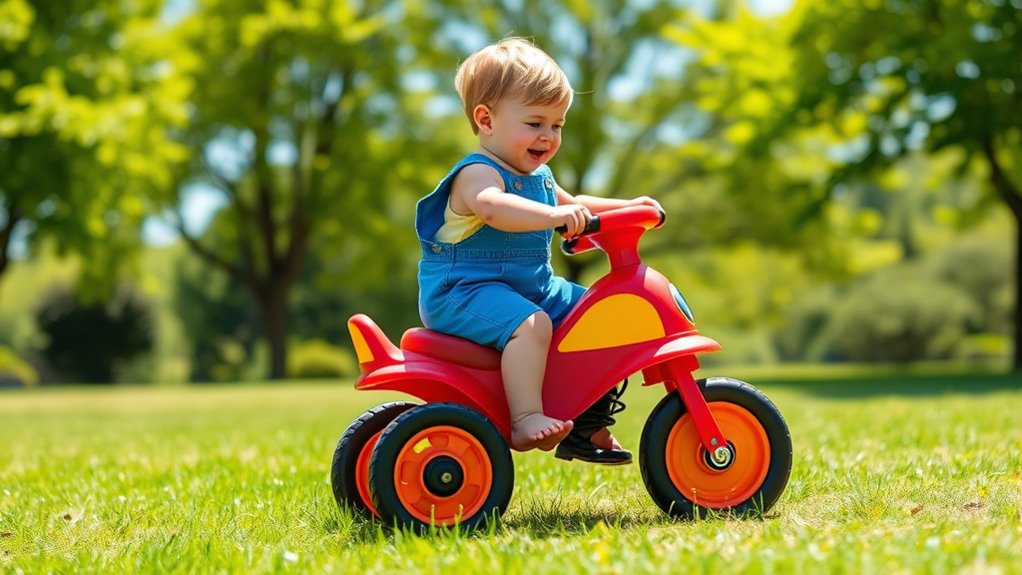
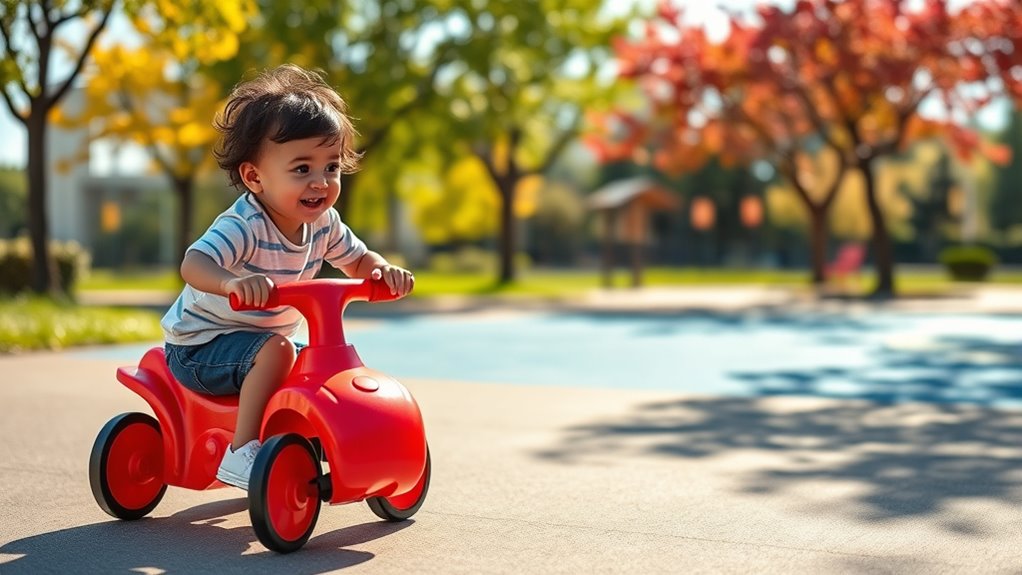
Ride-on toys are more than just fun accessories; they are effective tools for promoting your child’s gross motor skill development. When your little one hops onto a ride-on, they aren’t just playing—they’re actively building key physical abilities. One of the main benefits is balance improvement. As they push off and glide forward, they learn to stabilize their body on a moving object, which helps strengthen their core muscles and enhances their overall sense of equilibrium. This process encourages them to adjust their body position in real-time, fostering better posture and stability that will translate to other physical activities. Over time, as they become more confident with balancing on their ride-on, you’ll notice a natural improvement in their ability to stay upright and steady during other tasks, like walking or climbing.
Ride-on toys boost balance, core strength, and stability through active, engaging play.
Coordination enhancement is another essential aspect of using ride-on toys. When your child pushes with their feet, steers, or turns, they’re engaging multiple muscle groups and brain functions simultaneously. This multisensory activity helps develop hand-eye and foot-eye coordination, which are essential skills for everyday tasks. For instance, steering a ride-on requires them to visually track their direction and adjust their movements accordingly, sharpening their spatial awareness. The act of controlling speed and maneuvering around obstacles also fine-tunes their motor planning and timing. As they practice these skills, they learn to synchronize their movements more precisely, which benefits activities such as drawing, writing, or participating in sports. Additionally, incorporating headphones can make indoor play more enjoyable and focused, supporting their engagement in physical activities.
Using ride-on toys regularly encourages your child to explore movement in a safe environment, giving them the confidence to try more complex physical actions. You’ll see improvements in how they coordinate their limbs and balance their body, which are foundational for gross motor development. Plus, the act of propelling themselves forward or turning around helps them develop muscle memory and control, essential for more advanced physical skills later on. The physical effort involved in pushing and steering also boosts their endurance and strength, supporting overall motor development.
Incorporating ride-on toys into your child’s playtime routines offers a practical, engaging way to foster essential motor skills. With each ride, they’re not only having fun but actively improving their balance and coordination—skills that are critical for their growth and independence. As they grow more proficient, their confidence in their physical abilities will flourish, laying a strong foundation for future physical activities and healthy development.
ride-on toy for gross motor skills development
As an affiliate, we earn on qualifying purchases.
As an affiliate, we earn on qualifying purchases.
Frequently Asked Questions
When Should My Child Start Riding on Toys?
You can start letting your child ride on toys around age one, as soon as they can sit steadily and have basic balance development. These toys help improve foot coordination and strengthen muscles. Always supervise their play and choose age-appropriate options. By providing ride-on toys early, you support their gross motor skills growth, making it easier for them to develop better balance and coordination as they grow.
Are Ride-On Toys Suitable for All Outdoor Terrains?
Hold onto your petticoats—ride-on toys aren’t suited for all outdoor terrains. You need to check terrain compatibility because uneven or rough surfaces can make riding unsafe or difficult. For surface safety, smooth, flat surfaces like concrete or asphalt are ideal. Avoid gravel, grass, or dirt paths where wheels may get stuck or tip over. Always supervise your child and choose terrain that keeps them safe and confident while playing.
How Can I Encourage Safe Riding Habits?
You can encourage safe riding habits by always making sure your child wears a helmet to protect their head. Supervision tips like watching them closely and setting clear boundaries help prevent accidents. Teach your child to ride at a safe speed, avoid uneven surfaces, and stay alert to their surroundings. Reinforce good habits consistently, and praise them for following safety rules to build responsible riding behavior.
What Are the Best Ride-On Toys for Different Age Groups?
Imagine your toddler mastering balance training and coordination enhancement on a sturdy, age-appropriate ride-on toy like a push car. For younger children, choose low-slung models with easy-to-grip handles to foster safe riding habits. As they grow, opt for larger, pedal-powered bikes or scooters that challenge their skills further. These toys support gross motor development, helping your child build confidence and coordination at every stage.
How Do Ride-On Toys Compare to Other Gross Motor Activities?
Ride-on toys help you develop balance, coordination, and muscle strength more actively than some other gross motor activities. When kids push, pedal, or steer, they engage multiple muscle groups and refine their motor skills. Unlike stationary activities, ride-on toys encourage movement and exploration, making them an effective way to build core stability and coordination while keeping your child engaged and physically active.
children's balance and coordination ride-on toy
As an affiliate, we earn on qualifying purchases.
As an affiliate, we earn on qualifying purchases.
Conclusion
As you encourage your child to play with ride-on toys, you’re helping them build essential gross motor skills. Did you know that kids who regularly use ride-on toys tend to develop stronger balance and coordination by age three? Keep supporting their active play, and you’ll see them grow more confident and agile each day. Your involvement makes a big difference in their physical development, turning playtime into a fun, skill-building adventure.
kids push and steer ride-on toy
As an affiliate, we earn on qualifying purchases.
As an affiliate, we earn on qualifying purchases.
indoor ride-on toy for active play
As an affiliate, we earn on qualifying purchases.
As an affiliate, we earn on qualifying purchases.