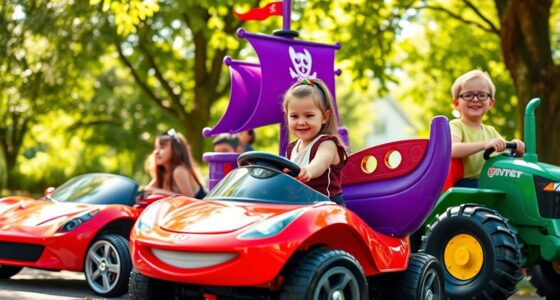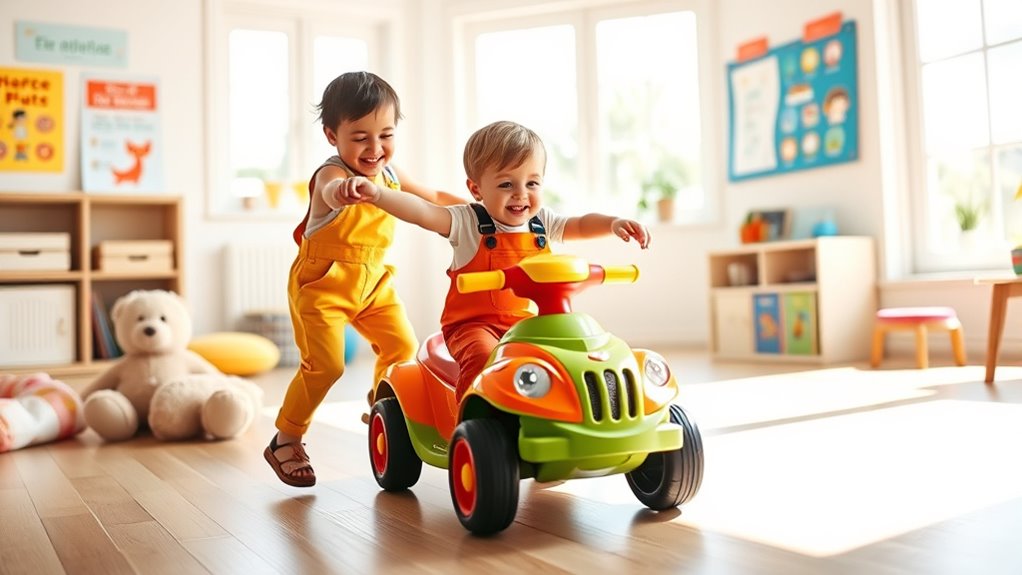

Ride-on play helps you support your child’s gross motor milestones by encouraging muscles development, balance, and coordination. When they push off the ground and steer, they build leg and core strength while gaining body awareness. They also improve their posture, endurance, and confidence through active exploration. As your child masters turning, stopping, and maneuvering, they prepare for more advanced skills like jumping and running. Keep going to discover even more ways ride-on play boosts physical growth.
Key Takeaways
- Promotes muscle development and balance as children push off the ground while riding.
- Enhances coordination and spatial awareness through steering and maneuvering.
- Strengthens leg and core muscles during active propulsion and control.
- Improves balance, endurance, and confidence with sustained movement and exploration.
- Supports mastery of gross motor skills like climbing, jumping, and running through active practice.
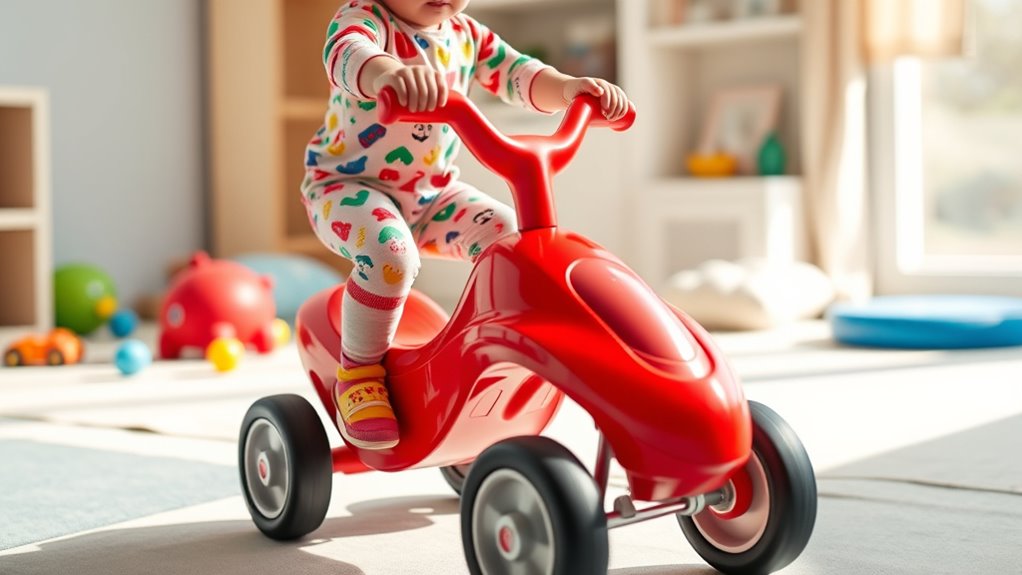
Have you ever wondered how a baby’s ability to move develops over time? It’s fascinating to watch as your little one progresses through various stages of gross motor development, gaining strength, coordination, and confidence. One of the most exciting ways to support this growth is through ride-on play. These toys aren’t just fun; they’re powerful tools that encourage your child to practice essential movements like balancing, steering, and pushing, which are vital for their motor milestones.
Supporting your child’s gross motor skills with ride-on toys boosts strength, coordination, and confidence.
When your baby first starts using a ride-on toy, typically around 12 months, they begin to develop their leg muscles and improve their balance. At this stage, they learn to push off the ground and propel themselves forward, which helps strengthen their legs and improves coordination. As they grow more confident, they start to understand how to steer and control the direction of the ride-on, refining their hand-eye coordination and spatial awareness. This process helps them develop crucial skills like controlled movement and body awareness, laying a foundation for walking and running.
Using a ride-on toy also encourages your child to experiment with different speeds and movements, which promotes muscle development and stability. As they push themselves along, they activate their core muscles and improve their overall posture. This activity not only supports gross motor skills but also boosts their confidence in their physical abilities, making them more eager to explore their environment. When they start to turn, stop, or climb aboard a ride-on, they learn to coordinate multiple muscle groups simultaneously, which is essential for complex movements like climbing stairs or hopping.
As your child approaches age two and beyond, ride-on toys help refine their balance and endurance. They begin to develop a sense of rhythm and timing, especially when maneuvering around obstacles or navigating uneven surfaces. This type of active play also encourages independence, as your child learns to control their movements without constant assistance. The more they practice steering and balancing, the better they become at mastering gross motor tasks such as running, jumping, and climbing. These milestones are essential for their overall physical development, and ride-on play provides a safe, engaging way to reach them.

Garvee 12V Kids Ride On Truck Car with Remote Control - Electric Ride On Toys for Toddlers, Spring Suspension, 3 Speeds, LED Lights, Bluetooth Music & Parent Safety Brake
✅ Dual Protection Safety System: Parent-controlled remote with 300 ft range instantly stops this ride-on truck via brake...
As an affiliate, we earn on qualifying purchases.
Frequently Asked Questions
When Should a Child Start Using Ride-On Toys?
You can start your child on ride-on toys around age one, as soon as they can sit up steadily and have enough balance to push themselves forward. Make certain they’re supervised closely to prevent falls or injuries. As they grow, ride-on toys help develop their gross motor skills, coordination, and confidence. Choose age-appropriate, stable models, and encourage them to explore and practice movement safely to support their development.
Are Ride-On Toys Suitable for All Developmental Stages?
Ride-on toys aren’t suitable for all developmental stages. You should consider your child’s age, coordination, and strength before introducing them. For younger toddlers, push-powered or stable ride-ons work best, helping develop balance and motor skills. As your child grows, they can use more advanced, pedal-powered options. Always supervise play and make sure the toy matches their abilities to promote safe, enjoyable gross motor development.
How Can Ride-On Play Improve Balance and Coordination?
Ride-on play helps improve your child’s balance and coordination by encouraging them to stabilize themselves while moving. As they push, steer, and navigate turns, they strengthen core muscles and develop spatial awareness. This active engagement challenges their balance, making their movements more controlled over time. You’ll notice increased confidence as your child learns to coordinate their limbs and maintain stability during play, supporting their overall motor development.
What Safety Precautions Are Needed During Ride-On Play?
Think of ride-on play as a bustling city street—you need safety measures to keep everyone safe. Always supervise your child closely, ensuring they wear a helmet and protective gear. Check the ride-on for loose parts and smooth surfaces before use. Keep the play area clear of obstacles, and teach your child to ride safely. These precautions turn playtime into a safe adventure, helping your little one grow confidently.
How Do Ride-On Toys Support Independence in Toddlers?
Ride-on toys help you foster your toddler’s independence by encouraging them to explore their surroundings and make choices. As they practice steering, start, and stopping, they build confidence in their abilities. You’ll notice them gaining better balance and coordination, which promotes self-reliance. By allowing your child to control their ride, you support their growing sense of autonomy, setting the stage for further motor skill development and independence.

Hotsolo 12V Ride on Car Truck, Power Wheels with Parent Remote Control, Shock Absorbers, Bluetooth, Music, Led Lights, Ride on Toy for Kids Ages 3-8, Blue UTV for Boys
[No More Bumps & Bruises!] Built tough for adventure, this kids ride on car features a full roll...
As an affiliate, we earn on qualifying purchases.
Conclusion
As you encourage your child to explore ride-on play, you’re helping them reach gross motor milestones like a gardener nurturing a blooming flower. Each ride builds strength, balance, and coordination, setting the foundation for future skills. Keep supporting their adventures, and watch as they grow stronger and more confident, just like a tree stretching towards the sun. Your involvement makes a difference—you’re guiding their journey, one joyful ride at a time.

Best Choice Products Kids 12V Electric Ride On UTV Car and Trailer w/Parent Control, LED Lights, 2 Speeds, Bluetooth - Red
DETACHABLE TRAILER: Kids can easily pack and haul their favorite toys and games with a high-capacity bed that's...
As an affiliate, we earn on qualifying purchases.

Hikiddo 2 Seater Ride on Toy Car for Kids, 24V 4x4 Ride-on Truck Kids Electric Car w/Remote Control, 4x200W Motors - Hot Pink
POWERFUL PERFORMANCE: This 24V big kids ride-on car with remote features strong 4x200W motors. The switchable 2WD/4WD mode...
As an affiliate, we earn on qualifying purchases.