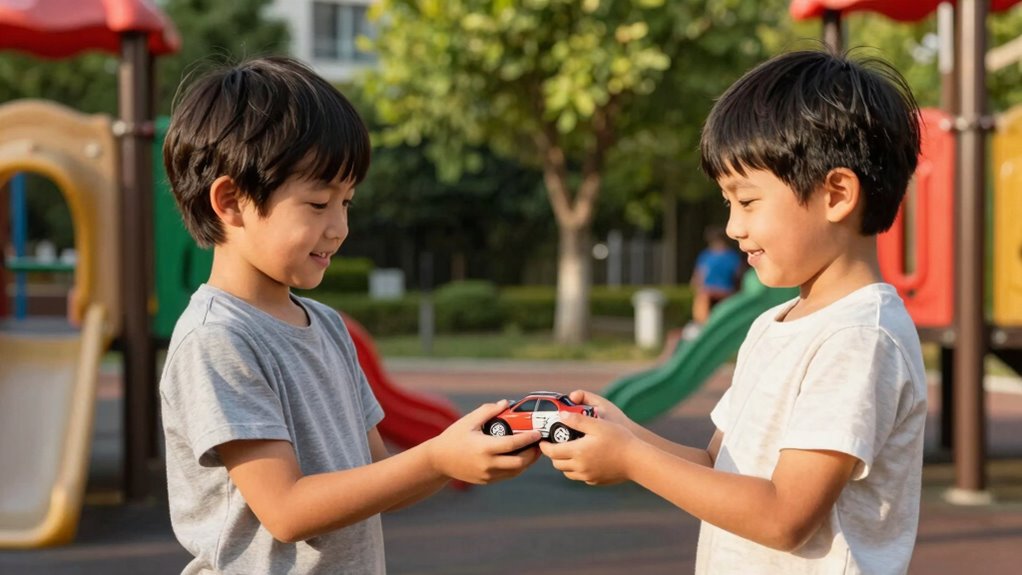

To teach grace and courtesy for shared paths and toys, model respectful behaviors like sharing, patience, and using kind words. Acknowledge children’s feelings when conflicts arise, helping them recognize and label emotions such as frustration or happiness. Teach them to communicate their needs calmly, listen to others, and negotiate solutions. Establish clear routines and rules about taking turns, and praise respectful interactions. If you want simple strategies to help children develop these important social skills, keep exploring.

Turn the school run and nap time into listening time
- Thousands of audiobooks, podcasts and originals
- Listen on your phone, tablet or Echo — also offline
- Cancel anytime
Key Takeaways
- Model respectful sharing by demonstrating patience and kindness when children take turns with toys.
- Teach children to use polite words like “May I,” “Please,” and “Thank you” during shared play.
- Encourage children to express their feelings and listen to others’ perspectives to foster empathy.
- Establish clear routines and rules about sharing, waiting, and asking politely to promote consistency.
- Reinforce positive behavior with praise to motivate children to practice grace and courtesy during shared activities.
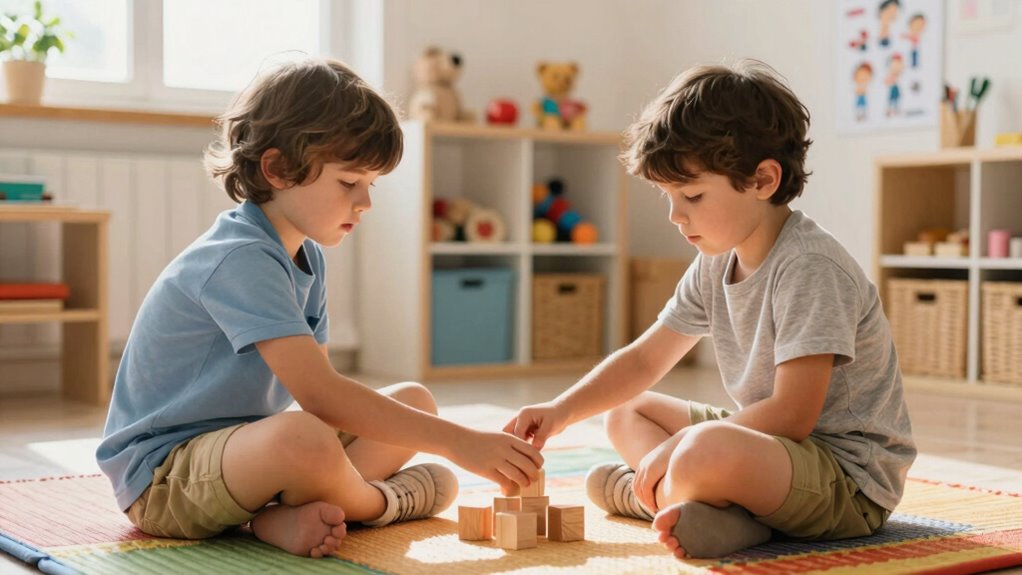
Learning to share both paths and toys can be challenging for young children, but teaching them grace and courtesy makes the process smoother. When you guide your child through sharing, you’re helping them develop essential skills like empathy development and conflict resolution. These skills are foundational for healthy social interactions and emotional growth, and your role in nurturing them is vital.
Start by modeling respectful behavior yourself. When you share your own belongings or demonstrate patience during conflicts, your child observes how to handle situations calmly and kindly. Use simple language to explain feelings and actions, like saying, “I see you’re upset because your friend took your toy. It’s okay to feel that way, but let’s find a way to share.” This helps your child recognize and label their emotions, fostering empathy development. As they become more aware of others’ feelings, they’ll be better equipped to resolve conflicts without frustration or aggression.
Model respectful behavior and use simple language to help children recognize and manage their emotions with empathy.
Encourage your child to express their feelings openly. When conflicts arise, instead of dismissing their emotions, validate them. For example, “It sounds like you’re feeling sad because your turn was skipped.” Validating emotions teaches your child that their feelings are important, which is a critical step in developing empathy. It also opens the door for constructive dialogue about sharing and taking turns. Recognizing empathy development as a foundational social skill can help you tailor your guidance to nurture emotional understanding. Incorporating conflict resolution strategies can further empower your child to navigate social interactions more effectively. Additionally, teaching children about emotional awareness can enhance their ability to recognize and manage their feelings in various situations. Building on this, incorporating positive reinforcement can motivate children to practice these skills consistently.
Teach specific conflict resolution strategies. Show your child how to use words to communicate, like “Can I have a turn next?” or “Please, I want to play with that too.” Reinforce the importance of listening to others’ perspectives. When they practice these skills, they learn to negotiate and find compromises, which reduces fighting and promotes cooperation. Praise their efforts to resolve disputes peacefully to reinforce positive behavior.
Creating a routine around sharing and courtesy also helps. For instance, establish clear rules about waiting for turns and asking politely. When your child follows these rules, acknowledge their effort. Consistency helps them internalize respectful behaviors and understand that kindness leads to better interactions. Over time, these lessons become second nature, making shared playtime more enjoyable for everyone.
In the end, your involvement in teaching grace and courtesy isn’t just about sharing toys or paths. It’s about guiding your child toward understanding others’ feelings, resolving conflicts peacefully, and building empathy that will serve them throughout life. With patience and intentional guidance, you’re helping them develop social skills that foster kindness, cooperation, and genuine connections with those around them. Recognizing the importance of techniques for teaching empathy can further enhance your approach to nurturing these vital skills.
Top picks for "shar grace courtesy"
As an affiliate, we earn on qualifying purchases.
Frequently Asked Questions
How Can I Introduce Sharing to Children Who Are Reluctant?
To introduce sharing to reluctant children, start by setting clear sharing boundaries and explaining why sharing matters. Use turn-taking techniques, like timers or prompts, to help them understand patience and fairness. Encourage positive reinforcement when they attempt to share, and model sharing behavior yourself. Keep activities simple and fun, gradually increasing complexity as your child becomes more comfortable. Patience and consistency are key to helping them embrace sharing.
What Are Effective Ways to Model Grace and Courtesy?
Remember, actions speak louder than words. To model grace and courtesy effectively, demonstrate respectful communication and empathy development daily. Use polite language, say “please” and “thank you,” and show patience when sharing toys or space. Children learn by watching you, so stay calm and kind even in challenging moments. Consistently showing these behaviors teaches them to mirror your respectful attitude, fostering a caring, courteous environment.
How Do I Handle Conflicts Over Shared Toys Calmly?
When conflicts over shared toys arise, stay calm and guide your child through conflict resolution. Remind them of sharing boundaries and encourage taking turns. Use gentle tones and validate their feelings, helping them express themselves. If tensions escalate, suggest a break or alternative activity. Modeling patience and respectful communication teaches your child how to handle disagreements calmly, fostering positive sharing habits and resolving conflicts effectively.
At What Age Should Children Start Learning Sharing Skills?
You should start teaching sharing skills around age two, as children begin to grasp sharing etiquette and social development. At this stage, they’re learning to take turns and understand others’ feelings. By introducing simple sharing activities and modeling respectful behavior, you help your child develop essential social skills. Consistent guidance and patience foster positive interactions, making sharing a natural part of their growing social understanding.
How Can I Encourage Patience During Sharing Activities?
Did you know that patience development in children can take several years? To encourage patience during sharing activities, use gentle reminders and set clear expectations. Implement sharing strategies like taking turns and offering praise when they wait patiently. Stay calm yourself, model patience, and avoid rushing. By consistently practicing these techniques, you help your child learn the valuable skill of patience, making shared play more enjoyable for everyone involved.
Conclusion
Practicing grace and courtesy helps children navigate shared spaces and toys smoothly, fostering respect and cooperation. When you teach them these skills early, you’ll see fewer conflicts and more positive interactions. Interestingly, studies show that children who learn social manners early are 30% more likely to develop better peer relationships later in life. By modeling patience and kindness, you set the foundation for lifelong social success, making shared experiences enjoyable for everyone involved.
Fall Picks
fall essentials
As an affiliate, we earn on qualifying purchases.