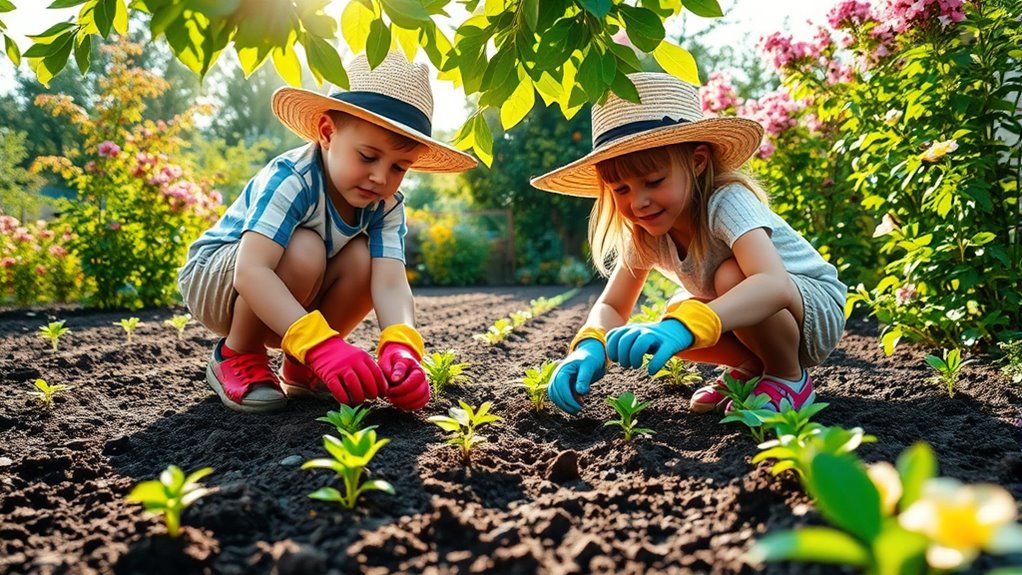

Gardening with kids is a wonderful way to introduce them to nature, responsibility, and sustainability. By actively involving them in preparing soil, planting seeds, and caring for plants, you help build their curiosity and environmental awareness. Natural pest management and soil health become fun lessons, showing how healthy soil leads to thriving plants. Keep exploring, and you’ll discover more ways to make gardening both educational and enjoyable for your little ones.
Key Takeaways
- Gardening with kids fosters curiosity, responsibility, and environmental awareness through hands-on planting and soil care activities.
- Involving children in soil preparation teaches them about soil health, microbes, and organic nourishment essential for plant growth.
- Teaching natural pest management with beneficial insects and companion plants promotes eco-friendly gardening habits.
- Regular garden maintenance tasks reinforce the importance of soil vitality for healthier, pest-resistant plants.
- Kids develop patience, problem-solving skills, and environmental responsibility by caring for plants and understanding the garden ecosystem.
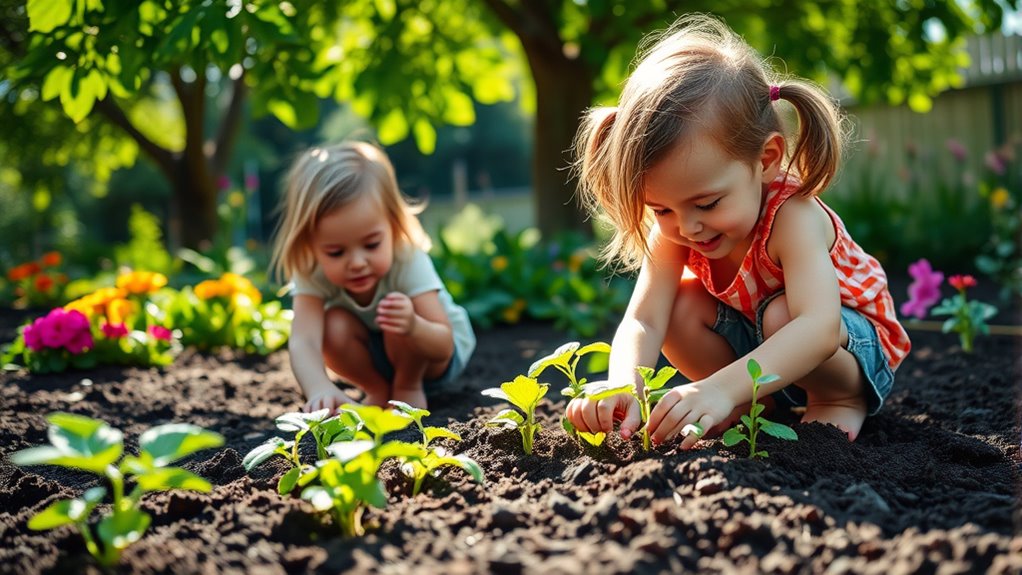
Gardening with kids is a rewarding activity that fosters their curiosity, responsibility, and love for nature. As you guide them through planting and caring for a garden, you teach valuable lessons about soil health and pest management. These lessons not only help children understand how plants grow but also instill respect for the environment and the importance of sustainable practices.
When starting out, involve your kids in preparing the soil. Explain that healthy soil is the foundation of a thriving garden. Show them how to loosen the earth, remove weeds, and add compost or organic matter. This hands-on approach helps children grasp the concept that soil isn’t just dirt—it’s a living system filled with beneficial microbes, earthworms, and nutrients that support plant growth. By understanding soil health, kids learn to appreciate the importance of nourishing the soil rather than relying on chemical fertilizers, which can harm the environment.
As you plant, talk about how pests can threaten plants but also emphasize natural pest management. Teach your children about beneficial insects like ladybugs and predatory beetles, which help control harmful pests without the need for chemicals. Show them how to attract these helpful bugs by planting companion plants or providing shelter in the garden. Encourage them to observe pests and recognize when they’re causing problems, reinforcing that pest management isn’t about eradication but balance. This insight fosters patience and problem-solving skills, as children learn to identify issues and take eco-friendly actions to protect their plants.
Throughout the gardening process, involve your kids in regular maintenance tasks like watering, mulching, and checking for pests. Use these moments to reinforce the importance of soil health—reminding them that healthy soil means fewer pests and better plants. Encourage them to notice how healthy plants resist diseases and pests better, linking the health of the soil to the health of the plants. Explain that maintaining soil vitality is an ongoing effort, and their care makes a real difference.

DUYOYU Kids Plant Growing Kit – Kids Greenhouse & Flower Growing Kit with Upgraded Irrigation & Grow Light – Perfect Gardening for Kids(Solar Green)
【Mini Garden Experience: Build, Plant, and Observe】Our kid gardening kit allows children to experience the entire plant growth…
As an affiliate, we earn on qualifying purchases.
As an affiliate, we earn on qualifying purchases.
Frequently Asked Questions
What Are the Safest Plants for Children to Grow?
When choosing plants for children, safety is key. You should pick child-friendly herbs like basil, mint, and chamomile, which are easy to grow and safe to handle. Additionally, opt for non-toxic flowers such as marigolds and sunflowers, which add color without risk. These plants not only keep your kids safe but also encourage their curiosity and love for gardening, making the experience both fun and educational.
How Can I Make Gardening More Engaging for Reluctant Kids?
If you think getting kids to garden is like convincing cats to take baths, think again! To make it exciting, you can create interactive activities like scavenger hunts or themed garden projects such as fairy gardens or dinosaur digs. These fun, hands-on approaches turn gardening into an adventure, sparking their curiosity and making reluctant kids enthusiastic to dig in. Before you know it, they’ll be planting, exploring, and loving every moment outdoors!
What Tools Are Best for Small Children in the Garden?
You should choose child-friendly gardening tools that are lightweight, small, and easy to handle. Look for tools with bright colors, blunt blades, and secure grips to guarantee garden tool safety. These tools make gardening more engaging and help kids develop confidence while keeping safety in mind. Always supervise their use, and teach them proper handling to foster a safe and enjoyable gardening experience.
How Do I Teach Kids About Composting and Sustainability?
Teaching kids about composting and sustainability is an adventure that could change the world! Start by showing them the incredible composting benefits—like turning trash into treasure—and explain how it helps our planet. Use fun activities like building mini compost bins or planting a sustainability garden. By making it interactive, you turn complex ideas into exciting lessons that instill eco-conscious habits and inspire the next generation of environmental heroes.
What Are Quick-Growing Plants Suitable for Beginner Young Gardeners?
For beginner young gardeners, quick-growing plants like radishes, lettuce, and sunflowers work well. You can design your garden bed to include these easy-to-maintain plants, making it visually appealing and functional. Focus on simple watering techniques, like consistent, gentle watering to keep the soil moist. This approach helps kids learn about garden bed design, plant growth, and proper watering, making gardening both fun and educational.

Islmlisa 8" Long Gardening Tools for Kids, 3-Piece Kids Garden Tools with Rake,Shovel and Trowel
Three Unique Garden Tools For Kids; Also Great Toddler Garden Tools.
As an affiliate, we earn on qualifying purchases.
As an affiliate, we earn on qualifying purchases.
Conclusion
As you nurture your garden with your kids, you’re planting more than seeds—you’re cultivating curiosity, patience, and joy. Each sprout becomes a symbol of growth, echoing the lessons you share together. Watching tiny seedlings burst into life mirrors the blossoming of young minds, full of wonder and potential. So, keep tending your garden with love and care, for in doing so, you’re sowing lifelong memories and inspiring roots that will flourish long after the last blossom fades.

Back to the Roots 100% Organic Potting Mix (Value 12 Quart) | Premium Blend | Made in the USA
Includes 12qt of Back to the Roots Premium Blend Potting Mix. 100% Organic and Peat-Free, made from upcycled…
As an affiliate, we earn on qualifying purchases.
As an affiliate, we earn on qualifying purchases.

Live Beneficial Nematodes Hb+Sc+Sf – Kills Over 200 Different Species of Soil Dwelling and Wood Boring Insects. (5 Million_Nematodes)
Check the "Guide" under images to determine which nematodes you need
As an affiliate, we earn on qualifying purchases.
As an affiliate, we earn on qualifying purchases.