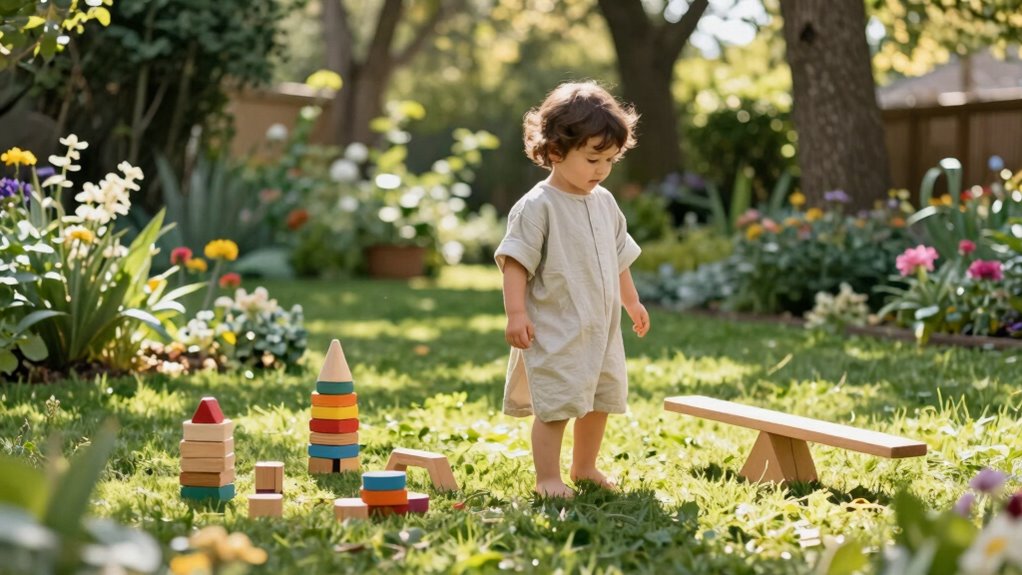
As a parent, you can give your child the freedom to explore outdoors while setting simple, clear boundaries. These limits help your child assess risks, make decisions, and build confidence and independence. Boundaries are tools for teaching responsibility and judgment, supporting growth and resilience. When combined with guidance and modeling responsible behavior, boundaries create a safe space for discovery. Keep exploring, and you’ll see how these principles can help your child thrive in nature.

Turn the school run and nap time into listening time
- Thousands of audiobooks, podcasts and originals
- Listen on your phone, tablet or Echo — also offline
- Cancel anytime
Key Takeaways
- Establish clear, simple boundaries that promote safe exploration and build children’s confidence and decision-making skills.
- Use guided questions to encourage risk assessment and critical thinking during outdoor activities.
- Model responsible outdoor behavior to reinforce boundaries as tools for growth, not restrictions.
- Create environments where children can experience challenges safely, fostering resilience and emotional strength.
- Emphasize that boundaries support autonomy, self-awareness, and lifelong learning in line with Montessori principles.
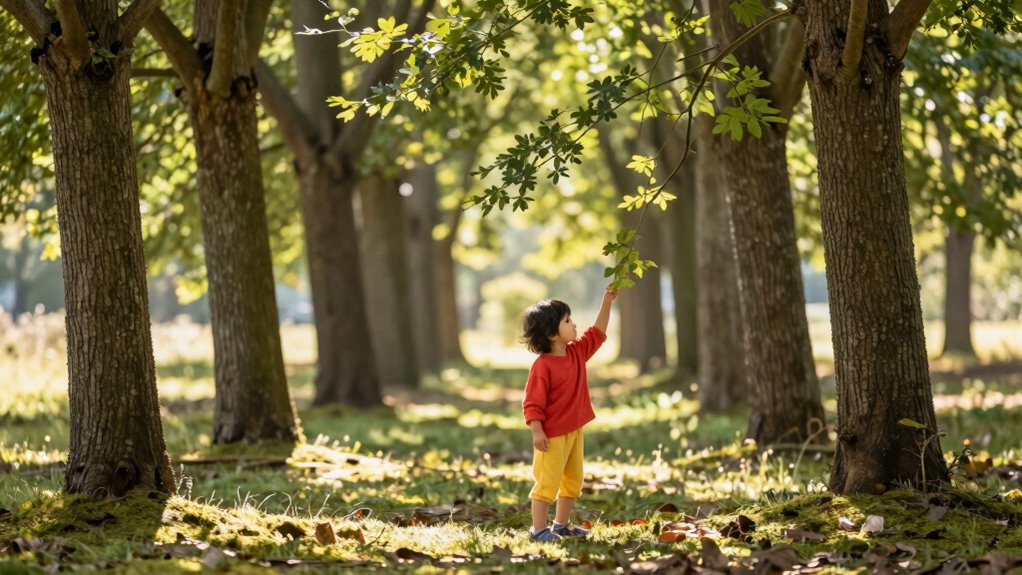
Outdoors, true freedom often exists within boundaries that shape our experiences. As a parent, you might feel torn between the desire to let your child explore freely and the need to keep them safe. This is where the idea of freedom within limits becomes essential. When your child engages in nature exploration, they learn vital skills like risk assessment—evaluating what’s safe and what’s too dangerous. You don’t have to eliminate all risks to protect them; instead, you can create an environment where they are encouraged to observe, make decisions, and learn from their experiences.
Allowing your child to explore outdoors within reasonable boundaries helps them build confidence and independence. For example, you might set clear, simple rules about climbing trees or crossing streams, which serve as boundaries that still leave room for discovery. These boundaries aren’t meant to restrict but to teach your child how to assess risks and act responsibly. When they navigate these limits, they learn to judge their own capabilities and develop good judgment—skills that will serve them well throughout life. You can guide them through risk assessment by asking questions like, “Do you think this branch is sturdy enough to hold you?” or “What should you do if you slip?” This encourages critical thinking while empowering them to make decisions.
Setting simple rules during outdoor adventures helps children assess risks, build judgment, and grow confident in their abilities.
Research shows that fostering an environment where children can explore within safe boundaries promotes resilience and emotional strength. You’ll find that giving children the opportunity to explore within safe limits fosters resilience. They encounter challenges and setbacks, but these experiences help them develop problem-solving skills and emotional strength. Instead of overprotecting, you’re teaching them how to evaluate their environment, recognize hazards, and respond appropriately. This approach promotes a sense of autonomy and trust in their own judgment, which is fundamental to their growth. It’s also important to model responsible behavior yourself—showing how you assess risks and make decisions while outdoors. Your example reinforces that boundaries aren’t barriers but tools for safe and meaningful exploration.
In the end, the principle of freedom within limits aligns with Montessori ideals—respecting a child’s natural curiosity and desire to learn through experience. It reminds you that true freedom isn’t about complete unrestrained liberty but about providing the right boundaries to support safe, confident exploration. When you embrace this balance, you give your child the space to grow, learn, and develop independence while feeling secure in the boundaries you set. This way, outdoor adventures become not just fun but also rich opportunities for lifelong learning and self-discovery.
As an affiliate, we earn on qualifying purchases.
Frequently Asked Questions
How Can Parents Balance Safety and Independence Outdoors?
You can balance safety and independence outdoors by practicing risk management and boundary setting. Allow your child to explore within clear, consistent boundaries that you establish together, helping them understand limits while fostering confidence. Keep an eye on potential hazards and adapt boundaries as your child grows and skills develop. This approach encourages independence without compromising safety, giving your child a secure environment to learn and grow naturally.
What Outdoor Activities Best Promote Montessori Principles?
Think of outdoor activities as a garden of growth, where each step nurtures independence. Nature exploration and sensory play best promote Montessori principles, engaging your child’s curiosity and senses. Allow them to investigate leaves, rocks, and flowers or feel different textures. These activities foster autonomy, patience, and a deep connection with nature. By providing safe, accessible spaces, you empower your child to learn through hands-on discovery, cultivating lifelong confidence and love for the outdoors.
How Much Supervision Is Appropriate During Outdoor Free Play?
During outdoor free play, you should supervise enough to manage risk and enforce boundary setting without limiting your child’s independence. Keep an eye on potential hazards and guarantee they stay within safe areas, but allow freedom for exploration. Your role is to facilitate risk management, helping your child recognize dangers while trusting their judgment. This balance promotes confidence, independence, and respect for boundaries, aligning with Montessori principles.
How Do Outdoor Limits Differ for Various Age Groups?
You know what they say, “A little room to grow.” For different age groups, outdoor limits should vary with age-specific boundaries and environmental adaptations. Younger children need close supervision and safe zones, while older kids can explore more freely, with boundaries adjusted to their developing skills. Tailoring outdoor limits helps foster independence and safety, ensuring each child learns to navigate their environment confidently.
How Can Parents Encourage Responsibility During Outdoor Activities?
You can encourage responsibility during outdoor activities by involving your child in boundary setting and risk management. Explain the boundaries clearly and let them understand why they’re important. Encourage them to assess risks and make decisions within those limits. This fosters independence and responsibility, as they learn to respect boundaries while exploring safely. Consistently reinforce these rules and praise responsible choices, helping your child develop confidence and self-control outdoors.
Conclusion
Remember, giving children freedom within limits outdoors helps them grow confident and responsible. It’s a delicate dance—letting them explore while guiding their steps. When you set gentle boundaries, you’re planting seeds of independence that will flourish over time. Keep in mind, a little bit of structure can go a long way in fostering their natural curiosity. After all, a guiding hand and open space create the perfect environment for children to spread their wings and thrive.
Halloween Picks
halloween
As an affiliate, we earn on qualifying purchases.