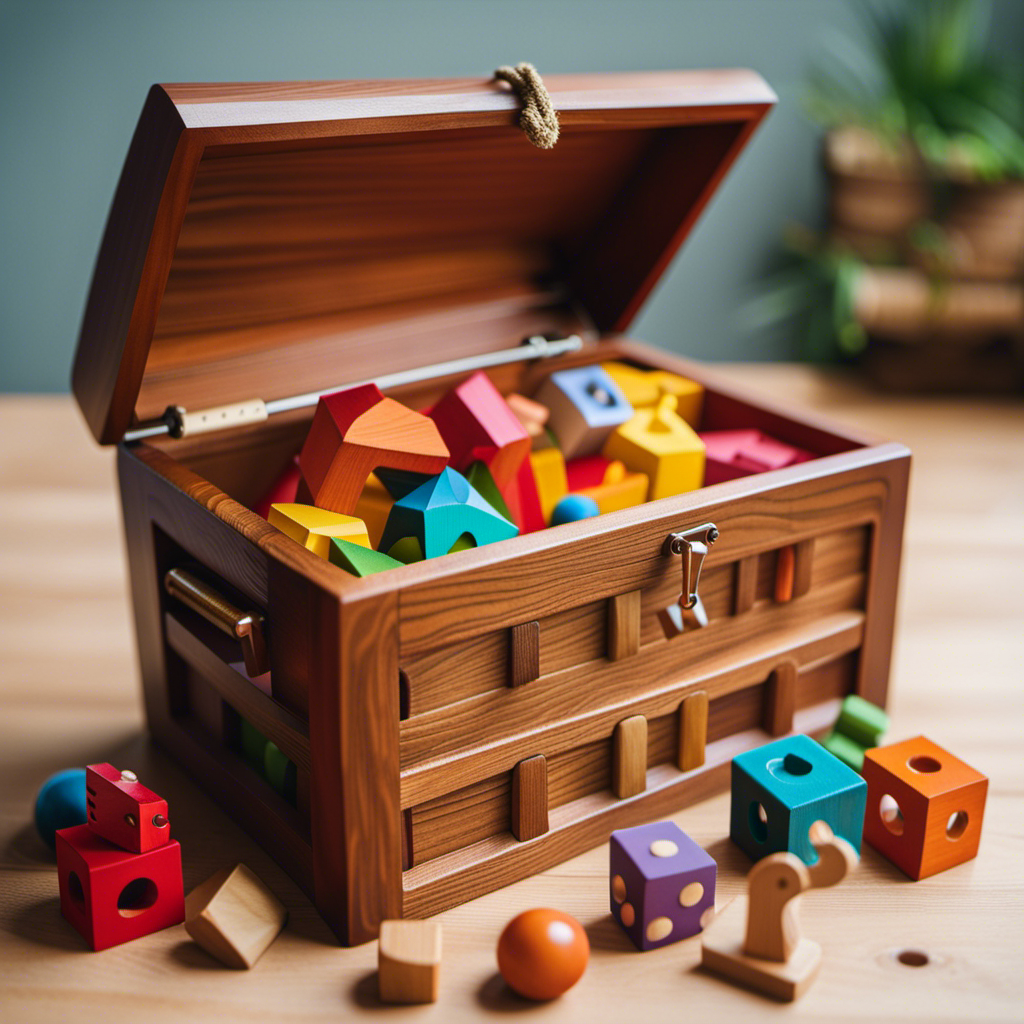
To boost your preschooler’s dexterity, provide toys like pegboards, lacing cards, and stacking cups that promote hand-eye coordination and precise finger movements. Toys such as playdough tools, tweezers, and squeeze bottles help strengthen small hand muscles and improve grip. Encouraging activities with these toys supports their overall fine motor development and prepares them for writing and daily tasks. Keep exploring, and you’ll discover more ways to enhance their skills with simple, effective tools.
Key Takeaways
- Pegboards and stacking cups enhance hand-eye coordination and spatial awareness through precise placement and stacking activities.
- Lacing cards and threading toys promote fine pincer grip and manual dexterity by requiring stringing through small holes.
- Playdough tools and pinching toys strengthen finger muscles and improve grasping, supporting better pencil grip.
- Squeeze bottles and small object manipulation develop hand strength and control essential for precise movements.
- Repetitive activities with small objects encourage focus, steady hand movements, and overall fine motor skill development.
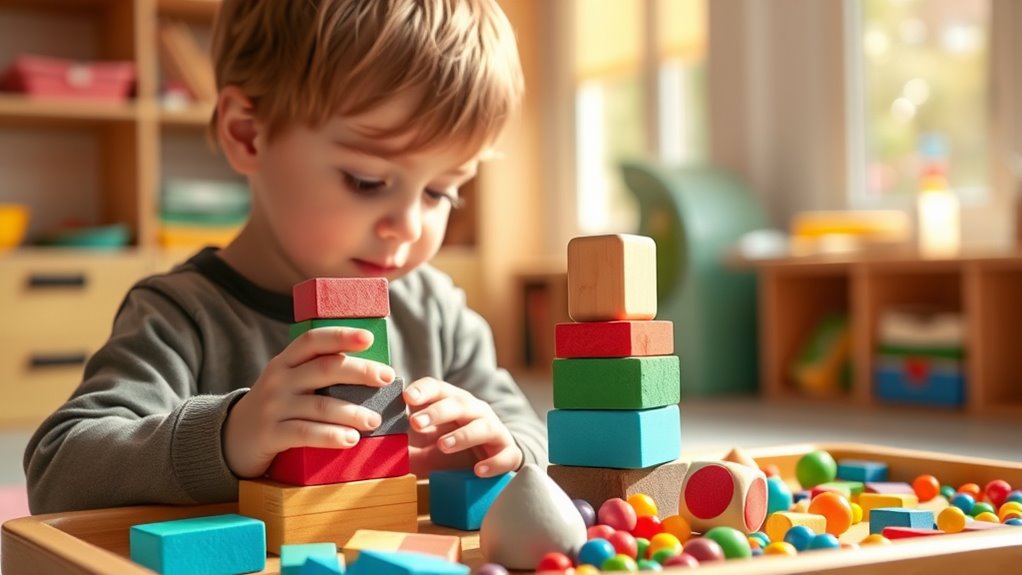
Have you ever wondered how children develop the ability to grasp a pencil or button a coat? It’s a fascinating process that involves the strengthening of fine motor skills, particularly hand-eye coordination and pencil grip development. When kids start preschool, they’re often eager to explore and manipulate objects, but mastering these skills takes practice and the right toys to encourage their growth. You can support this journey by providing activities that challenge their dexterity and help refine their control over small muscles.
Hand-eye coordination plays a crucial role in developing fine motor skills. It’s the ability to coordinate what your child sees with how they move their hands. For example, picking up small beads or fitting puzzle pieces together requires precise coordination. Toys like pegboards, lacing cards, and stacking cups are excellent choices because they force children to focus visually and translate that focus into accurate hand movements. These activities help children learn to judge distances, improve aim, and develop a steady hand—fundamental skills for more complex tasks like writing. Additionally, repetitive practice with these toys reinforces neural pathways essential for skill mastery.
Pencil grip development is another vital component that lays the foundation for early writing. As children practice holding crayons, markers, or pencils, they learn how to grip these tools correctly, which makes writing easier and more efficient. Toys that promote grasping and pinching, such as squeeze bottles, playdough tools, or tweezers, help strengthen the hand muscles needed for a proper pencil grip. When kids repeatedly grasp and manipulate small objects, they build the finger strength and control necessary for holding a pencil correctly, reducing frustration and encouraging confident writing.
Frequently Asked Questions
How Do Fine Motor Skills Impact Overall Preschool Development?
You might wonder how fine motor skills influence preschool development. Developing hand-eye coordination and pencil grip is essential because it lays the foundation for writing, drawing, and self-care skills. When you support these skills, you’re helping your child become more independent, confident, and ready for school. Fine motor skills also boost overall cognitive development, enabling better focus, problem-solving, and tasks like tying shoelaces or buttoning clothes.
When Should Parents Start Introducing Fine Motor Activities?
Thinking about when to introduce fine motor activities? Well, you should start as early as your little one shows curiosity—around age one. Use age-appropriate toys that match their skill milestones, like soft blocks or chunky puzzles. The earlier, the better! Engaging them now helps develop dexterity and coordination, setting the stage for writing and other essential skills. So, don’t wait—every milestone is a perfect opportunity!
Are Digital Toys Effective for Improving Fine Motor Skills?
You might wonder if digital toys are effective for improving motor skill development. While they can engage your preschooler and promote hand-eye coordination, they shouldn’t replace traditional toys that encourage active manipulation. Digital toys can complement motor skill activities, but for ideal development, mix them with hands-on toys that require grasping, squeezing, and drawing. Balance is key to supporting your child’s fine motor growth effectively.
How Can Teachers Incorporate Fine Motor Tasks Into Daily Routines?
Think of your classroom as a bustling workshop, where each activity is a station to sharpen tiny tools. You can incorporate fine motor tasks by setting up sensory play stations—like sand or water tables—and integrating simple crafts into daily routines. Encourage kids to pick up small objects, twist, or squeeze, making these tasks natural parts of the day. This approach helps develop dexterity while keeping learning fun and engaging.
What Signs Indicate a Preschooler Needs Extra Fine Motor Support?
You’ll notice a preschooler struggling with hand-eye coordination, such as difficulty catching or threading beads. If their pencil grip isn’t developing well or they often hold writing tools awkwardly, it’s a sign they might need extra support. Watch for frustration during fine motor activities or slow progress in tasks like cutting or drawing. Providing targeted activities can help improve their dexterity and build confidence in their skills.
Conclusion
By bringing playful puzzles, playful paints, and tiny tools into your preschooler’s world, you’re boosting their budding dexterity and developing their fine motor skills. With engaging objects that encourage exploration and effort, you help cultivate coordination, concentration, and confidence. Remember, fostering fun-filled focus fosters future feats. So, choose toys that challenge and cheer, creating a caring, enthralling, and confident child ready to conquer countless creative crafts. Your support sparks skill, so start stimulating their small muscles today!