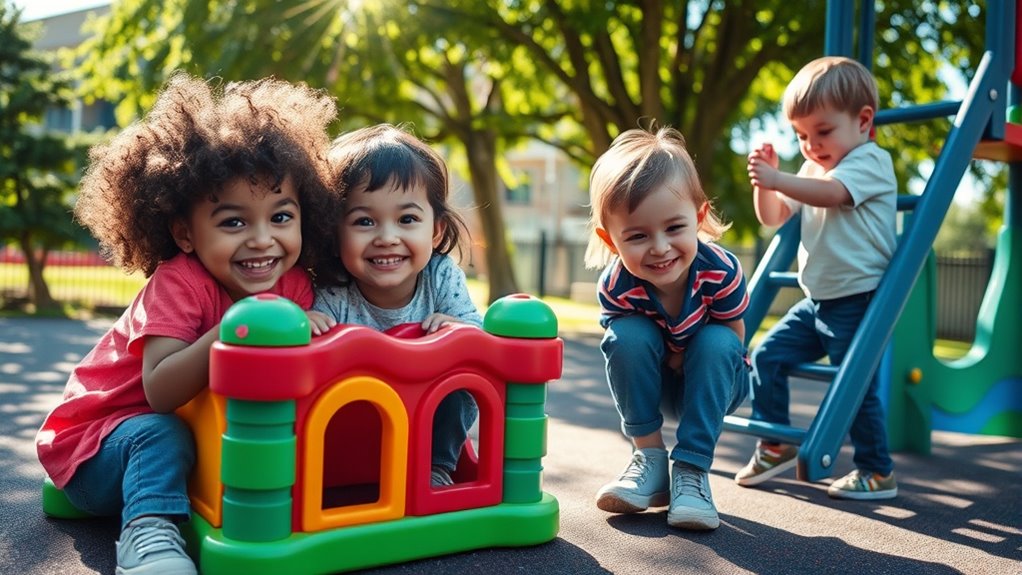

To encourage cooperative play and empathy, focus on demonstrating kindness and sharing yourself. Use group activities and games that promote taking turns and working together, highlighting how sharing can be enjoyable for everyone. Engage in conversations about feelings during play, and praise positive behaviors to reinforce empathy. By creating a safe, respectful environment, you help children recognize others’ perspectives and build strong relationships. Keep exploring these strategies to foster emotional intelligence and social skills effectively.
Key Takeaways
- Use group activities and cooperative games to foster sharing and teamwork among children.
- Model empathetic behavior and kindness to set positive examples for children to follow.
- Encourage children to express their feelings and listen to peers to build emotional understanding.
- Reinforce sharing and cooperation through praise and recognition of positive social interactions.
- Create a safe, respectful environment that supports open discussions about emotions and perspectives.

Fostering cooperative play and empathy in children is essential for their social development and forming strong relationships. When you focus on teaching sharing strategies, you’re helping children learn how to navigate interactions with others more effectively. Sharing strategies involve guiding kids to understand the importance of taking turns, offering toys willingly, and recognizing that sharing can lead to mutual enjoyment. By encouraging children to practice these skills, you’re fostering understanding—an vital component of empathy. When kids see the positive outcomes of sharing, they begin to understand others’ feelings and perspectives, which helps build emotional intelligence.
Teaching sharing strategies fosters empathy and emotional intelligence through understanding others’ feelings and perspectives.
To support this, you can create opportunities for children to engage in activities that naturally promote sharing. For example, setting up group projects or cooperative games where taking turns and sharing resources are necessary can reinforce these skills in a practical way. When conflicts arise, instead of immediately stepping in to resolve them, you can ask questions that prompt children to think about how their actions affect others. Questions like, “How do you think your friend feels when you don’t share?” or “What can you do to make sharing easier?” help them develop awareness of others’ emotions and foster understanding. This approach encourages children to see sharing not just as a rule but as a way to strengthen relationships.
You should also model sharing and empathy yourself. Children learn a lot by observing adults, so demonstrate sharing strategies in your everyday interactions. When you share your belongings or show kindness to others, you’re providing a real-life example that they can imitate. Reinforce positive behavior with praise, highlighting how their actions contribute to a harmonious play environment. For instance, saying, “I really appreciated how you shared your toy; that shows you care about your friends’ feelings,” reinforces the value of sharing and understanding.
Creating a safe and supportive environment is fundamental for nurturing empathy. When children feel secure and respected, they are more willing to express their feelings and listen to others. Encourage conversations about emotions during play and everyday routines, so children become comfortable discussing how they feel and understanding others’ emotions. This ongoing dialogue builds a foundation for empathy and cooperative play.
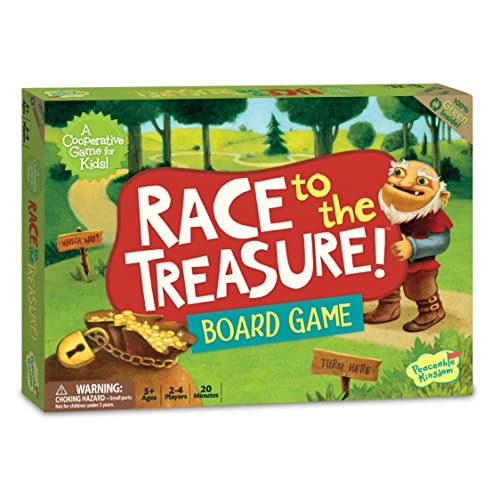
Peaceable Kingdom Race to the Treasure! Cooperative Path Building Game for 2 to 4 Kids Ages 5+
An award winning cooperative game where the race to the treasure is on!
As an affiliate, we earn on qualifying purchases.
As an affiliate, we earn on qualifying purchases.
Frequently Asked Questions
How Can Parents Model Empathetic Behavior Effectively?
You can model empathetic behavior by actively engaging in empathy exercises with your child, such as discussing feelings or imagining others’ perspectives. During parent-child bonding moments, show understanding and compassion in your words and actions. When you demonstrate empathy, your child learns to do the same. Consistently practicing these behaviors helps them develop emotional intelligence, fostering stronger relationships and a deeper sense of compassion over time.
What Are Age-Appropriate Cooperative Games for Young Children?
You can choose age-appropriate cooperative games like building blocks, simple board games such as “Candy Land,” or teamwork-based activities like relay races. Focus on sharing strategies that emphasize taking turns, communicating, and working together. When selecting games, consider your child’s developmental level and interests to guarantee they stay engaged. These activities help children develop cooperation and empathy naturally, making play both fun and educational.
How to Handle Conflicts During Cooperative Play?
When conflicts arise during cooperative play, you should stay calm and guide children through conflict resolution. Encourage emotional regulation by helping them express their feelings gently. Ask questions like, “What happened?” and “How do you feel?” to promote understanding. Stay patient, listen actively, and teach children to listen to each other. This approach not only resolves conflicts but also builds vital social skills that last a lifetime.
Are There Cultural Differences in Promoting Empathy?
Yes, cultural differences influence how you promote empathy. Cultural norms shape attitudes toward sharing, understanding, and emotional expression. In some cultures, empathy education focuses on collective well-being and community harmony, while others emphasize individual feelings. By recognizing these differences, you can tailor your approach to foster empathy effectively, respecting cultural values. This understanding helps you create inclusive environments where children learn empathy in ways that resonate with their cultural backgrounds.
How Does Technology Influence Cooperative Play and Empathy Development?
Technology impacts cooperative play and empathy development by enabling digital collaboration, which helps you connect with others across distances. Through online games and virtual teamwork, you learn to communicate, share, and solve problems together. Virtual empathy grows as you understand different perspectives through digital interactions. While it fosters cooperation, it’s important to balance screen time with face-to-face play to develop deeper emotional understanding and genuine social skills.

hand2mind See My Feelings Mirror, Play Therapy Toys, Mindfulness for Kids, Emotional Regulation for Kids, Social Emotional Learning Activities, Calm Down Corner Supplies, Calming Corner (Set of 1)
EMOTIONS FOR TODDLERS: Help children learn to label and identify emotions with the See My Feelings Mirror! Make…
As an affiliate, we earn on qualifying purchases.
As an affiliate, we earn on qualifying purchases.
Conclusion
By fostering cooperative play and empathy, you plant seeds of understanding that grow into a garden of kindness. Just like a symphony relies on each instrument working in harmony, your efforts create a harmonious environment where children learn to support and connect with one another. Remember, your guidance is the gentle breeze guiding these seeds toward blossoming. With patience and care, you can nurture a world where empathy blooms and cooperation thrives, shaping compassionate hearts for the future.

KINDEN Teamwork Games Group Learning Activity Fun Playing Run Mat for Kids and Adults Field Day Game(1 Pack)
NOTE: It just ONE. Please check it. Material: oxford fabric ONE piece per pack.
As an affiliate, we earn on qualifying purchases.
As an affiliate, we earn on qualifying purchases.

Mind Brain Emotion 52 Essential Social Skills Lessons & Teaching Tool Kit – Social Emotional Learning Activities for Parents, Teachers, School Counselor (Kindergarten, Elementary Kids)
Winner, Parents' Favorite Award: Modern-day social stories for teaching social skills for kids. Tools created by Harvard educator…
As an affiliate, we earn on qualifying purchases.
As an affiliate, we earn on qualifying purchases.