Setting up a dramatic play garage encourages you to support your child’s social and language growth through imaginative role-playing. By engaging in scenarios like fixing cars or interacting as customers and mechanics, your child practices new vocabulary and learns to express ideas clearly. This role play also promotes cooperation, turn-taking, and understanding others’ perspectives. With a variety of scenarios, your child can build confidence and cross-cultural awareness. Keep exploring ways to enrich their social and language skills further.

Turn the school run and nap time into listening time
- Thousands of audiobooks, podcasts and originals
- Listen on your phone, tablet or Echo — also offline
- Cancel anytime
Key Takeaways
- Encourages imaginative storytelling, expanding vocabulary related to cars, roles, and actions.
- Promotes social skills like sharing, turn-taking, and negotiation through cooperative role play.
- Facilitates understanding of social roles and problem-solving in realistic garage scenarios.
- Develops communication skills by describing actions, giving instructions, and active listening.
- Incorporates cultural diversity, fostering intercultural awareness and cross-cultural social understanding.
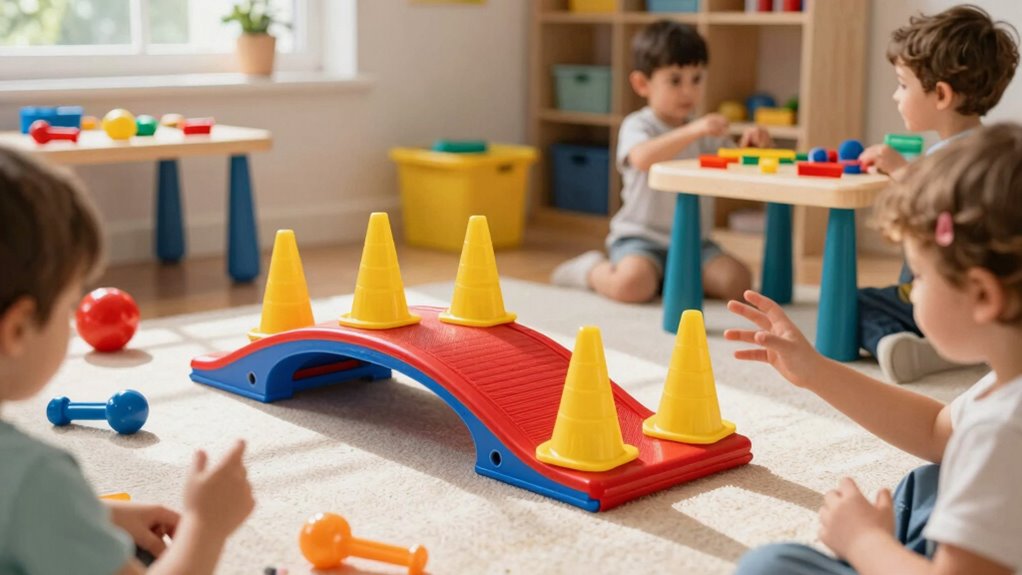
Creating a play garage setup can be a fun and effective way to boost your child’s social and language skills. When you set up a pretend garage, you open the door to a world of imaginative storytelling that sparks your child’s creativity. They can pretend to be a mechanic fixing cars, a traffic cop directing busy streets, or a car owner preparing for a trip. As they craft these stories, they practice using new vocabulary, sequencing events, and expressing their ideas clearly. This kind of imaginative storytelling not only entertains but also strengthens language development by encouraging your child to describe scenarios, explain their actions, and share their thoughts.
A well-designed play garage also invites cooperative role play, which is essential for social growth. When your child interacts with friends or siblings in this pretend environment, they learn how to negotiate, share, and take turns. They might decide together which car to repair or who gets to be the boss of the garage. These interactions teach important social skills like patience, empathy, and problem-solving. By engaging in cooperative role play, your child learns to listen actively and communicate effectively to reach common goals. It’s an opportunity for them to practice social cues, such as making eye contact, using polite language, and understanding others’ perspectives—all in a playful, supportive setting. Incorporating themes like role-playing scenarios can further deepen their understanding of social roles and responsibilities.
Encouraging your child to participate in role-playing activities around the garage can deepen their understanding of social roles and responsibilities. For example, they might pretend to be a customer bringing in a broken car or a mechanic explaining what needs fixing. These scenarios give your child context to develop language related to problem-solving, instructions, and explanations. As they switch roles, they also learn flexibility, adapting their language and behavior to suit different situations. This dynamic play enhances their ability to communicate in various social contexts, fostering confidence and fluency. Additionally, cross-cultural communication skills can be subtly nurtured through diverse scenarios, broadening their understanding of social interactions across different backgrounds. A diverse range of social interactions during play helps prepare your child for real-world social diversity and intercultural understanding. Moreover, integrating cultural awareness into play scenarios can further enrich their social learning experiences.
As an affiliate, we earn on qualifying purchases.
Frequently Asked Questions
What Age Range Benefits Most From a Play Garage Setup?
You’ll find that children aged 3 to 6 benefit most from a play garage setup. Your garage organization and play area design should focus on accessible tools, cars, and pretend accessories to encourage role play and social interaction. During this age range, kids develop language and social skills by engaging in cooperative play, making a well-organized garage space ideal for nurturing their growth through imaginative scenarios and shared experiences.
How Can Parents Encourage Imaginative Play in the Garage?
Think of yourself as a guide, igniting your child’s imagination like a spark in a dark room. You can encourage imaginative play by suggesting diverse scenarios, such as fixing a car or fueling it up. Provide props like toy tools and gas pumps to inspire creative role play. Join in their activities, ask open-ended questions, and let their ideas drive the story, helping them develop social skills and language.
Are There Safety Concerns With a Play Garage Environment?
Yes, there are safety concerns with a play garage environment, but you can address them through playground safety and risk mitigation. Regularly inspect the area for hazards like sharp objects or loose parts, and make sure surfaces are soft enough to cushion falls. Keep tools and small objects out of reach, and supervise your child closely. By prioritizing safety, you create a fun, engaging space that promotes social and language growth without unnecessary risks.
What Materials Are Best for Building a Durable Garage Play Area?
You should choose materials that prioritize construction safety and material durability for your garage play area. Opt for sturdy wood or heavy-duty plastic, which withstand rough play and are easy to clean. Avoid sharp edges and toxic paints, ensuring the setup remains safe for children. Using high-quality, durable materials not only promotes safety but also extends the lifespan of your play space, providing a reliable environment for social and language growth.
How Does Play Garage Setup Support Emotional Development?
Have you ever noticed how children in a play garage learn to navigate feelings? This setup encourages emotional recognition, helping kids understand their own emotions and those of others. It also fosters social empathy as they role-play different scenarios, building compassion and patience. By acting out real-life situations, children develop emotional resilience and confidence, making this play environment a essential tool for emotional growth and understanding.
Conclusion
As you watch your child navigate the play garage, you’re planting seeds of connection and communication that will bloom over time. This vibrant setup isn’t just a toy; it’s a launchpad for their imagination and social skills to soar. With each turn of the steering wheel and each friendly exchange, you’re nurturing a future filled with confidence and camaraderie. Remember, your gentle guidance turns play into a powerful journey of growth and discovery.
Halloween Picks
halloween
As an affiliate, we earn on qualifying purchases.