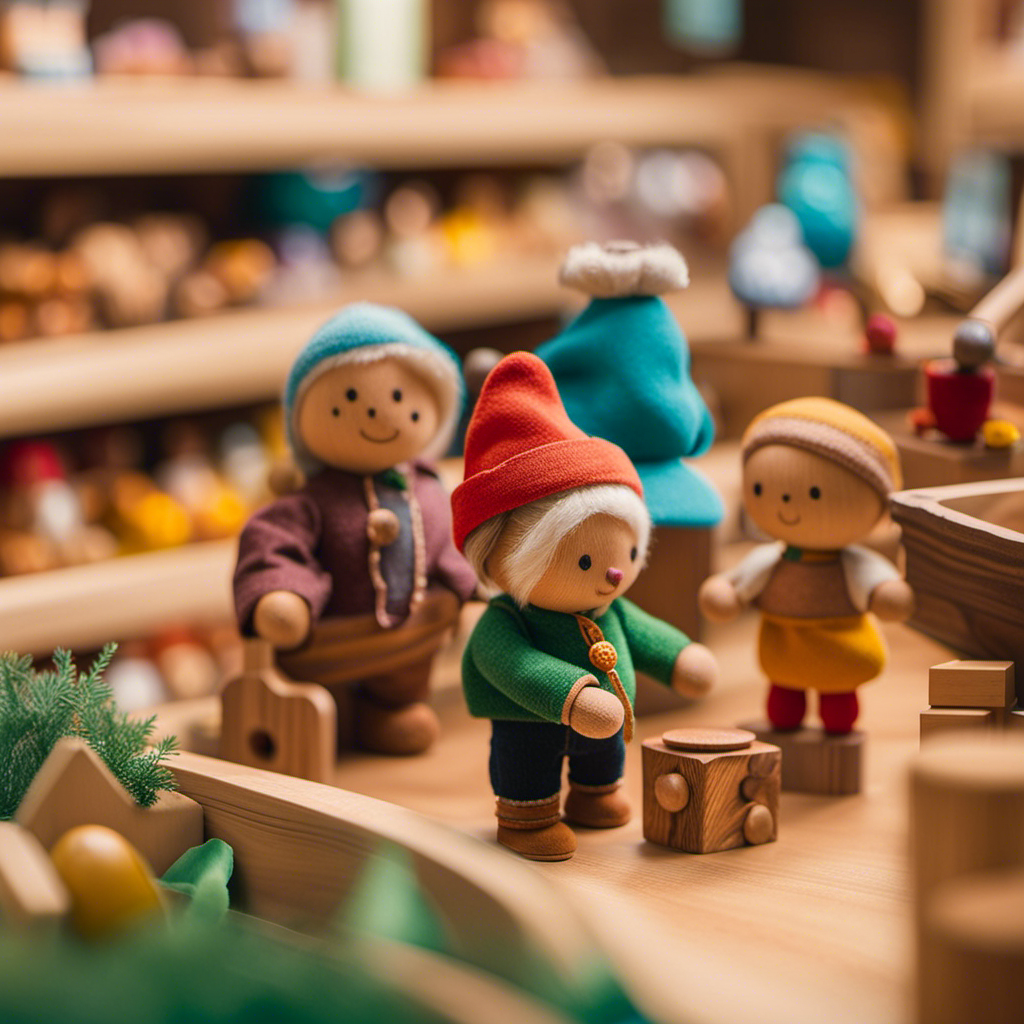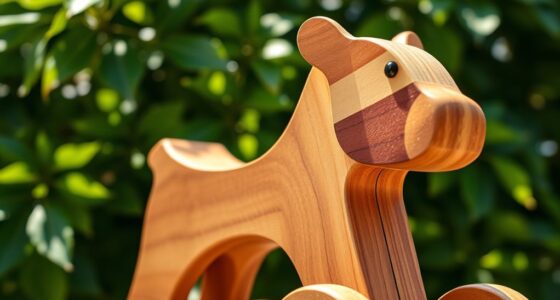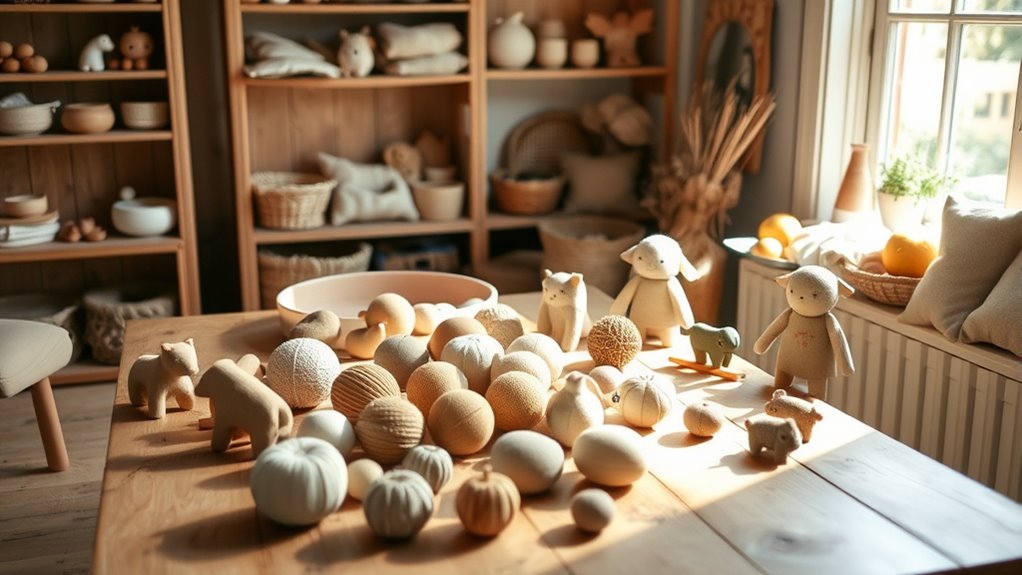

Crafting your own Waldorf toys is a wonderful way to create safe, natural playthings that spark imagination and sensory exploration. By choosing eco-friendly materials like untreated wood, natural wool, or beeswax, you guarantee your toys are both beautiful and safe for children. Simple projects like wooden teething rings or felt animals allow you to personalize each piece and promote sustainable values. Keep exploring to discover easy steps and tips for making meaningful toys that encourage open-ended play.
Key Takeaways
- Use natural, eco-friendly materials like untreated wood, wool felt, and food-grade oils to craft safe, sustainable Waldorf-inspired toys.
- Create simple shapes and minimalistic designs emphasizing open-ended play and sensory exploration for children’s development.
- Follow step-by-step guides for shaping, assembling, and finishing toys such as teething rings and felt figurines.
- Focus on handmade quality, ensuring toys are smooth, durable, and free from harmful chemicals or synthetic dyes.
- Incorporate personal touches and love into each handcrafted toy to foster meaningful connections and imaginative play.
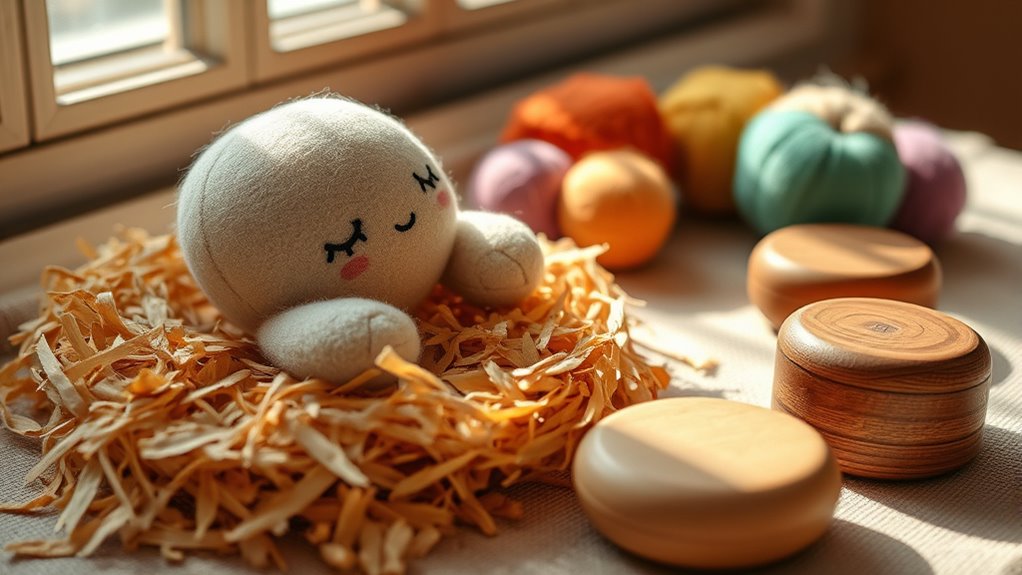
Have you ever wondered how to create meaningful, eco-friendly toys for your children? Crafting your own Waldorf-inspired toys is a wonderful way to foster imagination and connection while staying true to natural materials. When you make these toys yourself, you control every aspect, ensuring they’re safe, simple, and free from harmful chemicals. Plus, the process can be incredibly rewarding, giving your children timeless treasures that reflect love and care.
Start with the basics by making wooden teething rings. These are not only practical but also serve as gentle sensory tools for teething babies. To craft them, choose smooth, untreated wood like maple or beech. You’ll want to sand the wood thoroughly to eliminate any splinters, then shape the rings into circles using a saw or a jigsaw. Finish by sanding again to achieve a silky smooth surface. You can leave the wood natural or add a touch of food-grade oil, like beeswax or coconut oil, to enhance durability and appearance. These teething rings are simple, safe, and timeless, providing your little one with soothing comfort during teething.
Next, you might consider creating felt animal figurines. Felt is a versatile and natural material that lends itself beautifully to Waldorf-inspired toys. To make these figurines, start by selecting high-quality natural wool felt in various colors. Cut out basic shapes such as bodies, limbs, and features, then stitch them together using a simple embroidery or blanket stitch. Keep the designs minimalistic—think gentle curves and soft features—so children can use their imagination to bring the animals to life. Add details like embroidered eyes or small accessories to give each figurine personality. Felt animal figurines are perfect for open-ended play, storytelling, or as calming companions for your child. They’re lightweight, durable, and can be easily cleaned, making them ideal toys for everyday use.
Both projects emphasize natural, sustainable materials and simple craftsmanship, aligning perfectly with Waldorf principles. Making your own toys like wooden teething rings and felt animal figurines isn’t just about saving money; it’s about creating meaningful objects that encourage sensory exploration and imaginative play. These toys are gentle on the environment and safe for your children, free from plastic, paint, or synthetic dyes. As you craft, you also pass on important values about sustainability and sustainable living. Plus, your children will cherish the handmade quality, seeing that love and effort are poured into their playthings. Whether you’re a seasoned DIYer or just starting out, these projects offer a fulfilling way to nurture your child’s development with natural, handcrafted Waldorf toys.

Mr. Pen Birch Wooden Rings, 2.7", 10 Pack, Wooden Rings for Crafts
Package includes 10 wooden rings for crafts, enough quantity for your daily use, spare or replacement, meeting your…
As an affiliate, we earn on qualifying purchases.
As an affiliate, we earn on qualifying purchases.
Frequently Asked Questions
What Safety Considerations Should I Keep in Mind?
When making your toys, prioritize safety by following childproofing tips, like smooth edges and sturdy construction. Use non-toxic finishes to guarantee harmful chemicals don’t come into contact with your child’s skin or mouth. Always check for small parts that could pose a choking hazard, and avoid sharp or loose elements. Regularly inspect your toys for wear and tear, maintaining a safe, natural environment for your child’s imaginative play.
Can I Customize Waldorf Toys for Different Ages?
Imagine your toy as a blank canvas, ready to reflect growth. You can certainly customize Waldorf toys for different ages by making age-appropriate modifications and developmental adaptations. For infants, opt for soft, simple textures; for toddlers, include larger, easy-to-handle pieces. Adjust complexity as children grow, encouraging new skills. Your thoughtful adjustments turn play into a journey that nurtures their development at every stage.
How Long Do DIY Waldorf Toys Typically Last?
Diy Waldorf toys usually last quite a while if you focus on toy durability and choose quality materials. Their longevity depends on the material lifespan—natural wood and cotton tend to hold up well with gentle use and regular care. You can extend their lifespan by sanding rough edges and avoiding excessive moisture. With proper maintenance, your handmade toys can be enjoyed by multiple children over several years.
Are Natural Materials Always Better Than Synthetic Ones?
Back in the day, folks believed natural materials were always best, but it’s not that simple anymore. You should consider material durability and environmental impact. Natural materials often last longer and are eco-friendly, but synthetic ones can be more durable and resistant to wear. Ultimately, it depends on your priorities—if sustainability matters most, go natural; if longevity is key, choose wisely between both.
How Do I Clean and Maintain Handmade Waldorf Toys?
To clean and maintain your handmade Waldorf toys, start by inspecting them regularly for dirt or damage. Use gentle cleaning supplies like a damp cloth or mild soap to wipe surfaces, avoiding harsh chemicals. Store toys properly in a clean, dry toy storage area to prevent dust buildup. This keeps your natural playthings in good condition, ensuring safe, enjoyable play for your little one while preserving their beauty and integrity.

Naozinebi 8 Sets Jungle Animal Felt Sewing Craft Kit Make Your Own Zoo Hat Woodland Animal DIY Bonnet Art Set for Safari Birthday Party Favors Classroom Activities Supplies
Sufficient Quantity and Variety: each package of the safari party favors comes with 8 individual animal craft kits…
As an affiliate, we earn on qualifying purchases.
As an affiliate, we earn on qualifying purchases.
Conclusion
Creating your own Waldorf toys allows you to craft treasures as gentle and nourishing as a mother’s embrace. With simple materials and mindful attention, you can shape playthings that inspire imagination and comfort. Think of it as weaving a delicate tapestry of love and creativity, each stitch adding warmth to your child’s world. Embrace the process, and watch as these natural toys become cherished keepsakes, turning everyday moments into magical memories.

Taksa Toys Locomo Family 1 Open-Ended Waldorf Educational Outdoor Play Figures, Wooden Animal Montessori Toys for Kids 3 4 5 6 7+ for Childs Learning & Creativity Year Old, Gifts (Set of 5)
𝐑𝐄𝐀𝐃𝐘 𝐅𝐎𝐑 𝐀 𝐓𝐇𝐑𝐈𝐋𝐋𝐈𝐍𝐆 𝐎𝐔𝐓𝐃𝐎𝐎𝐑 𝐀𝐃𝐕𝐄𝐍𝐓𝐔𝐑𝐄 𝐖𝐈𝐓𝐇 𝐍𝐀𝐓𝐔𝐑𝐄?: The box contains five wooden animals. Please note that natural…
As an affiliate, we earn on qualifying purchases.
As an affiliate, we earn on qualifying purchases.
handmade wooden baby teether
As an affiliate, we earn on qualifying purchases.
As an affiliate, we earn on qualifying purchases.