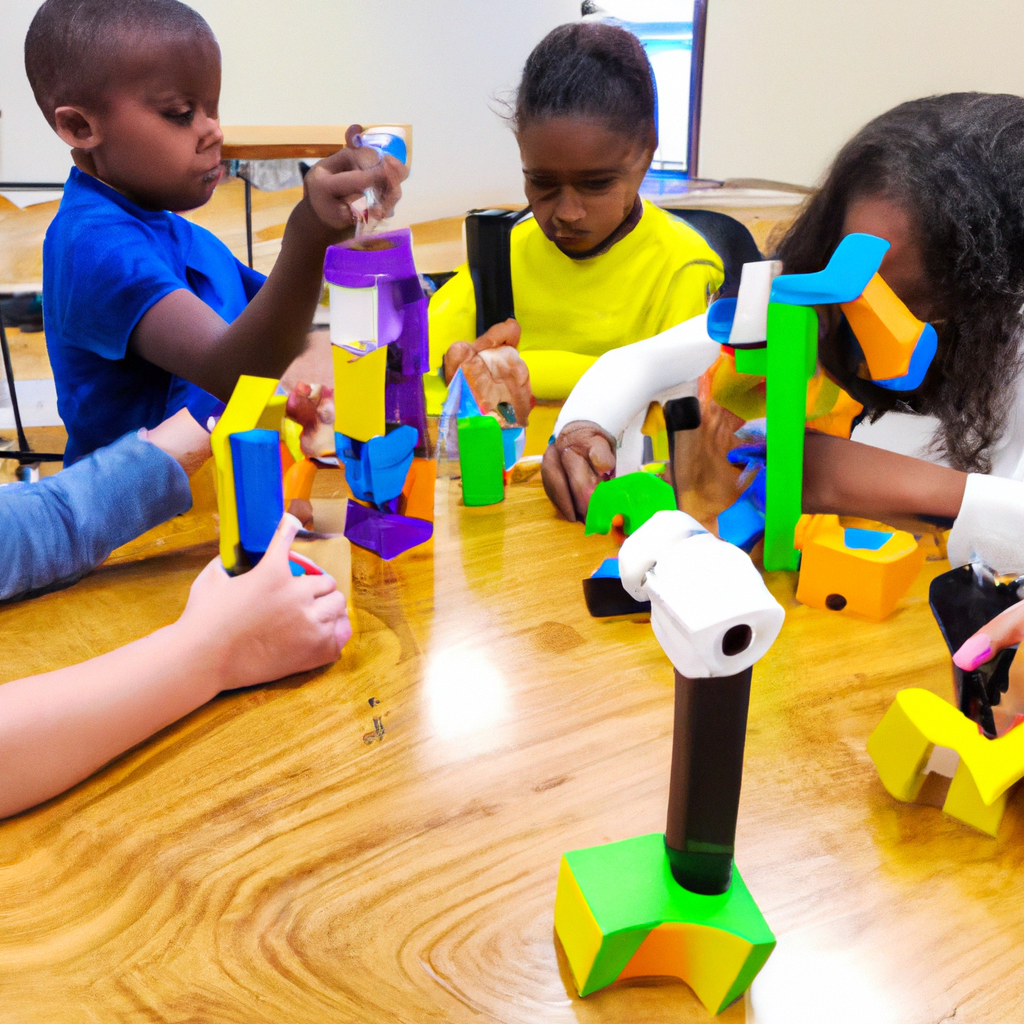
Transform household items into fun, eco-friendly STEM learning toys by repurposing everyday objects like cardboard tubes, plastic containers, and buttons. Use these materials to create marble runs, hydraulic systems, or simple gears that teach scientific concepts and problem-solving skills. It’s a great way to encourage curiosity and creativity while saving money and helping the environment. Keep exploring how you can turn common household items into educational tools that inspire young minds.
Key Takeaways
- Transform household items like cardboard and plastic containers into educational STEM toys that promote hands-on learning.
- Repurpose common objects such as buttons, coins, and tubes to create gears, levers, and simple machines.
- Use sustainable materials and household scraps to teach resourcefulness and environmental responsibility.
- Incorporate trial-and-error to troubleshoot and improve projects, fostering resilience and problem-solving skills.
- Design engaging, eco-friendly learning tools that demonstrate scientific principles and encourage curiosity at home.

Have you ever wondered how to bring science, technology, engineering, and math into your everyday life? You don’t need fancy gadgets or expensive kits to make learning fun and meaningful. Instead, you can transform common household items into engaging STEM toys that spark curiosity and promote hands-on exploration. This approach not only makes learning accessible but also encourages you to think creatively about sustainability. Using sustainable materials for DIY projects reduces waste and teaches valuable lessons about environmental responsibility, turning everyday challenges into opportunities for innovation.
Transform household items into fun, eco-friendly STEM projects that spark curiosity and promote sustainability.
When you start turning household items into STEM toys, you’ll encounter plenty of creative challenges. For example, repurposing items like cardboard boxes, plastic bottles, or old jars requires thinking outside the box. How can you turn a cardboard tube into a tunnel for marbles or a simple lever? Can you use old buttons or coins to create gears or pulleys? These projects push your problem-solving skills to the limit and help you discover how different materials behave under various conditions. As you experiment, you’ll learn that even seemingly insignificant objects can become the foundation for complex engineering concepts.
One of the most exciting aspects of DIY STEM is choosing sustainable materials. Instead of buying new toys, you can gather household scraps to craft educational tools that are eco-friendly. For example, use discarded plastic containers to build a simple hydraulic system or transform egg cartons into a learning game about fractions. Not only do you save money, but you also teach your kids the importance of reusing and recycling. This process demonstrates that sustainability isn’t just a buzzword — it’s a practical approach to creative problem-solving. Plus, working with familiar materials allows you to explore their properties and limitations, deepening your understanding of scientific principles.
As you create, you’ll find that these projects challenge you to think critically and adapt quickly. You might need to troubleshoot why a homemade ramp doesn’t work or how to make a balanced scale using everyday objects. These creative challenges keep the process engaging and teach resilience. They also show that failure is just part of the learning journey, encouraging a growth mindset. By incorporating sustainable materials into your DIY STEM activities, you turn ordinary household items into powerful educational tools that demonstrate the importance of innovation and resourcefulness. This way, your home becomes a mini laboratory where curiosity and sustainability go hand in hand, making learning an ongoing adventure that’s both fun and environmentally conscious. Additionally, engaging with natural materials aligns with the principles of Holistic Development emphasized in Waldorf toys, fostering sensory and emotional growth through tactile exploration.
Top picks for "stem turn household"
Open Amazon search results for this keyword.
As an affiliate, we earn on qualifying purchases.
Frequently Asked Questions
How Can I Ensure Safety While Creating DIY STEM Toys?
When creating DIY STEM toys, you wanna prioritize safety by choosing materials that are non-toxic and age-appropriate. Always check material safety labels and avoid sharp or small parts for young children. Keep supervision requirements in mind, staying close to guide your kids and prevent accidents. Use safe tools, secure objects properly, and teach safety rules. This way, you guarantee a fun, educational experience without risking harm.
What Age Groups Are Suitable for These DIY STEM Projects?
Did you know that children aged 6 to 12 have the highest engagement levels with STEM activities? When choosing projects, consider age appropriateness and skill levels to make certain safety and fun. For younger kids, simple, supervised projects work best, while older children can handle more complex tasks. Tailoring activities to the right age group helps build confidence and skills, making learning both safe and enjoyable.
Can These Toys Be Reused or Recycled After Play?
You can definitely reuse or recycle these DIY STEM toys after play. Recycling options vary depending on the materials used, so check local guidelines for plastics or paper. Reuse guidelines suggest cleaning items thoroughly and repurposing them for future projects or storage. This eco-friendly approach extends the life of your creations, reduces waste, and encourages sustainable habits, making your learning fun and environmentally responsible.
How Do I Troubleshoot if a DIY Toy Doesn’T Work?
When your DIY toy doesn’t work, start troubleshooting by checking common issues like loose connections, missing parts, or incorrect assembly. Examine the toy carefully, ensuring all components are properly aligned and secured. Test each part individually to identify faults, and consult any instructions or guides you followed. If needed, replace damaged parts or adjust connections. These troubleshooting steps can help you quickly fix your toy and get it functioning again.
Are There Recommended Resources for More Advanced DIY STEM Activities?
You’re looking for resources to explore more advanced DIY STEM activities. Online courses can guide you through complex projects and deepen your understanding, while STEM kits provide structured, hands-on experiences. Check out platforms like Coursera or Khan Academy for courses, and explore specialized kits from companies like KiwiCo or Thames & Kosmos. These resources will challenge you and help you develop your skills further, making your STEM journey more engaging and educational.
Conclusion
By transforming everyday household items into STEM toys, you turn learning into an exciting adventure—like turning a simple spoon into a rocket launcher. Imagine your child’s face lighting up when they build a paper bridge that holds their favorite toy. It’s not just about saving money; it’s about sparking curiosity and creativity. So, grab those items, get inventive, and watch as science and fun collide right in your own home!