
To help kids grasp direction words like left, right, stop, and go without flashcards, use visual cues, gestures, and movement activities. Incorporate routines and outdoor play, like obstacle courses or freeze dance, to make learning natural and fun. Reinforce words through daily interactions, storytelling, and hands-on tasks. Engaging activities like mirror games or walking routines help solidify understanding. Keep exploring these strategies to make directions stick more effortlessly.
Key Takeaways
- Use visual cues, gestures, and movement to reinforce understanding of direction words without flashcards.
- Incorporate direction words into daily routines and outdoor activities for natural learning.
- Engage children with movement games, dance, and obstacle courses that emphasize left, right, stop, and go.
- Use storytelling and role-playing to make directions meaningful and memorable in real-life contexts.
- Consistently pair verbal instructions with physical actions to strengthen comprehension and retention.

hzsshb Wooden Letters Practicing Board,Reusable Handwriting Alphabet Tracing Board Double-Sided Toddlers and Preschool Gifts Learning Toys Learning to Write ABC for Kids Ages 3-8
Alphabet Learning Toys: The wooden tracing board is an ideal tool for toddlers learning to write ABC.groove design,…
As an affiliate, we earn on qualifying purchases.
As an affiliate, we earn on qualifying purchases.
How to Teach Kids Direction Words Without Flashcards
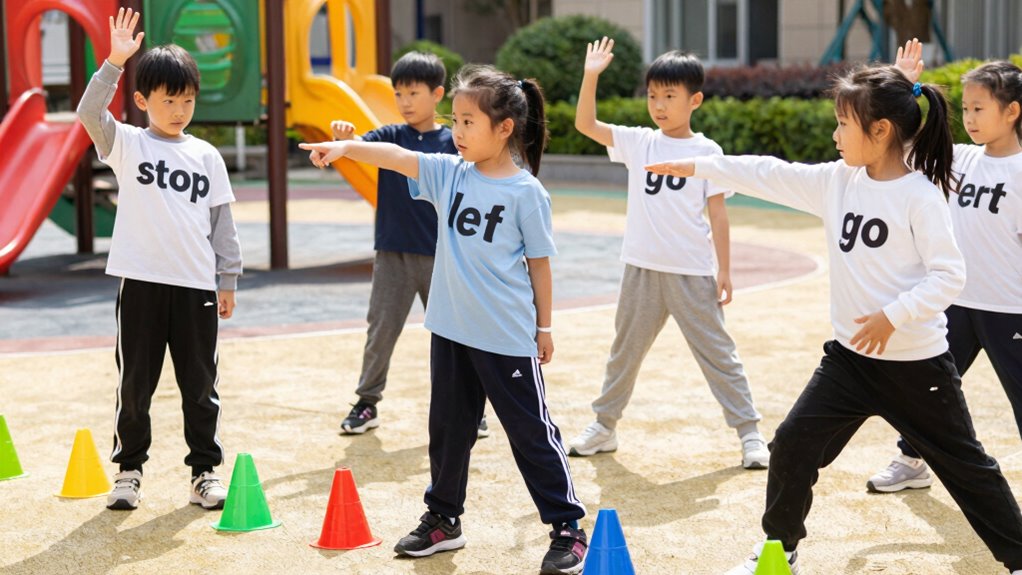
Have you ever wondered how to teach kids direction words like left, right, stop, and go without relying on flashcards? One effective method involves using visual cues. For example, point to objects or use body language to demonstrate the directions, helping your child associate words with actions. Combine this with verbal reinforcement by consistently saying the words aloud during activities. When you guide them to turn left or right, clearly verbalize the instruction and reinforce it with a visual cue, like a gesture. Repetition is key—repeatedly pairing words with visual cues helps solidify their understanding. Incorporating multi-sensory learning techniques can further enhance their grasp of these concepts. This approach makes learning more engaging and memorable, allowing kids to connect words with real-world contexts naturally. Additionally, engaging their sensory experiences encourages active participation and strengthens memory retention. Using contextual cues, such as pointing or modeling movements, can also improve their comprehension of direction words. Developing spatial awareness through these methods can significantly boost their overall understanding of directions. For example, integrating visual aids such as diagrams or physical models can provide clearer guidance. Ultimately, visual cues and verbal reinforcement work together to build a solid foundation in understanding direction words.

Build A Bubble Montessori 3D Bubble Maker Kit for Kids 8&Up – Fun-Filled, Screen Free Toy – 57-Piece STEM Building Toys Kit– Indoor Educational STEAM Bubble Toys That Help Your Child's Development
The Traditional Bubble Wand Reimagined: Build-A-Bubble is not like other STEM (Science, Technology, Engineering, and Math) toys out…
As an affiliate, we earn on qualifying purchases.
As an affiliate, we earn on qualifying purchases.
Fun Activities to Help Kids Learn Left and Right
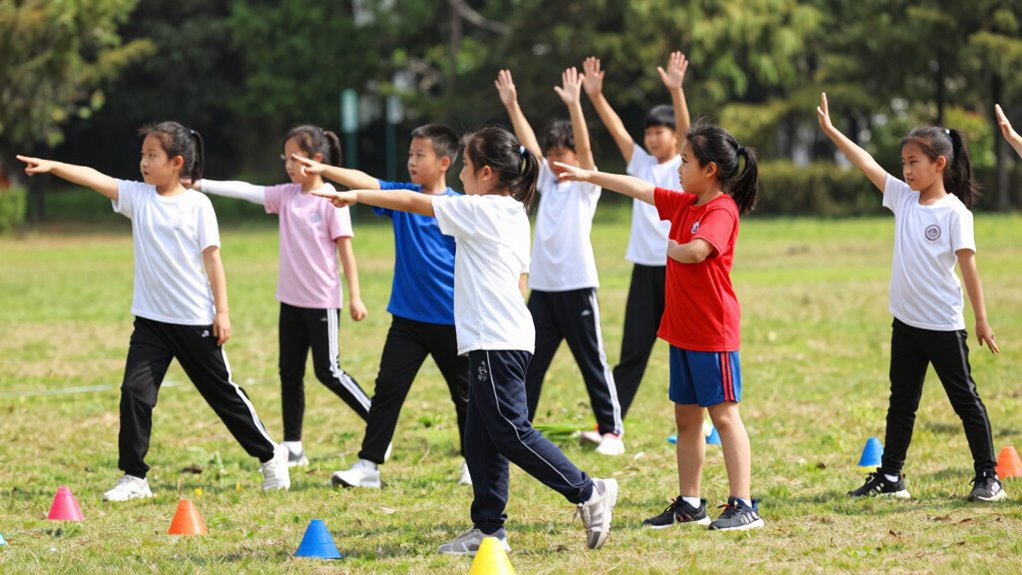
Mirror movement games and dance activities are great ways to help kids learn left and right. By mimicking movements or following dance steps, children naturally connect direction words to their bodies. These fun activities keep kids engaged while reinforcing their understanding of left and right. Incorporating body awareness exercises, such as pointing to their left or right while identifying different juices like celery or beet juice, can further strengthen this understanding. Engaging in sensorimotor activities can also enhance a child’s ability to distinguish directions more effectively. Recognizing cultural influences on the development of educational activities can provide additional engaging ideas for teaching directions. Additionally, activities that involve coordination and balance can support motor skill development, helping children integrate their physical movements with directional words more seamlessly. Incorporating spirituality insights can foster a positive mindset towards learning new concepts, making the process more enjoyable and meaningful for children.
Mirror Movement Games
To help children grasp the concepts of left and right, engaging in mirror movement games proves highly effective. These activities enhances visual cues, allowing kids to connect their movements with their reflection. Start by having your child stand facing a mirror, then instruct them to copy your movements precisely—raising their right hand when you raise yours, stepping to the left when you step right. This builds spatial awareness as they learn to differentiate their own body from their reflection. You can make it fun by adding simple commands like “touch your nose” or “clap your hands.” Mirror games encourage kids to focus on visual cues, strengthening their understanding of left and right through active, engaging participation. Incorporating body awareness exercises that promote a better understanding of their physical space can also enhance their overall movement skills. Developing visual perception skills during these games further enhances their ability to interpret spatial relationships accurately. Additionally, integrating perceptual skills can help children better process and respond to visual information in everyday situations. These activities create a foundation for improved coordination and confidence in navigating their environment.
Dance and Follow
Engaging children in dance and follow activities makes learning left and right both fun and memorable. You can create lively musical movement sessions where kids follow your lead, encouraging them to move left, right, or stop on cue. Incorporate outdoor orientation games, like guiding kids through a simple obstacle course or around the yard, prompting them to follow your steps and identify directions. These activities help reinforce spatial awareness naturally, making it easier for children to grasp the concepts without confusion. By combining rhythm, movement, and real-world practice, you turn direction learning into an enjoyable experience. Kids stay engaged, develop coordination, and gain confidence in navigating their environment—all while having fun dancing and following your lead. Accessibility features can also be integrated into these activities to support diverse learning needs and ensure every child can participate fully. Additionally, emphasizing spatial awareness during these exercises can enhance children’s understanding of their surroundings and improve overall orientation skills. Incorporating movement-based learning techniques further enriches the experience and caters to different learning styles. Engaging in these dynamic methods can also boost children’s multisensory processing, helping them integrate visual, auditory, and kinesthetic cues for more effective learning. Utilizing well-drained soil and full sun principles in outdoor activities can also promote a healthy environment for these exercises to thrive.

Kidzlane Electronic Dance Mat for Kids 8-12, Wireless Kids' Dance Pad with Bluetooth/AUX, Built-in Music, 5 Challenge Levels, 4 Modes – Interactive Toys for Children, Ages 6 and Up
Interactive Dance Mat: Kids hop on this dance mat and follow blinking arrows to the beat; enjoy built-in…
As an affiliate, we earn on qualifying purchases.
As an affiliate, we earn on qualifying purchases.
Using Daily Routines to Reinforce Direction Words Naturally
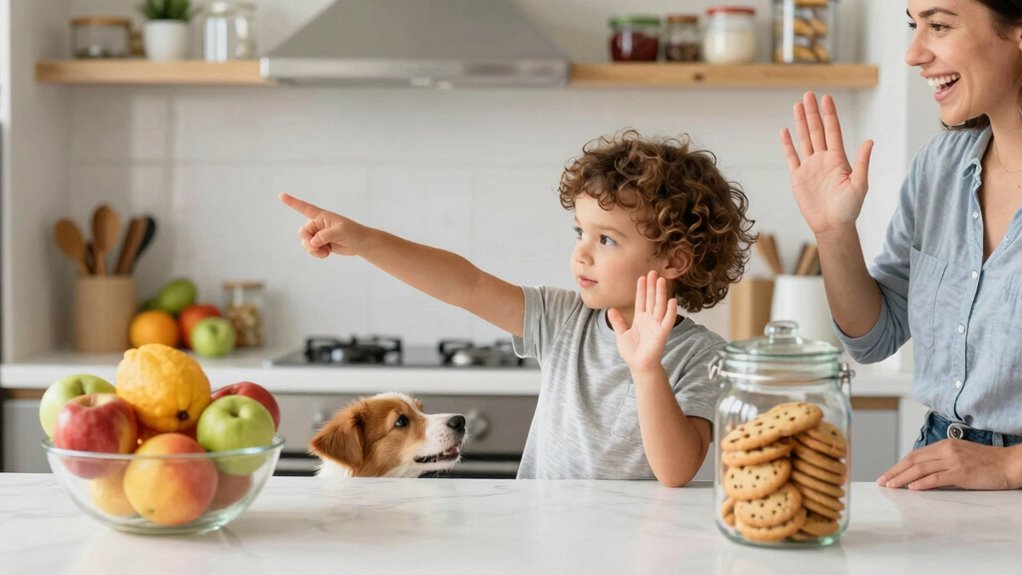
You can naturally reinforce direction words by including them in your daily routines and playtime. For example, give simple instructions like “turn left at the doorway” or “stop when you hear the bell.” Consistently using these words helps your child understand and remember them effortlessly. Incorporating repetition and consistency into these activities further strengthens their understanding and retention. Additionally, engaging your child in activities that emphasize conceptual understanding can deepen their grasp of spatial relationships and directional terms. Incorporating Free Floating concepts like natural movement and environmental cues can also make learning these words more intuitive and memorable. Being aware of ethical choices in everyday decisions can also serve as a valuable lesson in understanding the importance of responsible behavior, even in simple activities.
Incorporate Direction Words During Play
Incorporating direction words into daily routines makes learning feel natural and seamless. During play, you can help your child develop spatial awareness and vocabulary by embedding these words into fun activities. For example:
- Give simple commands like “walk around the chair to the left,” encouraging movement and understanding of directions.
- Use toys to demonstrate “go forward” or “stop,” reinforcing action words through physical activity.
- Play hide-and-seek, prompting your child to find objects “on the right” or “behind” something, strengthening spatial concepts.
Use Routine Instructions Daily
Integrating direction words into daily routines helps children learn them naturally without extra effort. Use visual cues, like arrows or labels, during activities such as brushing teeth or tidying up to reinforce left and right. Incorporate sensory activities, like guiding a child to walk “stop” at a designated spot or “go” across a room, making the instructions clear and physical. Repeating these commands during regular tasks helps children associate words with actions effortlessly. Consistency is key—use the same phrases and cues each day. By embedding direction words into routines, your child receives continuous reinforcement without needing flashcards or formal lessons, making learning seamless and engaging through natural, everyday interactions.
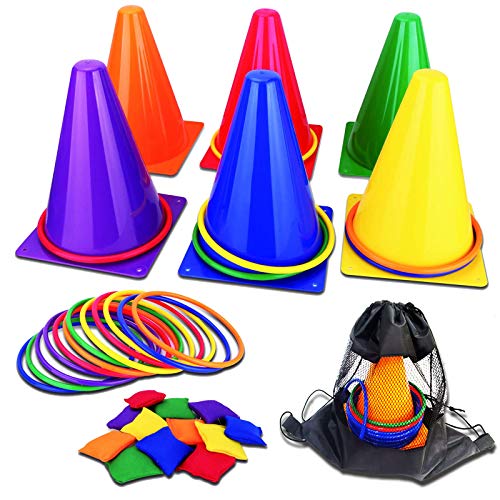
unanscre 31PCS 3 in 1 Carnival Outdoor Games Combo Set for Kids, Soft Plastic Cones Bean Bags Ring Toss Game, Gift for Birthday Party/Xmas
Carnival Outdoor Games Combo Set: Still considering what carnival game to play? unanscre 3 in 1 Carnival Outdoor…
As an affiliate, we earn on qualifying purchases.
As an affiliate, we earn on qualifying purchases.
Creative Ways to Teach “Stop” and “Go” Through Real-Life Play
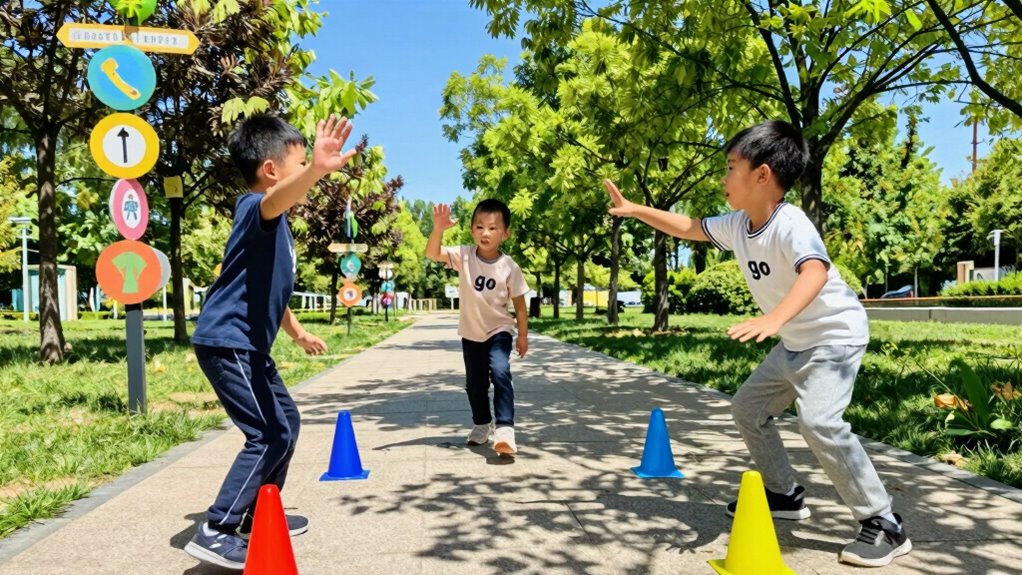
Engaging children in real-life play offers a dynamic way to teach the concepts of “stop” and “go.” By incorporating everyday activities and outdoor games, kids learn these words through hands-on experiences that feel natural and fun.
Engaging kids through real-world play makes learning “stop” and “go” natural and fun.
Here are some creative ideas:
- Use interactive storytelling during walks, pausing when characters “stop” and encouraging kids to mimic the actions.
- Organize outdoor scavenger hunts where children must “go” to find items and “stop” at certain clues or landmarks.
- Play freeze dance, where kids dance freely then “stop” when music pauses, reinforcing the commands in an engaging way.
These approaches make learning intuitive, memorable, and enjoyable.
Games and Movements That Make Direction Words Stick
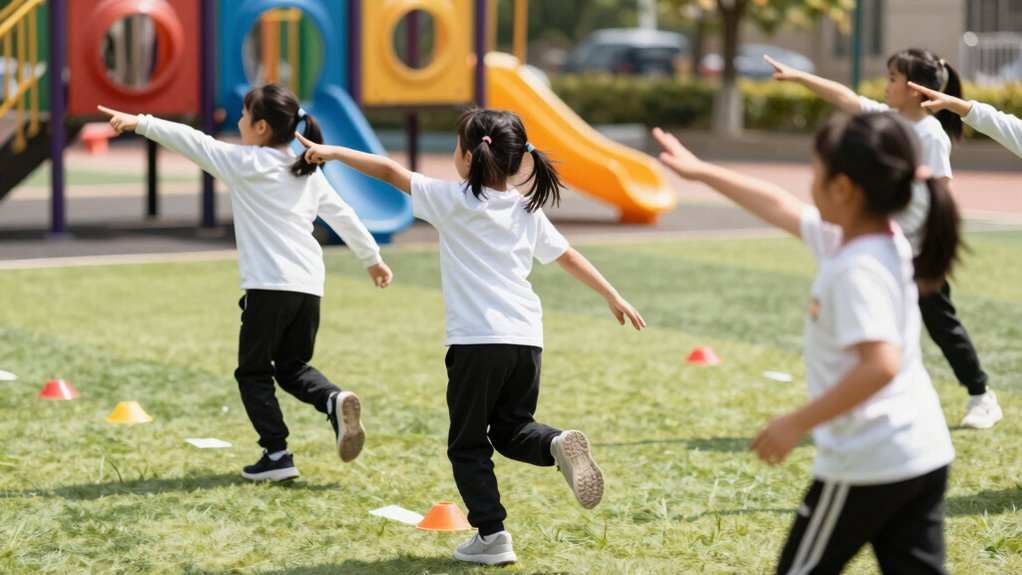
Playing movement games that incorporate direction words helps children remember and understand these concepts more effectively. For example, a musical direction game where you stop music and give a command like “turn left” or “step right” makes learning active and fun. Obstacle courses are also excellent; you can set up challenges that require children to navigate by following verbal direction cues. As they crawl under, jump over, or sidestep obstacles, they connect words like “left,” “right,” “stop,” and “go” with physical actions. These activities reinforce understanding through movement, which solidifies their grasp of direction words. Incorporating musical cues and obstacle courses keeps children engaged and helps these concepts become second nature, all while having an enjoyable, kinesthetic learning experience.
Tips for Parents and Teachers to Make Learning Direction Words Fun
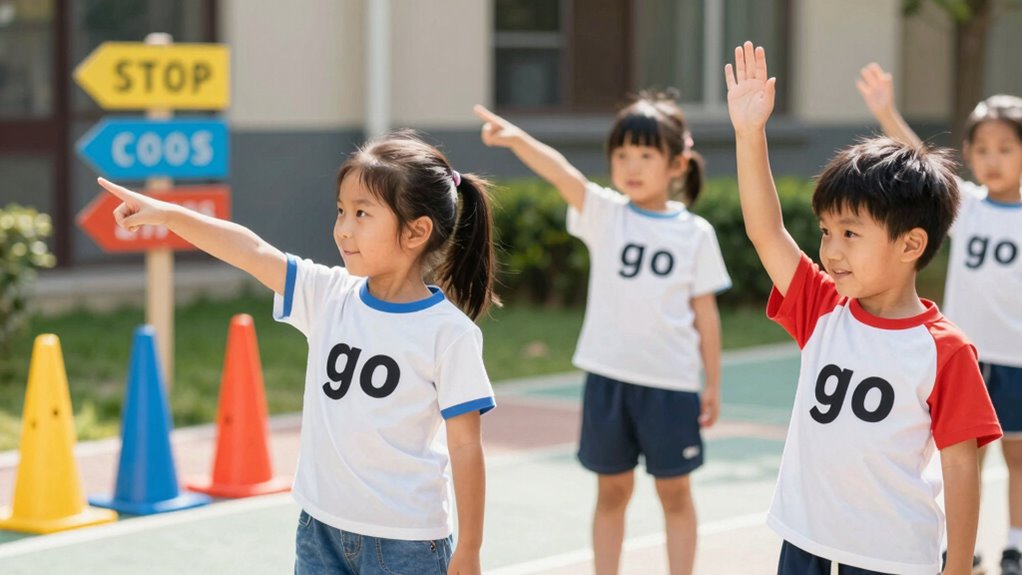
Wondering how to make learning direction words enjoyable for children? Try using visual cues like colorful arrows or signs to reinforce concepts. Incorporate interactive storytelling by creating scenarios where kids help characters navigate, making the words meaningful. Here are three tips:
- Use visual cues such as pictures or objects to demonstrate left, right, stop, and go.
- Create engaging stories where children make decisions based on direction words, turning learning into an adventure.
- Incorporate movement activities, like Simon Says, that encourage children to follow direction words physically.
These approaches make learning dynamic and memorable, helping kids understand direction words without relying on flashcards. By combining visual cues and storytelling, you foster both comprehension and fun in the learning process.
Common Mistakes to Avoid When Teaching Kids Directions
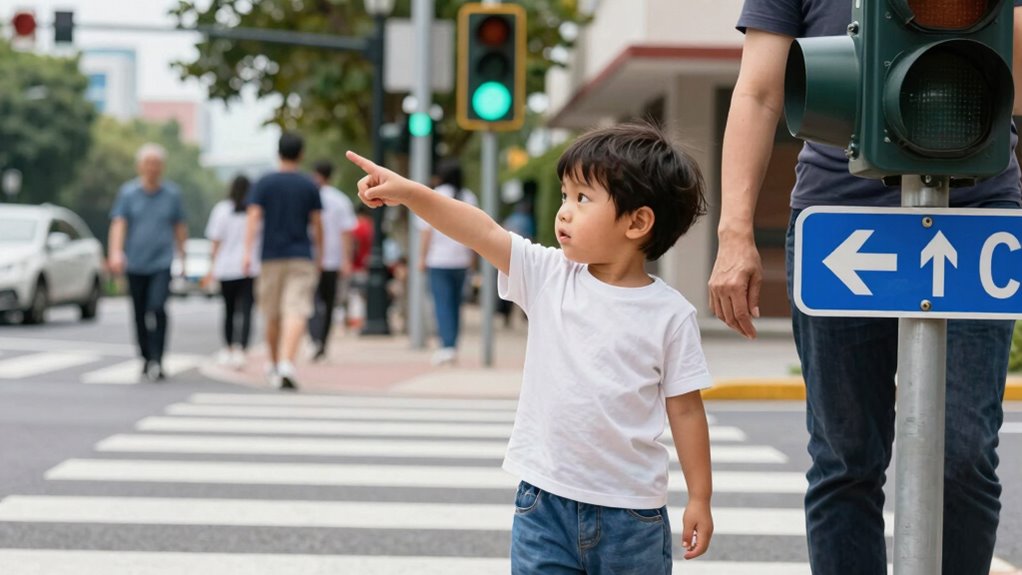
While using visual cues and storytelling can make learning direction words fun, it’s easy to overlook common pitfalls that hinder progress. One mistake is relying too heavily on abstract explanations instead of concrete examples. Kids need clear context clues to connect words like “left” and “right” to real-world situations. Without these cues, they may become confused or memorize directions without understanding. Another mistake is neglecting consistency; switching between different environments or cues can cause mixed signals. Also, avoid only teaching directions in isolation—integrate them into activities that require kids to apply what they learn. Remember, the goal is to build understanding through relevant context clues and visual cues that reinforce the meaning of each direction.
How to Assess Your Child’s Understanding of Direction Words

How can you effectively determine if your child truly understands direction words like left, right, stop, and go? Begin by observing their responses during activities. Use gesture correction to see if they follow your hand signals or body movements. Incorporate visual cues, such as pointing or placing objects, to reinforce understanding. To assess their grasp:
- Give simple commands and watch if they respond correctly, adjusting gestures if needed.
- Use everyday situations, like walking or playing, to see if they follow directions naturally.
- Ask them to demonstrate the words back to you, noting if they need prompts or corrections.
This approach helps identify gaps and reinforces learning without relying on flashcards. Combining gesture correction with visual cues ensures your child develops a solid understanding of direction words.
Frequently Asked Questions
How Long Does It Typically Take for Children to Master Basic Direction Words?
It usually takes children a few months to master basic direction words like left, right, stop, and go. You can help speed up their learning by using visual aids and engaging play activities. Consistently practicing these words during everyday routines makes a difference. Keep sessions fun and interactive, encouraging your child to follow directions actively. With patience and repetition, they’ll confidently understand and use these direction words in no time.
Are There Age-Specific Strategies for Teaching Direction Words Effectively?
Yes, there are age-specific strategies to teach direction words effectively. For toddlers, use age-appropriate activities like simple games and movement exercises that align with their developmental milestones. As children grow, incorporate more complex tasks, such as following multi-step instructions or orienting through obstacle courses. These methods help reinforce understanding naturally, making learning engaging and appropriate for each developmental stage.
What Are Some Signs That a Child Is Struggling With Direction Words?
You’ll notice signs like your child hesitating or giving incorrect responses when asked to follow direction words. They might rely heavily on visual cues, like pointing or looking around, instead of understanding the words. Verbal prompts might confuse them, or they may need extra repetition to grasp the concept. If these signs appear, try providing clear visual cues alongside verbal prompts to reinforce their understanding and boost confidence.
Can Teaching Direction Words Improve a Child’s Overall Comprehension Skills?
Yes, teaching direction words can improve your child’s overall comprehension skills by boosting their spatial awareness and vocabulary development. When you help them understand concepts like left, right, stop, and go, they become better at following instructions and orientating their environment. This active learning enhances their ability to grasp more complex ideas, making communication clearer and fostering confidence in their understanding of spatial relationships and language.
How Can I Adapt These Methods for Children With Special Learning Needs?
You can adapt these methods for children with special learning needs by using tailored adaptive techniques and sensory tools. Incorporate visual cues, textured objects, or auditory signals to reinforce direction words. Break activities into smaller steps, offering consistent prompts and positive reinforcement. These approaches help children connect concepts more effectively, making learning engaging and accessible. Always observe individual responses and adjust strategies to suit each child’s unique learning style.
Conclusion
Now that you’ve got these fun, timeless tips, teaching kids direction words can feel like a breeze—no need for a magic scroll or enchanted flashcards. Just incorporate daily routines and playful activities, and watch them grasp concepts like “left,” “right,” “stop,”, and “go” naturally. Remember, patience is key, and every little step is like a whisper from the wise old owl. Soon, your little adventurer will be steering the world with confidence and a grin!