
To develop executive functions through self-directed play, you should encourage your child to choose their activities, which helps exercise skills like planning, decision-making, and goal-setting. Imaginative and constructive play allows them to practice emotional regulation, persistence, and problem-solving naturally. Since the brain is highly adaptable during early childhood, these activities strengthen neural pathways essential for these cognitive skills. Keep exploring, and you’ll discover even more ways to support your child’s growth through play.
Key Takeaways
- Self-directed play activates neural pathways that strengthen executive functions like planning, decision-making, and problem-solving.
- Play-based activities foster emotional regulation and resilience by encouraging children to manage setbacks and persist.
- Choice-driven play exercises the prefrontal cortex, enhancing skills such as goal setting and strategy adjustment.
- Diverse self-directed play stimulates multiple brain areas, supporting holistic cognitive development and adaptability.
- Engaged, motivated play promotes lifelong executive skills crucial for navigating complex social and academic environments.

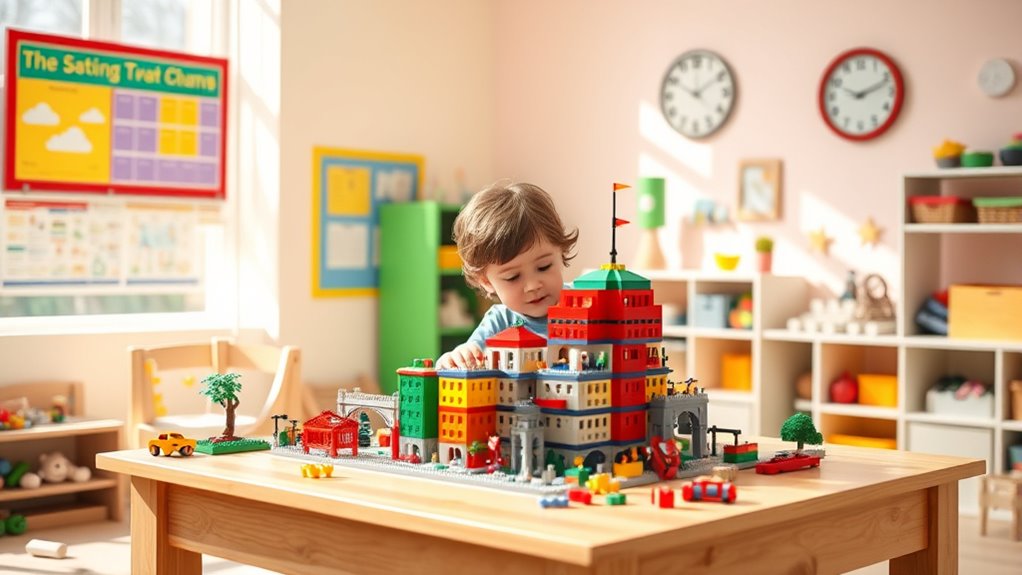
Have you ever wondered how some people stay organized, focused, and resilient in challenging situations? The secret often lies in the development of executive functions, which are essential mental skills that help you plan, focus, remember instructions, and juggle multiple tasks. One powerful way to nurture these skills in children—and even in yourself—is through play-based learning. When kids engage in self-directed play, they’re not just having fun; they’re actively building critical neural pathways that support brain development. This type of play encourages problem-solving, decision-making, and emotional regulation, all of which are core components of executive functions. As you observe a child immersed in imaginative play or constructing a complex LEGO set, you’re witnessing the cultivation of skills that will benefit them throughout life.
The beauty of play-based learning is its natural alignment with how the brain develops. During early childhood, the brain is highly plastic, meaning it can adapt easily to new experiences. When children choose their own activities and explore freely, they’re exercising their executive functions in real-time. They learn to set goals, monitor their progress, and adjust their strategies—all crucial aspects of self-regulation. These experiences help strengthen the prefrontal cortex, the brain region responsible for higher-order thinking, planning, and impulse control. The more children are encouraged to direct their own play, the more their brain’s executive functions are reinforced, laying a foundation for future academic success and social-emotional resilience.
Incorporating self-directed play into daily routines supports not only cognitive growth but also emotional intelligence. When kids decide what to build or how to resolve a conflict during play, they practice patience, flexibility, and perseverance. These are qualities that translate into better problem-solving skills and adaptability in real-world situations. Additionally, because play is intrinsically motivating, children are more engaged and likely to persist through challenges. This persistence is a direct reflection of developing executive functions—learning how to manage setbacks and stay focused on the task at hand.
Another important aspect is that engaging in diverse types of play can stimulate multiple areas of the brain, including those involved in neural pathways formation, which enhances overall cognitive resilience. Ultimately, fostering executive functions through play-based learning isn’t just about making children smarter; it’s about helping them become capable, confident individuals who can navigate complex environments with resilience. By allowing kids the freedom to explore, create, and learn through play, you’re actively supporting their brain development and equipping them with the skills they’ll carry into adulthood.

Tiny Land Pikler Triangle Set,7-in-1 Foldable Montessori Toddler Climbing Toys Indoor, Wooden Playground Jungle Gym for Kids, Climber Gift for Boys & Girls Toddler Climbing Toys (Morandi)
Tiny Land New Design Montessori Climbing Set: Crafted with a focus on both safety and aesthetics, this Montessori...
As an affiliate, we earn on qualifying purchases.
Frequently Asked Questions
How Does Self-Directed Play Specifically Enhance Working Memory?
Self-directed play boosts your working memory by challenging you to hold and manipulate information as you create and adapt rules or stories. As you switch between ideas, it enhances cognitive flexibility, making it easier to retain information during play. This process strengthens memory retention, helping you better manage multiple tasks and adapt to new situations, ultimately improving your overall executive functioning through engaging, self-driven activities.
What Age Is Ideal for Introducing Self-Directed Play for Executive Function Development?
You should introduce self-directed play during early childhood, around ages 2 to 5, as this is when play milestones naturally develop. Early childhood provides the ideal window to foster executive functions through play, helping children build problem-solving, planning, and self-control skills. By engaging in self-directed play at this stage, you support their cognitive growth, setting the foundation for lifelong learning and adaptability.
Can Self-Directed Play Replace Traditional Executive Function Training Methods?
Self-directed play can’t fully replace traditional executive function training, but it plays a crucial complementary role. You should provide appropriate adult guidance to help children navigate challenges and foster peer interaction, which enhances social skills and problem-solving. While self-directed play encourages independence and creativity, combining it with structured activities ensures thorough development of executive functions, balancing freedom with necessary support for prime growth.
How Do Cultural Differences Influence the Effectiveness of Self-Directed Play?
Cultural norms and play preferences considerably influence how effective self-directed play is for developing executive functions. You might find that in some cultures, children engage more freely in independent play, boosting skills like planning and self-control. In others, group or structured play is preferred, which can shape different aspects of executive function development. Adapting play activities to fit cultural contexts helps guarantee they effectively support children’s growth.
What Signs Indicate a Child Is Benefiting From Self-Directed Play in Executive Functions?
You’ll notice your child demonstrating play maturity, showing they can sustain a game and follow rules, which boosts executive functions. They also pick up on social cues, understanding others’ feelings and intentions during play. These signs indicate they’re benefiting from self-directed play, as it helps develop skills like self-regulation, problem-solving, and social awareness, all essential for their overall growth and success.

LOL-FUN Pikler Triangle Set with Slide for Toddler 1-3, Montessori Climbing Toys for 1 Year Old, Toddler Climbing Toys Indoor Pickler Climbing Set, Foldable Wooden Climber Jungle Gym for Kids
5-in-1 Pikler Triangle Set – Versatile pickler climbing set. Combines triangles, ramps, arches, slide, or frames. Adjustable for...
As an affiliate, we earn on qualifying purchases.
Conclusion
As you watch your child navigate their self-directed play, picture them building a fortress of imagination, each block representing problem-solving and decision-making. This vibrant world isn’t just fun—it’s where their executive functions grow strong, like roots anchoring a mighty tree. By encouraging their independence in play, you’re nurturing their ability to plan, adapt, and persist. Remember, every moment of creative exploration plants seeds for their bright, confident future—one playful step at a time.

JOYMOR 9-in-1 Pikler Triangle Set with Cushion (Large), Montessori Wooden Climbing Set for Toddlers with Colorful-Patterns Rocks, Seesaw, Arch, Foldable Ladder, Ramp, Toddler Climbing Toys Indoor
【Multiple Functions】The pikler triangle set includes a foldable ladder, an arch climbing set, a climbing wall, and a...
As an affiliate, we earn on qualifying purchases.
Amazon Product B0F6B5N5JF
As an affiliate, we earn on qualifying purchases.