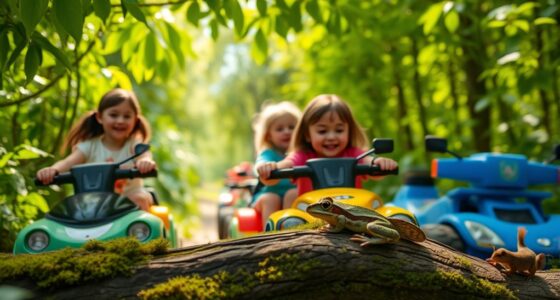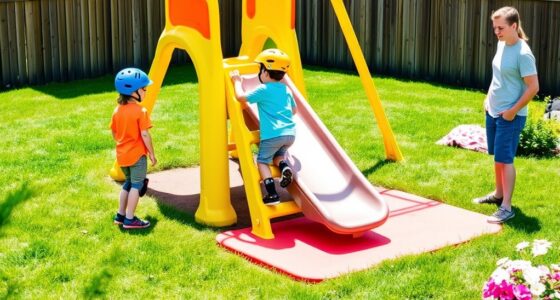

To create safe outdoor tracks and paths for ride-on toys, start by inspecting and maintaining the surface regularly, keeping it free of debris and ensuring it’s even and slip-resistant. Design gentle curves and include boundaries like low fences to keep kids on track. Install proper lighting for better visibility and always supervise children during play. Proper planning and upkeep help prevent accidents, and continuing will guide you through more safety tips for a fun, secure play area.
Key Takeaways
- Ensure constant adult supervision during outdoor play to prevent hazards and respond quickly to accidents.
- Regularly inspect and maintain track surfaces, repairing cracks and removing debris for a smooth, safe ride.
- Design tracks with gentle curves, proper boundaries, and ramps built to safety standards to reduce risks.
- Install adequate lighting to improve visibility and monitor children, especially during evening play.
- Incorporate routine safety checks and use stable, slip-resistant materials to keep paths secure and inviting.
Creating safe outdoor tracks and paths for ride-on toys is vital for ensuring kids can enjoy their playtime without unnecessary risks. When designing these routes, your primary focus should be on creating a secure environment where children can freely explore while minimizing hazards. The first step is guaranteeing that adult supervision is always present. Kids tend to get excited and may ignore potential dangers, so staying close allows you to intervene quickly if needed. Constant supervision also helps guide children to use the paths properly and avoid risky behaviors that could lead to accidents.
Surface maintenance plays a vital role in maintaining safety. Regularly inspecting the track or path for debris, cracks, or uneven surfaces helps prevent trips, falls, or sudden stops that could cause injuries. Keep the surface clear of loose stones, sticks, or other objects that might cause a ride-on toy to jolt or tip over. If you notice any damage or deterioration, repair it promptly to keep the area safe and smooth. Maintaining the surface also involves managing moisture levels; for example, after rain, ensure the track dries thoroughly to prevent slippery spots. Using appropriate materials, such as compacted gravel, asphalt, or rubberized surfaces, helps provide a stable and cushioned riding experience, reducing injury risk if a child falls.
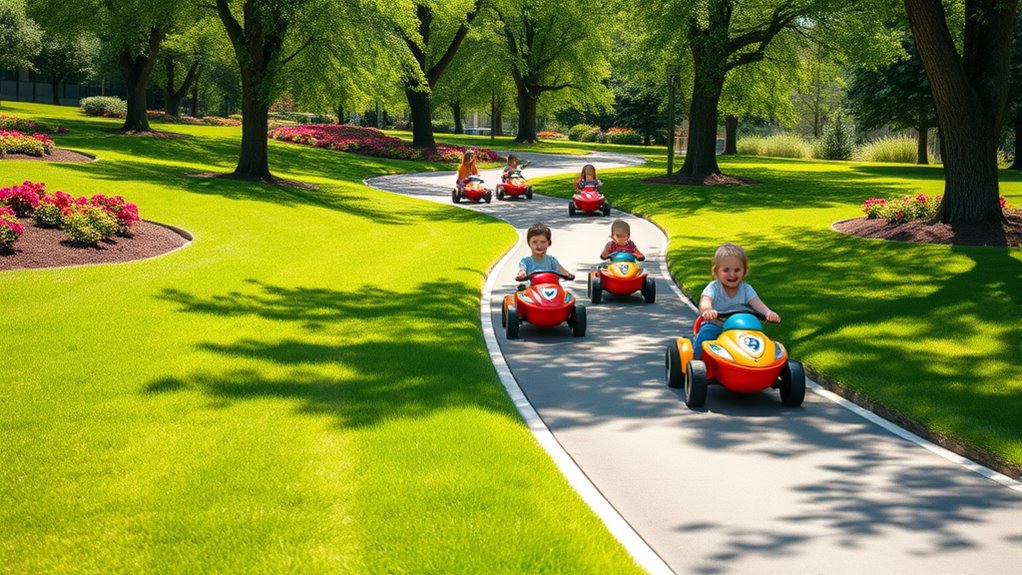
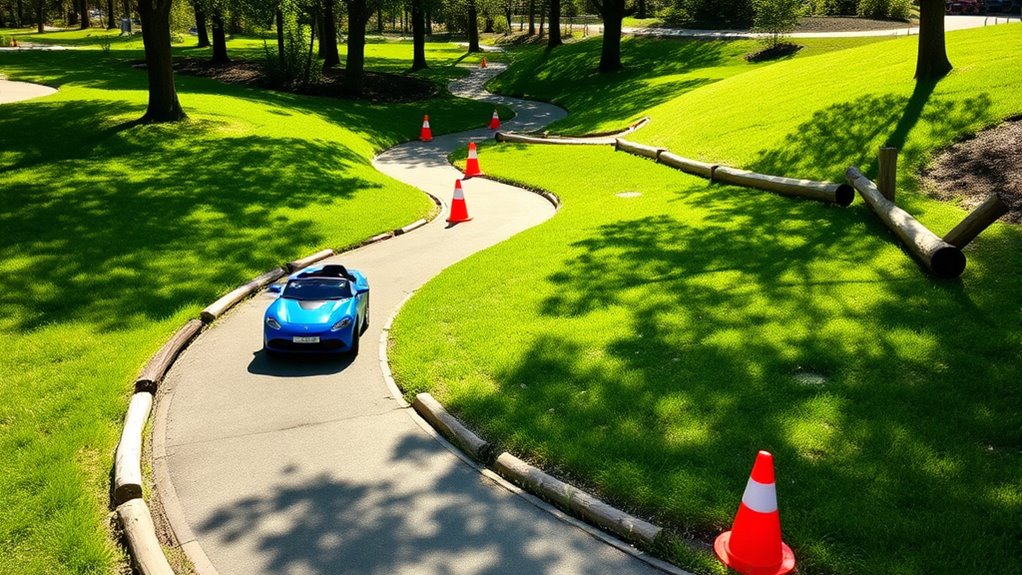
In addition to surface maintenance, consider the layout of your track. Curves should be gentle rather than sharp, giving kids enough space to maneuver without sudden turns that could cause them to lose control. Adding clear boundaries, like low fences or hedges, can keep children from veering off into unsafe areas while still allowing them to enjoy their ride. Incorporate gentle slopes or ramps if you want to add variety, but ensure these features are built with proper safety standards and are regularly checked for stability.
Lighting is another safety feature you shouldn’t overlook. Proper illumination extends playtime into the evening hours and enhances visibility, making it easier to supervise children from a distance. Well-lit paths also help you identify potential hazards early. If your outdoor track is used frequently, establish a routine for surface maintenance, checking it at least weekly. This proactive approach ensures the track remains safe and inviting for your children’s adventures. Additionally, selecting reliable home security systems can help monitor your property and keep young explorers safe even when you’re not nearby.
Ultimately, creating a safe outdoor track or path involves a combination of vigilant supervision, diligent surface maintenance, thoughtful design, and ongoing upkeep. By paying attention to these details, you give your kids a secure place to enjoy their ride-on toys, encouraging active play while keeping safety at the forefront.

Flexible Race Track Toys for Kids: 15 Ft Flex Race Car Ramp Track with Suction Cups – Rolls Up Portable DIY Racetrack Compatible with Diecast 1/64th Cars Model – Birthday Gifts for Boys Girls Ages 3+
🏁【 Build, Stick, Play Anywhere】 The 15ft flexible TPE track and strong suction cups allow kids to build…
As an affiliate, we earn on qualifying purchases.
As an affiliate, we earn on qualifying purchases.
Frequently Asked Questions
How Can I Prevent My Child From Falling off the Ride-On Toy?
To prevent your child from falling off a ride-on toy, always supervise closely and make certain they wear helmet safety gear. Choose a smooth, flat surface for riding and set clear boundaries. Teach your child to stay seated properly and avoid sharp turns. Regularly check the toy’s stability and brakes. By combining vigilant supervision tips with helmet safety, you help keep your child safe during playtime.
What Are the Best Materials for Outdoor Track Surfaces?
You should choose durable materials like asphalt, concrete, or compacted gravel for outdoor track surfaces to guarantee longevity and withstand weather. These options require minimal maintenance and handle frequent use well. For aesthetic options, consider stamped or colored concrete, or well-kept gravel, which can blend seamlessly with your yard’s landscape. Focus on durability considerations first, then select an aesthetic that complements your outdoor space for a safe, attractive track.
How Do Weather Conditions Affect Outdoor Ride-On Tracks?
Weather conditions are like a relentless tide that can erode your outdoor track’s safety. You need weatherproofing materials to shield it from rain, sun, and snow. Seasonal maintenance becomes your lifeboat, helping you fix cracks, remove debris, and ensure proper drainage. By staying proactive, you transform your track into a resilient pathway that keeps ride-on adventures safe and fun, no matter what the weather throws your way.
How Often Should I Inspect the Track for Safety Hazards?
You should perform safety inspections on your outdoor track at least once a month, especially after severe weather or heavy use. During these inspections, check for hazards like loose gravel, cracks, or debris. Regular track maintenance helps prevent accidents and guarantees ride-on toys stay safe. Keep an eye out for wear and tear, and promptly repair any issues you find. Consistent safety inspections keep your outdoor track fun and secure for everyone.
Are There Age-Specific Design Considerations for Outdoor Paths?
Yes, you should consider age considerations and developmental suitability when designing outdoor paths. For younger children, keep the paths smooth, gentle, and free of obstacles to prevent falls and injuries. Older kids can handle more complex routes with slight inclines or curves that challenge their coordination. Tailoring the design to age-specific needs guarantees safety and encourages skill development, making the outdoor space enjoyable and secure for all children.

Heavy Duty Interlocking Floor Tiles – Non-Slip, Self-Draining, Durable for Garage, Gym, Outdoor Patio, Garden Path, Workshop, Play Area (Red, 2pcs, 40x40x1.8cm)
Heavy-Duty Floor Mat: Designed for high-intensity environments, our durable workshop floor tiles offer exceptional Load-Bearing Capacity. Ideal for…
As an affiliate, we earn on qualifying purchases.
As an affiliate, we earn on qualifying purchases.
Conclusion
By designing safe outdoor tracks and paths, you turn playtime into a thrilling adventure without the risk of chaos or accidents. With every thoughtful detail, you create a playground that’s as secure as a fortress—yet as exciting as a race track. Your effort transforms ordinary outdoor spaces into magical zones where kids can race, explore, and build confidence. Keep safety your top priority, and you’ll give your little explorers a lifetime of joyful, worry-free rides!

Franklin Sports Kids Driveway Barrier Net – Visual Safety Fence – Outdoor Guard Barrier for Street, Pool + More – Protects up to 20 Feet – Easy Assembly
SET BOUNDARIES: Help keep kids safe and set playtime parameters with the Franklin Sports Kids Driveway Barrier Net,…
As an affiliate, we earn on qualifying purchases.
As an affiliate, we earn on qualifying purchases.

Fomlight: 4 Hanging LED Kids Safe Lights for Treehouse, Playhouse, Camping, Indoor/Outdoor, Battery-Operated Lamps with Pull Chain
✔️ SAFE FOR YOUR KIDS OR YOURSELF. These battery rope lights for treehouse playhouses or kids tent can…
As an affiliate, we earn on qualifying purchases.
As an affiliate, we earn on qualifying purchases.