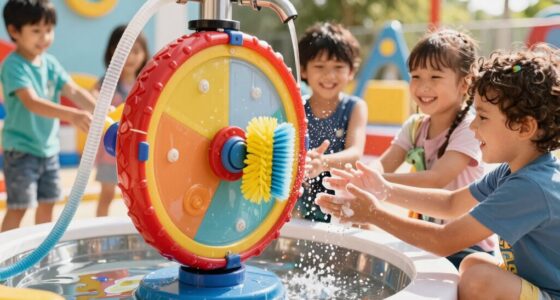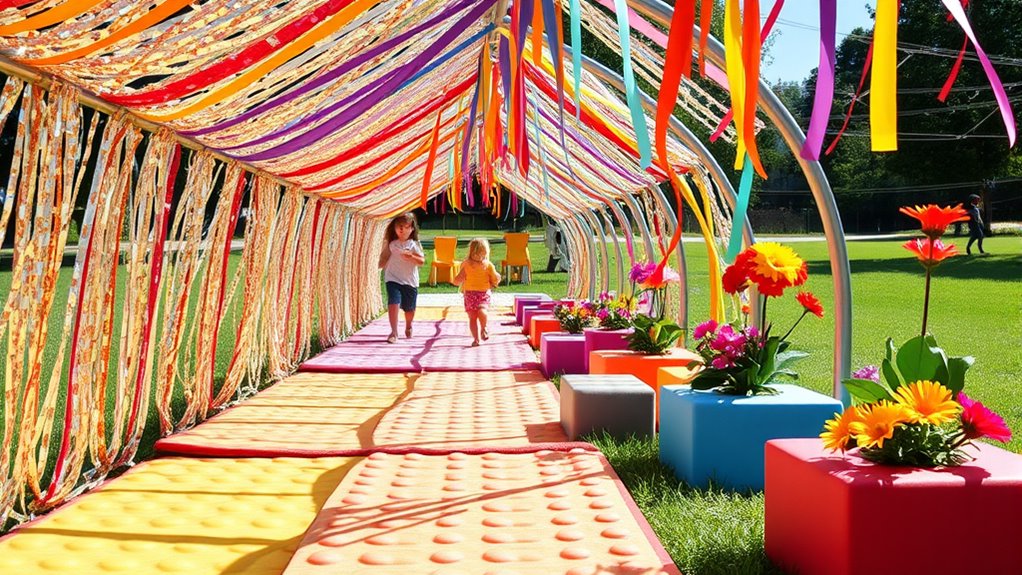

To create a sensory obstacle course, incorporate a variety of textured surfaces like soft foam, rough burlap, and smooth stones to stimulate tactile senses. Add auditory elements such as chimes, bells, or natural sounds to engage hearing. Combine these textures and sounds at different stations to keep the experience engaging and inclusive. Pay attention to children’s responses and adapt for safety and comfort. Keep exploring ideas, and you’ll find effective ways to boost sensory development through your course.

Turn the school run and nap time into listening time
- Thousands of audiobooks, podcasts and originals
- Listen on your phone, tablet or Echo — also offline
- Cancel anytime
Key Takeaways
- Incorporate diverse tactile textures like foam, rubber, and rough fabrics to stimulate touch and tactile discrimination.
- Integrate auditory elements such as bells, chimes, or natural sounds to enhance listening skills and cause-and-effect awareness.
- Place textured and sound-making surfaces at different points to encourage exploration and sensory engagement.
- Balance tactile and auditory stimuli to cater to various sensory preferences and promote inclusive participation.
- Observe children’s responses and modify elements to ensure a safe, engaging, and developmentally appropriate sensory experience.

Have you ever wondered how to make sensory play both fun and beneficial? Creating a sensory obstacle course is an excellent way to engage children in meaningful exploration while encouraging their development. To start, think about incorporating a variety of tactile textures. Use materials like soft foam, bumpy rubber mats, smooth stones, or rough burlap to create different surfaces that children can feel under their hands and feet. These textures stimulate the sense of touch and help children become more aware of different sensations. When designing the course, consider placing these textured elements at different points so kids can experience contrasting feelings as they navigate through. For example, they might walk across a line of smooth tiles, then step onto a rough patch of bark or a shaggy rug. This variation keeps the activity engaging and helps strengthen their tactile discrimination skills. Incorporating durable, safe wooden toys into your course can also provide sturdy, child-friendly elements that withstand active play and encourage creative use.
Auditory stimuli are equally important in creating a well-rounded sensory experience. Incorporate elements that produce interesting sounds, such as chimes, bells, or drums, at various stations along the course. When children press a button or hit a drum, they receive immediate auditory feedback, which can be both exciting and calming, depending on the sound. You can also use natural elements like rustling leaves or water features that make gentle sounds as children walk or touch them. These auditory cues not only add fun but also help children develop their listening skills and understand cause-and-effect relationships. For example, pressing a button that triggers a sound creates a connection between their actions and the resulting noise, reinforcing their understanding of how their movements influence their environment.
As you build your obstacle course, be sure to balance tactile textures and auditory stimuli in a way that caters to different sensory preferences. Some children might be more sensitive to certain textures or sounds, so offering a variety ensures everyone can participate comfortably. Incorporate sensory stations that combine both tactile and auditory elements, like a textured wall with embedded bells or a soft fabric tunnel that makes crinkling sounds when touched. Always observe how children respond to each element, and be ready to modify the course based on their reactions. The goal is to create an inviting space where kids can explore safely, develop their sensory processing skills, and have fun in the process. By thoughtfully blending tactile textures and auditory stimuli, you turn a simple obstacle course into a powerful tool for sensory development.
As an affiliate, we earn on qualifying purchases.
Frequently Asked Questions
What Safety Precautions Should I Consider During Setup?
You should prioritize supervision requirements to guarantee safety at all times. Constantly monitor participants and be ready to intervene if needed. Conduct hazard identification beforehand by inspecting all equipment and materials for sharp edges, loose parts, or other dangers. Keep the setup age-appropriate and clear pathways of obstructions. Having a first aid kit nearby and knowing emergency procedures also helps prevent and address accidents promptly.
How Can I Adapt the Course for Different Age Groups?
Think of your course as a tailor-made suit, fitting each age group perfectly. To adapt it, you can make age-appropriate modifications, like softer mats for little ones or more challenging obstacles for older kids. Adjust skill levels by increasing or decreasing complexity, ensuring safety and engagement. By customizing the course, you help every child enjoy and benefit from the experience, no matter their age or ability.
What Materials Are Most Engaging for Sensory Stimulation?
You should use materials that promote texture exploration and offer a variety of colors. Think soft fabrics, rough sandpaper, squishy gels, and textured mats to stimulate tactile senses. Bright, colorful items like painted stones or rainbow-colored balls keep it visually engaging. Incorporating different textures and vibrant colors keeps participants excited and helps them develop sensory skills through active exploration and play.
How Often Should the Course Be Rotated or Changed?
You should rotate or change your sensory obstacle course every 4 to 6 weeks to keep it engaging. Adjust the frequency based on seasonal variation and the needs of the participants. If they seem bored or overstimulated, increase the frequency of adjustments. Regular updates maintain interest and challenge, ensuring the sensory experience remains fresh and stimulating. Keep observing how users respond to fine-tune your approach effectively.
Can This Activity Be Modified for Children With Special Needs?
Imagine if you could make this activity as inclusive as the Wright Brothers’ first flight. You can modify the sensory obstacle course for children with special needs by incorporating textured paths, visual aids for those with visual impairments, and ramps for mobility challenges. Adjust obstacles to suit individual needs, ensuring every child feels safe and engaged. Your thoughtful modifications create a welcoming environment where all children can explore and thrive.
Conclusion
Now that you’ve built your sensory obstacle course, remember—you’re not just creating a fun experience, but a world of exploration and growth. Like a compass guiding curiosity, this course invites you to discover new senses and skills. Embrace the challenge with confidence, knowing each step is a chance to learn and connect. So go ahead, turn your creation into a journey—because every obstacle is an opportunity waiting to be conquered.
Fall Picks
fall essentials
As an affiliate, we earn on qualifying purchases.