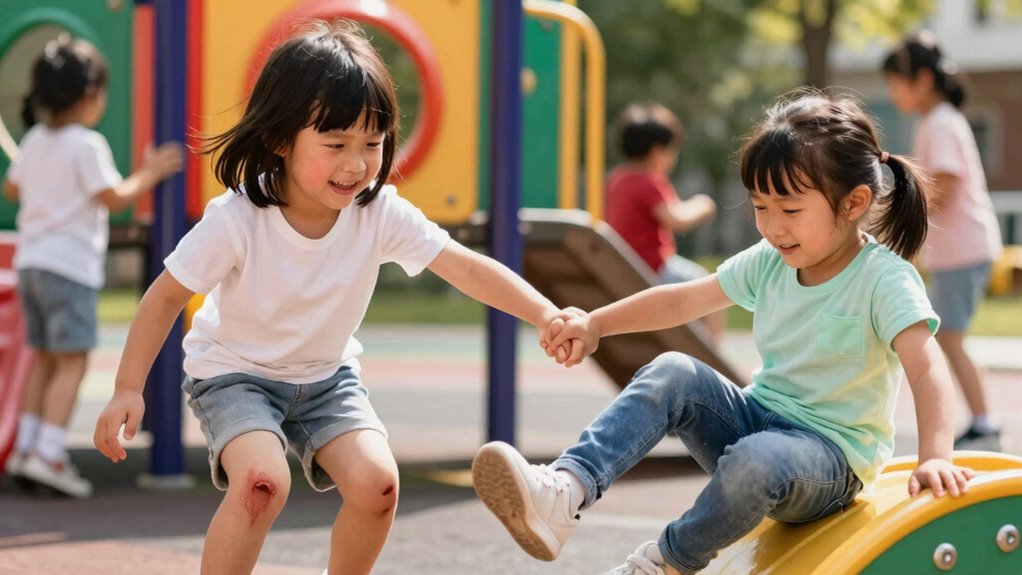

To help kids gain confidence after small mistakes during active play, encourage them to see errors as natural learning steps. Praise their efforts and resilience instead of perfection, and show them that mistakes are part of growing. Support and model accepting setbacks with patience and positivity. Peer encouragement also creates a safe space for risk-taking. Keep fostering this supportive environment, and you’ll help your child develop confidence that lasts—more ways to build their self-belief are just ahead.

Turn the school run and nap time into listening time
- Thousands of audiobooks, podcasts and originals
- Listen on your phone, tablet or Echo — also offline
- Cancel anytime
Key Takeaways
- Encouraging children to view mistakes as learning opportunities fosters resilience and confidence during active play.
- Parental praise for effort and persistence reinforces a growth mindset after small setbacks.
- Peer support and positive interactions reduce fear of judgment, promoting confidence after errors.
- Modeling graceful handling of mistakes by adults teaches children to accept setbacks positively.
- Creating a supportive environment where mistakes are celebrated encourages children to take risks and grow.

When kids make mistakes during play, it might seem like setbacks, but these moments are actually powerful opportunities for building confidence. As a parent, your encouragement plays a vital role here. Instead of focusing on what went wrong, praise their effort and resilience. For example, if your child misses a catch or falls during a game, let them know it’s okay to make mistakes and that everyone learns by trying again. Your positive words reassure them that errors are a normal part of learning, helping them develop a growth mindset. When you emphasize effort over perfection, your child begins to see mistakes not as failures but as stepping stones toward improvement. Recognizing the importance of positive reinforcement can further enhance their confidence during these moments.
Peer support is equally important in helping kids gain confidence after small mistakes. When children see their friends forgiving mistakes and encouraging each other, it creates a safe environment for taking risks. If a peer messes up during a team activity, others can respond with kindness or encouragement, which reinforces that mistakes don’t define their worth. This peer support fosters a sense of belonging and reduces fear of judgment, so your child feels more comfortable trying new things without the worry of failing in front of others. Over time, witnessing and experiencing this supportive attitude helps children accept mistakes as part of the process, rather than something to be ashamed of.
As a parent, your role extends beyond just offering words of reassurance. You can model accepting mistakes yourself, showing that even adults stumble and recover gracefully. This modeling demonstrates that errors are natural and manageable. When your child sees you handle setbacks with patience and a positive attitude, they learn to approach their own mistakes with less fear. Additionally, creating opportunities for peer interaction—like group games or collaborative projects—encourages kids to support each other, fostering confidence through shared experiences. When children cheer for their teammates or celebrate each other’s efforts, they internalize the idea that mistakes are part of growth and that everyone benefits from kindness and support.
In the end, confidence grows when children understand that mistakes during active play are normal and okay. Your encouragement can turn setbacks into lessons, while peer support builds a community where kids feel safe to take risks. By nurturing both individual reassurance and a supportive environment, you help your child develop resilience and belief in their abilities. Over time, they learn to view mistakes not as failures but as valuable steps in their journey to becoming confident, capable learners.
kids active play confidence building toys
As an affiliate, we earn on qualifying purchases.
As an affiliate, we earn on qualifying purchases.
Frequently Asked Questions
How Can Parents Encourage Resilience After Playtime Setbacks?
You can encourage resilience by using positive reinforcement when your child faces setbacks, praising their effort and determination. Foster a growth mindset by emphasizing that mistakes are opportunities to learn and grow. When your child encounters a playtime setback, stay supportive, avoid criticism, and remind them that persistence leads to improvement. This approach helps them build confidence, develop resilience, and view challenges as chances to become stronger and more capable.
What Role Do Teachers Play in Building Confidence Post-Mistakes?
Teachers play a pivotal role, shaping confidence like sculptors shaping masterpieces. You can boost a child’s growth mindset through positive reinforcement, highlighting efforts over outcomes, and encouraging them to see mistakes as learning opportunities. By celebrating small wins and emphasizing resilience, you help kids understand setbacks are just stepping stones, not roadblocks. Your support fosters a safe space where children feel empowered to try again, building unstoppable confidence after every misstep.
Are There Specific Activities That Boost Confidence After Errors?
You can boost confidence after errors by engaging kids in activities that emphasize positive reinforcement and skill development. For example, obstacle courses or team challenges encourage kids to try again and celebrate small successes. Praise their effort rather than perfection, helping them see mistakes as learning opportunities. These activities foster resilience, motivation, and a growth mindset, empowering kids to approach active play with confidence and a willingness to keep improving.
How Does Peer Support Influence Confidence Recovery in Kids?
Peer support plays an essential role in confidence recovery. When you see kids offering peer encouragement and social reassurance after mistakes, they feel less alone and more motivated. This supportive environment helps them understand that errors are part of learning. By actively engaging in positive peer interactions, kids build resilience, regain confidence faster, and develop a healthier attitude toward active play. Your encouragement fosters a safe space for growth and self-assurance.
What Signs Indicate a Child Is Struggling to Regain Confidence?
You’ll notice if a child is struggling to regain confidence when their self-esteem drops, shown through withdrawal or avoiding activity after a mistake. They might exhibit signs of emotional resilience being low, such as frustration, tears, or giving up easily. These cues indicate they’re having trouble bouncing back emotionally, and they could benefit from gentle reassurance and encouragement to rebuild their confidence and support their resilience.
Conclusion
Remember, each mistake during play isn’t a setback but a stepping stone. While errors might seem discouraging at first, they build resilience and confidence over time. Just like a child learns to ride a bike after falling, you’ll find that setbacks during play are simply part of growth. Embrace these moments—they’re the quiet victories shaping your child’s confidence, proving that sometimes, the biggest gains come after the smallest stumbles.
Halloween Picks
halloween
As an affiliate, we earn on qualifying purchases.