In a classroom setting, you can promote motor skills, social cooperation, and imagination through ride-on activities like obstacle courses, group challenges, and role-play scenarios. These activities encourage kids to climb, push, steer, and balance, building strength and coordination. They also teach sharing, turn-taking, and teamwork while fostering creativity. Organized and supervised use guarantees safety and organization. Keep exploring for more ideas to make ride-on activities even more engaging for your students.
Key Takeaways
- Incorporate obstacle courses and racing games to promote motor skills and physical coordination.
- Use group activities like relay races and shared riding challenges to foster teamwork and social interaction.
- Design designated safe areas for riding, ensuring supervision and age-appropriate equipment to maintain safety.
- Integrate imaginative role-play scenarios such as delivery or adventure stories to enhance creativity and cognitive skills.
- Encourage turn-taking, sharing, and respectful play to develop social skills alongside motor development.
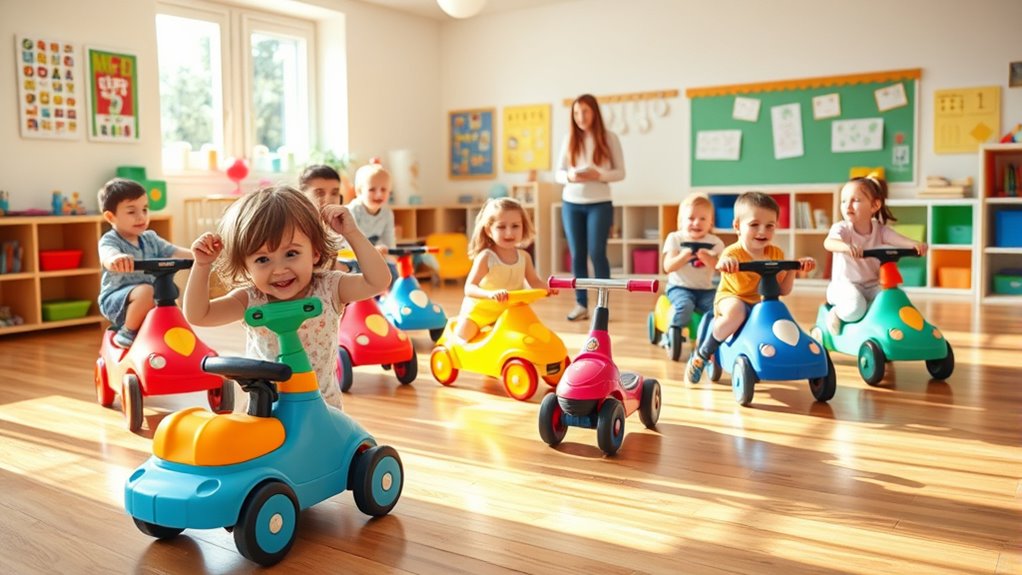
Incorporating ride-on activities into your classroom can transform learning into an engaging and active experience for young students. These activities not only make learning fun but also support essential developmental skills. When children climb onto a ride-on toy, they’re actively engaging their bodies, which helps develop their motor skills. Pushing, steering, or balancing on these toys encourages coordination, muscle strength, and spatial awareness. As they maneuver around the classroom, they’re practicing how to control their movements, which lays a foundation for more complex physical tasks later on.
Beyond motor skills, ride-on activities are excellent for fostering social development. When kids share a ride-on toy or take turns, they learn important lessons about patience, cooperation, and communication. These interactions create opportunities for social bonding and help children develop empathy as they navigate turn-taking and respectful play. You might notice children encouraging each other to ride or helping a peer get on and off the toy, which nurtures a sense of community and shared experiences.
Sharing ride-on toys teaches patience, cooperation, and empathy through turn-taking and respectful play.
To maximize these benefits, you can organize activities that promote both motor and social skills simultaneously. For example, setting up obstacle courses with ride-on toys challenges children to navigate different terrains, improving their balance and coordination. Incorporate group challenges where children work together to move objects or complete a task, requiring them to communicate and coordinate their actions. These activities encourage children to think about others’ needs and work collaboratively, enhancing their social skills.
Safety is vital when integrating ride-on activities into your classroom. Always supervise children closely and ensure the ride-on toys are age-appropriate and in good condition. Creating designated areas for riding can help contain activity and reduce accidents. Teaching children how to use the toys responsibly, such as riding at safe speeds and respecting their peers, fosters a culture of safety and respect. Additionally, appropriate storage solutions] can help keep the toys organized and in good condition when not in use.
In addition, incorporating storytelling or imaginative play with ride-on activities can boost cognitive and social development further. For instance, you might set up a pretend “race” or “delivery service,” encouraging children to role-play and communicate. These scenarios allow children to practice language skills and social interactions in a fun, dynamic way. Overall, integrating ride-on activities thoughtfully into your classroom provides a multisensory approach to learning that supports motor skills, social development, and a lively classroom environment.
ride-on toy obstacle course
As an affiliate, we earn on qualifying purchases.
As an affiliate, we earn on qualifying purchases.
Frequently Asked Questions
What Safety Precautions Should Teachers Take During Ride-On Activities?
You should guarantee helmet safety by requiring all children to wear properly fitted helmets before riding. Follow supervision guidelines strictly by constantly monitoring students, keeping them within a safe area, and maintaining a clear line of sight. Teach children how to operate ride-on toys safely, and set rules for riding to prevent accidents. Regularly inspect the toys for damages and ensure the riding environment is free of hazards.
How Can Ride-On Activities Be Adapted for Different Age Groups?
Think of adapting ride-on activities like tailoring a suit—each piece fits a different age and skill level perfectly. You can modify speed, complexity, and supervision to make activities age-specific and skill-appropriate. For younger children, simplify controls and add safety features; for older kids, introduce challenges to build coordination. By customizing these elements, you guarantee every child enjoys and benefits from ride-on activities safely and confidently.
Are There Eco-Friendly Ride-On Options Available for Classrooms?
Yes, eco-friendly ride-on options are available for classrooms. You can choose vehicles made from recycling materials or opt for solar-powered vehicles, which reduce emissions and energy use. These options teach students about sustainability while providing fun activities. By incorporating recycling materials into the design or selecting solar-powered models, you promote environmental awareness and create a greener learning environment that aligns with eco-conscious values.
How Do Ride-On Activities Improve Motor Skills in Young Children?
Ride-on activities boost your child’s fine motor skills by encouraging grasping, steering, and balancing. These activities also enhance sensory development as children experience different textures, sounds, and movements. When kids navigate rides, they refine hand-eye coordination and spatial awareness, which are essential for overall motor development. By engaging in these playful exercises, your child builds strength, coordination, and confidence, supporting their growth in a fun, active way.
What Budget-Friendly Ride-On Activity Ideas Exist for Large Classrooms?
You can create cost-effective solutions with DIY ride-on activities for large classrooms by repurposing household items like boxes or old tires into ride-on vehicles. Organize group activities where children take turns, promoting social skills. Use inexpensive materials such as cardboard, foam, or recycled items to make simple, safe ride-ons. These DIY projects foster creativity, are budget-friendly, and guarantee all children can participate in active, engaging play that supports motor development.
classroom ride-on toys for kids
As an affiliate, we earn on qualifying purchases.
As an affiliate, we earn on qualifying purchases.
Conclusion
Imagine your classroom as a bustling city, where ride-on activities are the vehicles fueling excitement and learning. Just like a well-organized traffic system keeps everyone moving smoothly, these activities channel energy into focus and creativity. I saw a student who struggled to stay engaged suddenly light up when riding a scooter, transforming chaos into curiosity. With these simple, classroom-friendly ride-on activities, you turn everyday moments into joyful journeys of discovery and growth.
kids ride-on scooter with safety features
As an affiliate, we earn on qualifying purchases.
As an affiliate, we earn on qualifying purchases.
interactive ride-on activity set
As an affiliate, we earn on qualifying purchases.
As an affiliate, we earn on qualifying purchases.