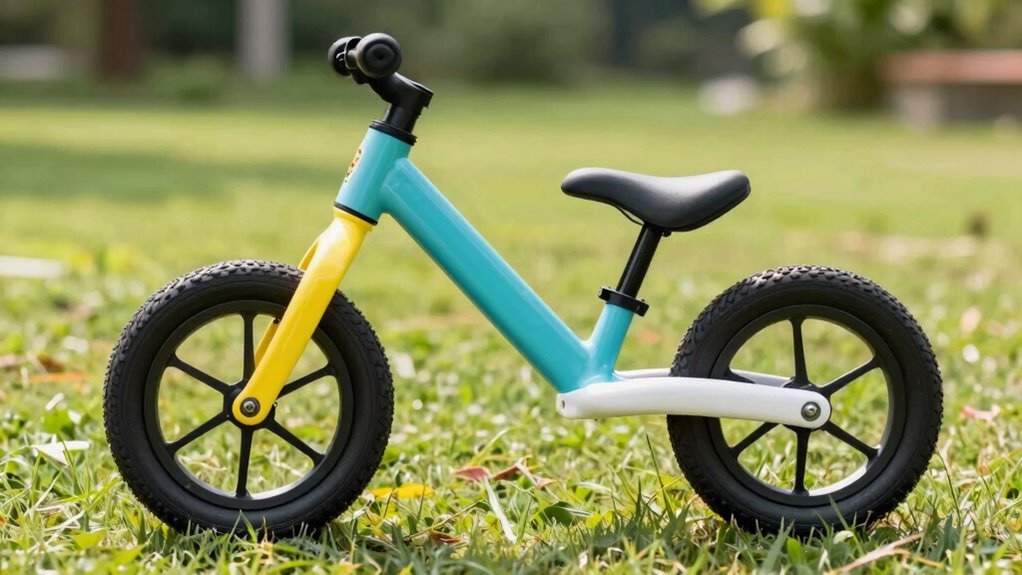

Understanding balance bike geometry helps you pick a bike that supports your child’s safety and confidence as they learn. Look for features like a low frame and appropriately small wheels, which make balancing and steering easier for beginners. A well-designed geometry offers stability, easy on/off access, and encourages natural riding postures. These choices build your child’s skills gradually and safely. Keep exploring to discover how the right geometry can set your little rider up for success.

Turn the school run and nap time into listening time
- Thousands of audiobooks, podcasts and originals
- Listen on your phone, tablet or Echo — also offline
- Cancel anytime
Key Takeaways
- Proper bike geometry ensures a comfortable, stable riding posture that enhances balance and confidence for young children.
- Smaller wheel sizes improve steering control and help children reach the ground easily, boosting safety and independence.
- Well-designed balance bikes feature a low top tube and appropriate sizing to make mounting, dismounting, and handling easier for beginners.
- Stable geometry minimizes falls and encourages safe exploration, supporting gradual skill development like steering and braking.
- Considering bike geometry helps parents select long-lasting, adaptable bikes that grow with their child’s improving riding abilities.
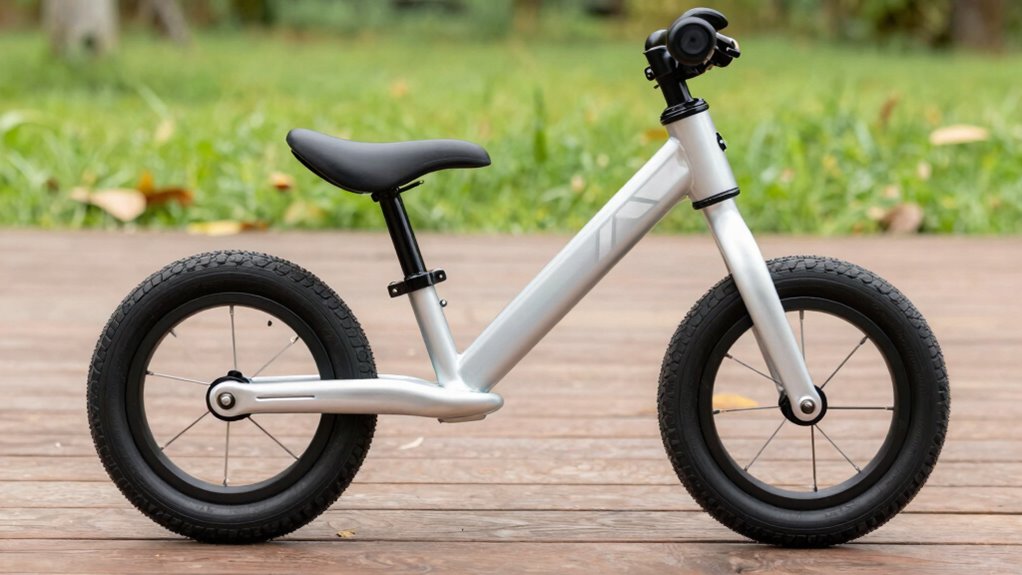
Have you ever wondered how the design of a balance bike affects a child’s riding experience? The geometry of a balance bike plays a vital role in shaping how your child learns to balance, steer, and develop confidence. When you understand the basics of bike geometry, it becomes easier to choose a bike that promotes safe and effective learning. A well-designed balance bike has a frame that positions your child comfortably, with a low center of gravity that enhances stability. This means they can focus on mastering balance without feeling unstable or insecure. The wheel size is also important; smaller wheels are perfect for young beginners because they make steering more manageable and allow your child to touch the ground easily, which boosts their confidence.
Training techniques are closely linked to bike geometry. When your child’s bike is appropriately sized and balanced, they can practice skills like steering and stopping with less frustration. Proper geometry encourages a natural riding posture, which makes learning feel more intuitive. For example, a bike with a slightly sloped top tube allows your child to get on and off easily, helping them build independence. As they grow more confident, they can gradually practice gliding, turning, and braking. The right geometry supports these training techniques by providing a stable platform that minimizes falls and encourages safe exploration. Additionally, understanding bike geometry can help you assess how well a bike will support your child’s growth and skill development over time. Recognizing the importance of bike safety features ensures that the bike you select will prioritize your child’s well-being during each ride. Being aware of how bike design influences safety can also guide you in making more informed choices. Moreover, a well-considered geometry design can adapt to your child’s changing needs as they develop new riding skills. Incorporating biodiversity principles in selecting outdoor play equipment can further enhance your child’s appreciation for nature and sustainable practices as they learn to ride.
As an affiliate, we earn on qualifying purchases.
Frequently Asked Questions
How Does Bike Geometry Affect a Child’s Balance?
Bike geometry directly influences a child’s balance by affecting how stable and comfortable they feel. A bike frame suited for their size helps them stay balanced easily, while handlebar height impacts steering control and posture. When the bike has the right geometry, your child can focus on maintaining balance without struggling with awkward handling. Proper geometry makes riding more fun and confidence-boosting, helping them develop skills more quickly.
Is a More Aggressive Geometry Better for Beginners?
Imagine a sleek bike frame slicing through the air, tire size perfectly matching your child’s small hands on the handlebars. An aggressive geometry isn’t ideal for beginners because it makes steering more sensitive and less stable, which can overwhelm a child just learning to balance. Instead, look for a bike with a relaxed frame and appropriately sized tires, helping your child feel confident and in control as they master their balance.
How Do I Measure the Right Bike Size for My Child?
To find the right bike size for your child, measure their inseam length and compare it to the bike’s seat height. Focus on bike frame materials for weight considerations, making certain it’s lightweight enough for easy handling. Check pedal positioning to ensure comfortable foot placement and smooth pedaling. Proper sizing promotes confidence and safety, so always double-check measurements and aim for a bike that fits well without straining.
What Are the Signs of Improper Balance Bike Geometry?
If your child’s balance bike has improper geometry, you’ll notice issues like difficulty steering or uneven tire wear. Check the frame alignment; if it’s bent or misaligned, it can cause instability. Also, verify the tire pressure is correct—low pressure makes riding harder and less safe, while overinflation affects balance. These signs indicate that the balance bike’s geometry isn’t suitable, making it harder for your child to learn and enjoy riding.
Can Geometry Influence the Bike’s Weight and Handling?
Think of a tightrope walker balancing effortlessly—your bike’s geometry influences its weight and handling. A well-designed frame offers better stability, making it easier to control, while precise wheel alignment reduces wobbling. If the geometry is off, your bike might feel heavier or less responsive, forcing more effort to steer or maintain balance. Proper geometry guarantees your child’s ride feels natural, light, and confident—like walking a straight line on a tightrope.
Conclusion
Understanding balance bike geometry helps you choose the right bike for your child’s growth and confidence. Remember, a well-fitting bike isn’t just about comfort — it’s about fostering independence and joy in riding. As the saying goes, “A journey of a thousand miles begins with a single step.” By grasping these simple principles, you’re setting your little rider up for a lifetime of adventure and fun on two wheels.
Halloween Picks
halloween
As an affiliate, we earn on qualifying purchases.