
Understanding the center of gravity is key to maintaining balance on ride-ons. When you push or lean, your body shifts this point, affecting stability. A low, wide base and proper weight distribution help keep your center of gravity within the support area, preventing falls. By adjusting your posture and movements, you control your balance during tricks or sharp turns. Keep exploring these physics principles, and you’ll see how mastering them improves your riding skills.
Key Takeaways
- The center of gravity is the point where an object’s weight is concentrated, crucial for maintaining stability in ride-on toys.
- Proper balance involves keeping the center of gravity within the support base, preventing tipping during movement.
- Design features like low, wide bases and low seats help lower the center of gravity for enhanced stability.
- Leaning or shifting body weight adjusts the center of gravity, aiding in balance and control during riding or tricks.
- Skilled riders learn to anticipate how movements affect the center of gravity to maintain stability during complex maneuvers.
Have you ever wondered how the center of gravity affects the stability and balance of objects and living beings? It’s a fascinating concept that plays a vital role in how things stay upright, move, or topple over. When you ride a bike, a skateboard, or a toy car, you’re unknowingly dealing with the principles of the center of gravity. Basically, it’s the point where all the weight of an object is concentrated. Your goal, whether consciously or not, is to keep this point in the right position to maintain balance.
The center of gravity is key to maintaining stability in objects and living beings.
Imagine you’re on a ride-on toy. As you push forward or lean to one side, your body shifts the center of gravity. If it moves too far outside the base of support—like the tires or wheels touching the ground—the toy becomes unstable and could tip over. That’s because the line drawn downward from your center of gravity no longer falls within the contact area of the ride-on. To stay balanced, you need to keep this point aligned properly over the base, which is why leaning or shifting your weight helps you regain stability.
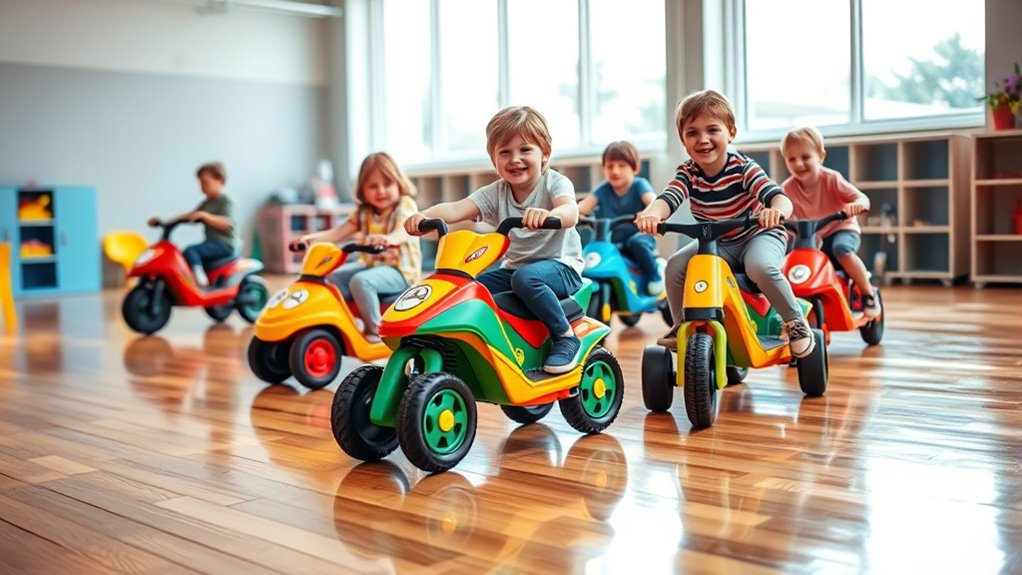
The design of ride-ons takes the center of gravity into account. Low and wide bases help keep the center of gravity close to the ground, making it easier to stay balanced. For example, a ride-on with a broad wheelbase or a low seat position distributes weight more evenly, reducing the chance of tipping. When you ride, you learn to adjust your posture and movements to keep your center of gravity within the support area. By doing so, you develop a natural sense of balance that’s rooted in physics.
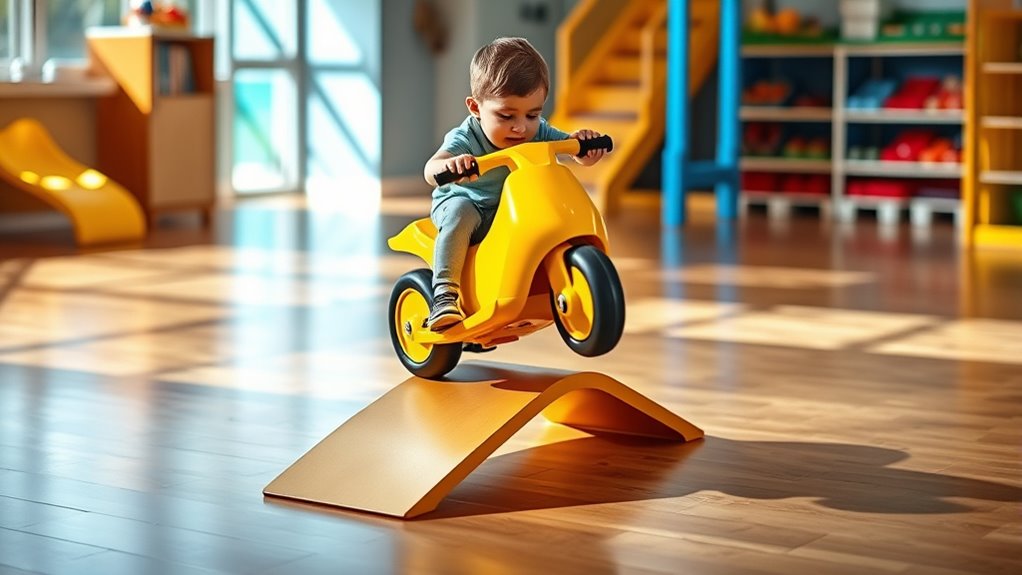
Understanding the center of gravity also explains why certain tricks or stunts are more challenging. When you perform a sharp turn or try to lift one wheel off the ground, you shift your weight and change the position of your center of gravity. If you don’t control this shift, your ride-on could become unstable. That’s why skilled riders learn to anticipate how their movements affect balance, making adjustments to stay upright. Additionally, knowing about the support area helps you understand how stability is maintained during movement and balance challenges.
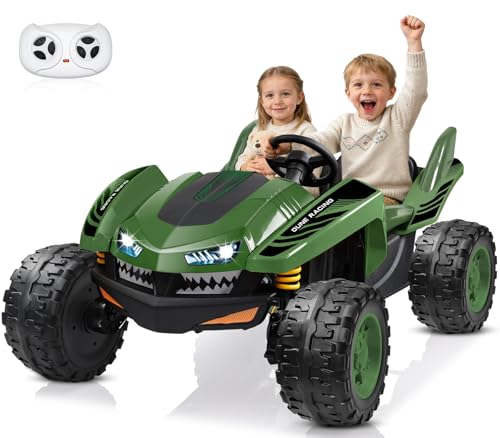
ANPABO 24V XXL Ride on Toys for Big Kids, 4x200W Powerful Motors, Max 5.1MPH, EVA Tires, 21" Spacious 2 Seater, 4-Wheeler Suspension, Remote Control, Bluetooth, Ride on Cars for Kids Aged 3-12(Green)
[Ocean Messenger Landing] Is your little one also fascinated by the great sharks in the ocean? ANPABO has…
As an affiliate, we earn on qualifying purchases.
As an affiliate, we earn on qualifying purchases.
Frequently Asked Questions
How Does Gravity Affect Ride-On Stability During Motion?
Gravity pulls your ride-on downward, affecting its stability during motion. When you move, gravity shifts the center of gravity, especially during turns or slopes. If the center of gravity moves too high or too far to one side, the ride-on becomes less stable and may tip over. To stay balanced, keep your weight low and centered, and avoid sudden, sharp turns that can destabilize the ride.
Can Center of Gravity Influence Ride-On Safety Features?
Yes, your ride-on’s center of gravity can influence its safety features. A lower center of gravity makes it more stable, reducing the risk of tipping over during turns or sudden stops. Designers often optimize the center of gravity to enhance safety, adding weight or repositioning components. By understanding this, you can better appreciate how safety features work to protect you and keep your ride-on balanced during play.
What Materials Best Enhance Balance in Ride-On Designs?
You should choose materials like low-density plastics, rubber, or lightweight metals such as aluminum to enhance balance in ride-on designs. These materials help keep the center of gravity low and improve stability, reducing the risk of tipping. Using a broader, heavier base made from these materials can further enhance balance. Make sure the materials are durable and non-slip, providing safety and comfort during use.
How Do Different Terrains Impact Balance and Gravity?
Different terrains critically impact your ride-on’s balance and gravity. Rough, uneven surfaces challenge your stability, making it harder to maintain control. Soft terrains like sand or snow can cause your wheels to sink, shifting the center of gravity unexpectedly. Conversely, smooth, level surfaces help keep your balance steady. To stay safe and balanced, adjust your speed and steering based on the terrain, and make sure your ride-on is designed to handle diverse environments.
Are There Age-Specific Considerations for Learning About Gravity?
Nearly 80% of children under five are curious about how gravity works. You should consider age-specific factors when teaching about gravity because young children are still developing their motor skills and understanding of physics. For early learners, hands-on activities and simple explanations work best. As they grow, you can introduce more complex concepts, ensuring their curiosity is nurtured safely and effectively at each developmental stage.

SEREED Toddler Balance Bike 2 Year Old, No Pedal Kids Toy Bike for 2-5 Years Old, Tool-Free Adjustment, Gift for 2-3 Boys Girls, Customize Plate with 3pcs Stickers (White)
STURDY AND SAFE- What you think for your kids is what SEREED toddler balance bike have. Wide and…
As an affiliate, we earn on qualifying purchases.
As an affiliate, we earn on qualifying purchases.
Conclusion
As you master balancing ride-ons, you’re not just learning about physics—you’re discovering your own inner steadiness. The center of gravity becomes a symbol of stability amid life’s unpredictable shifts, guiding you to find your equilibrium. Each wobble and correction reflects your growing confidence, reminding you that control is a dance between effort and surrender. Embrace this journey, knowing that mastering balance today paves the way for steadiness in every challenge tomorrow.

Radio Flyer Busy Buggy, for Toddlers 1-3, 3-in-1 Push Walker Ride On Car with 17 Sensory Activities, Anti-Tip Feature, Under-Seat Storage, Horn and Gears, 42 lb Capacity, Toddler Ride On Toys
3-IN-1 WALKER & RIDE-ON: The Radio Flyer Busy Buggy is a versatile first vehicle with push walker, ride…
As an affiliate, we earn on qualifying purchases.
As an affiliate, we earn on qualifying purchases.

John Deere Ride On Toys Sit 'N Scoot Activity Tractor for Kids Ages 18 Months and Up, Green
Stable Design: Watch your kids scoot to their heart's content with a foot to floor John Deere tractor…
As an affiliate, we earn on qualifying purchases.
As an affiliate, we earn on qualifying purchases.