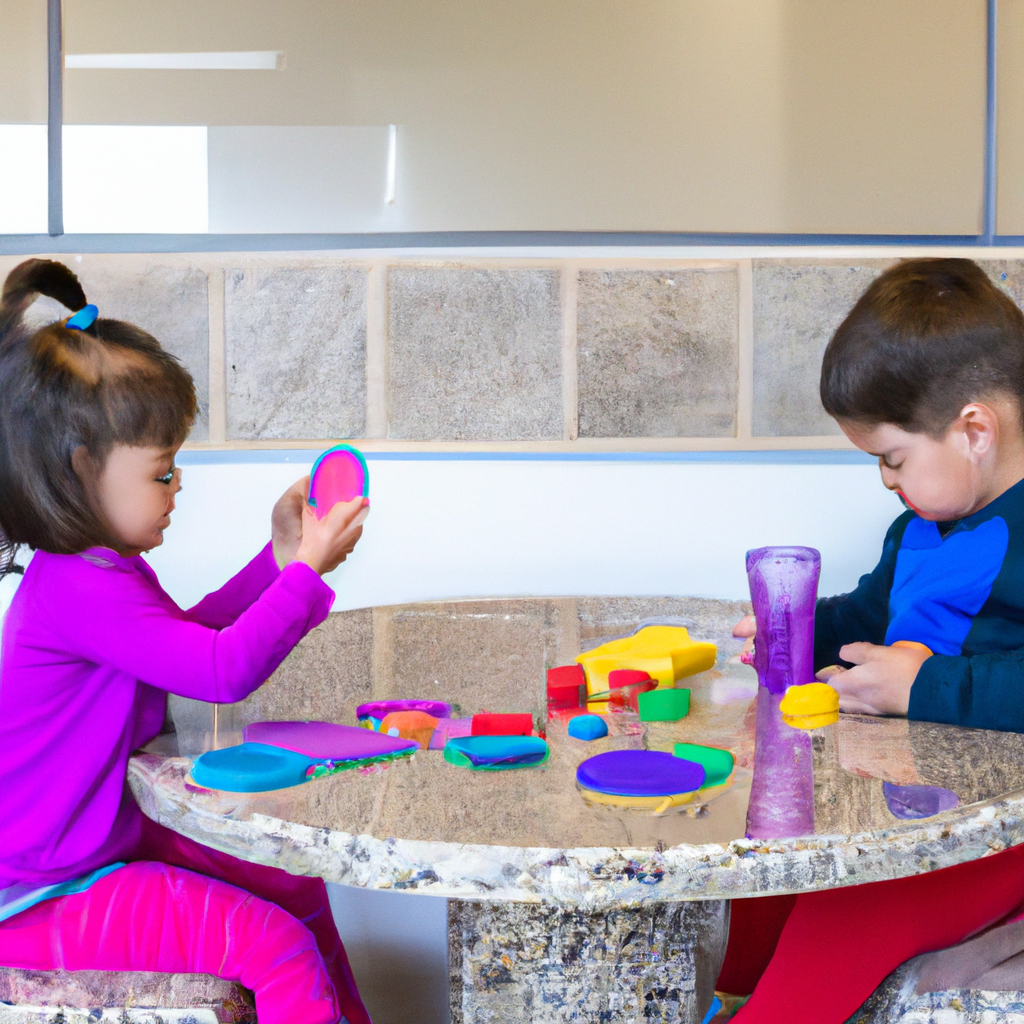

Encouraging children to make safe choices during active play helps them develop independence and confidence. You can support this by guiding them to assess risks, set boundaries, and recognize when a task is too difficult. Allowing children to explore within safe limits fosters decision-making skills that last beyond childhood. By teaching them responsibility and respecting boundaries, you help them learn to evaluate their environment. Keep exploring these strategies to create a balanced, empowering play experience.

Turn the school run and nap time into listening time
- Thousands of audiobooks, podcasts and originals
- Listen on your phone, tablet or Echo — also offline
- Cancel anytime
Key Takeaways
- Encourage children to make choices during play to foster independence and confidence.
- Guide children in assessing risks and recognizing when tasks are too difficult or unsafe.
- Create a balanced environment with boundaries that enable safe exploration and decision-making.
- Teach safety rules and boundaries to help children evaluate acceptable behaviors independently.
- Incorporate environmental awareness to promote responsible and sustainable active play choices.
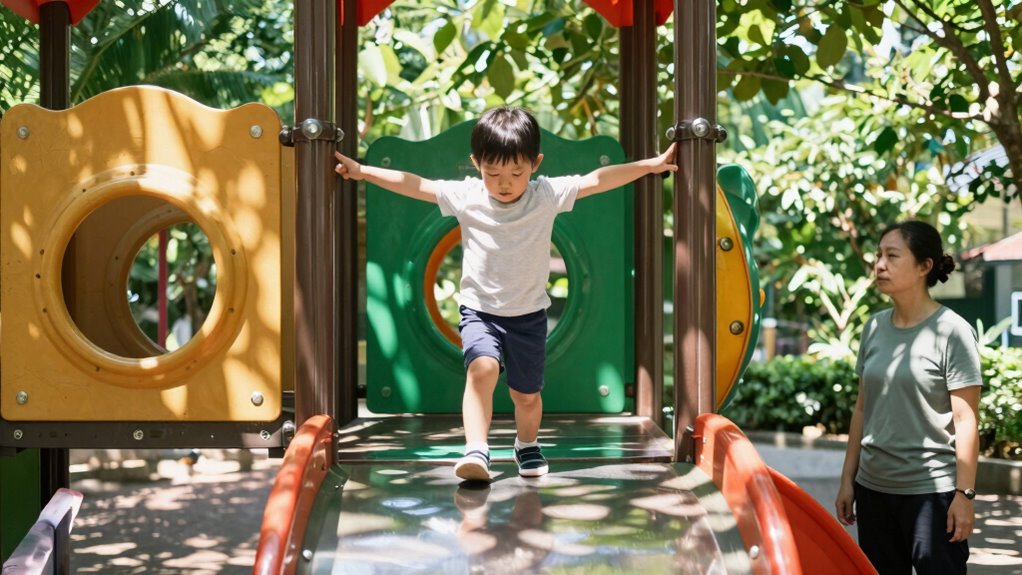
When children engage in active play, giving them opportunities to make choices fosters their sense of autonomy while promoting safe decision-making. As a caregiver or educator, your role involves guiding children to evaluate potential risks and make informed decisions, which helps build their confidence and independence. Encouraging children to assess risks during play allows them to develop essential decision-making skills—skills that will serve them well beyond childhood. Instead of removing all hazards, you should create a balanced environment where children can explore and learn to navigate challenges safely. This involves teaching them to recognize when a task might be too difficult or dangerous and when it’s appropriate to proceed or seek help.
To support this, you can introduce simple risk assessment tasks, like climbing a low structure or jumping over a small obstacle. Ask questions such as, “Is this safe for you right now?” or “What could happen if you try this?” These prompts prompt children to think critically about their actions. Over time, they learn to weigh the benefits and potential dangers of their choices, which sharpens their decision-making skills. It’s essential to give children space to make their own choices, even if they sometimes fail, because mistakes are valuable learning opportunities. When a child attempts something new and encounters a challenge, guide them with encouragement and gentle advice rather than taking over completely. This way, they develop resilience and an understanding of their limits.
Creating an environment that encourages safe risk-taking also involves setting appropriate boundaries. Clear, consistent rules help children understand what is acceptable and what isn’t, giving them a framework within which they can exercise autonomy. For example, you might establish boundaries around the height of climbing equipment or the type of activities permitted in certain areas. These boundaries are not meant to restrict but to protect, enabling children to explore within safe limits. As they become more confident, they will learn to evaluate risks independently, making decisions based on their growing understanding of safety. Recognizing the importance of biodiversity in creating healthy environments further supports children’s understanding of the natural world and their role within it. Promoting awareness of natural ecosystems can also enhance their appreciation for safety and sustainability. Incorporating environmental awareness into active play helps children connect safety with the broader context of caring for the planet. Additionally, understanding ecosystem health can foster a sense of responsibility and respect for their surroundings, reinforcing safe and sustainable behaviors.
children's safety play equipment
As an affiliate, we earn on qualifying purchases.
As an affiliate, we earn on qualifying purchases.
Frequently Asked Questions
How Does Autonomy Influence Children’s Social Skills During Play?
When you give children autonomy during play, it boosts their peer interaction and decision-making skills. They learn to negotiate, share, and resolve conflicts more effectively, which enhances their social competence. By making their own choices, they feel more confident and motivated to engage with others. This active role in play helps children develop essential social skills that support positive relationships and cooperative behavior in various social settings.
What Are Common Challenges in Ensuring Safety While Promoting Independence?
You often face the challenge of balancing risk assessment with fostering independence, where a minor oversight can lead to safety issues. Coincidentally, your supervision strategies, like active engagement and clear boundaries, play an essential role. Ensuring safety while promoting autonomy requires constant vigilance, adjusting your approach as children explore and develop new skills. This delicate balance helps children learn risk management while feeling supported and secure.
How Can Caregivers Balance Risk and Safety Effectively?
You can balance risk and safety by conducting thorough risk assessments before active play and implementing clear safety protocols. Start by identifying potential hazards, then adjust the environment to minimize dangers without restricting independence. Communicate safety rules clearly, and supervise actively to guarantee compliance. This approach allows children to explore and develop autonomy while staying protected, fostering confidence and learning through safe, engaging experiences.
Are There Specific Age Groups That Benefit More From Autonomous Play?
You’ll find that age-specific play benefits children differently based on their developmental stages. Toddlers thrive with simple, exploratory activities that promote independence, while preschoolers benefit from more complex, challenge-based play that develops problem-solving skills. As children grow, their capacity for autonomous play increases, so adapting activities to match their age and developmental stage helps them build confidence, independence, and essential skills safely.
How Can Environments Be Modified to Support Safe Autonomous Activities?
Did you know children who engage in autonomous play develop better decision-making skills? To support safe activities, modify your playground design with clear zones for different risk levels, and incorporate soft surfacing to cushion falls. Conduct regular risk assessments to identify potential hazards, and guarantee equipment is age-appropriate. These steps empower kids to explore confidently while minimizing injury risks, fostering independence and safe play.
Conclusion
As you observe children during active play, you realize that granting autonomy isn’t just about freedom—it’s about guiding them safely toward confident choices. But what happens when they face unexpected challenges? Will they trust their instincts or hesitate? The balance you strike now shapes their ability to make safe, independent decisions in moments that matter most. And in those vital seconds, their next move could change everything—are you ready to see what they’ll choose?
Halloween Picks
halloween
As an affiliate, we earn on qualifying purchases.