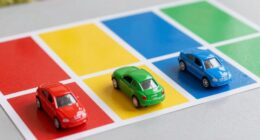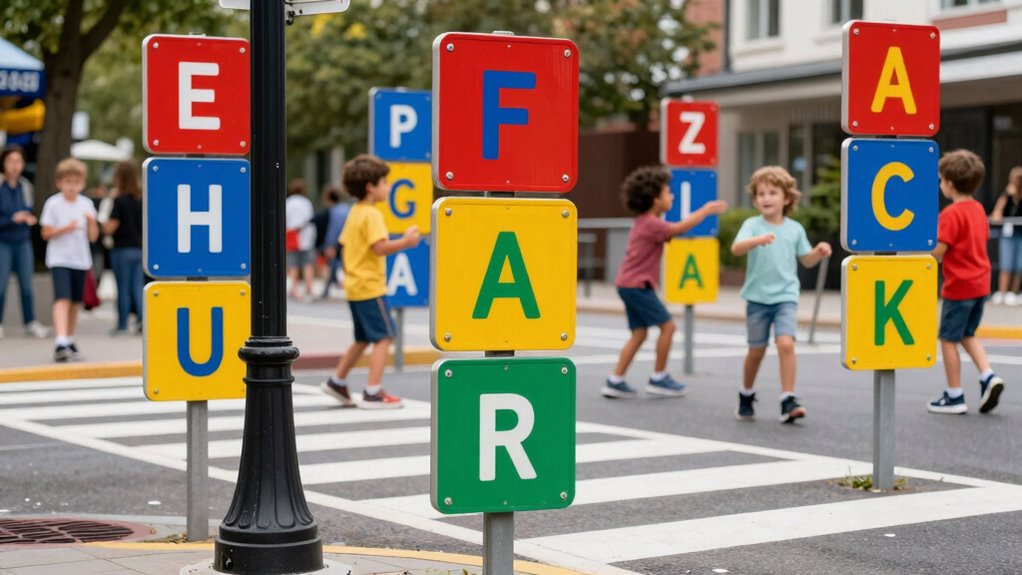

Brightly colored alphabet road signs turn everyday trips into fun learning moments by serving as interactive tools you and your child can explore together. As you drive or walk, kids recognize letters, sounds, and patterns naturally, making learning engaging rather than a chore. Games like finding words that start with certain letters make the experience active and memorable. Keep reading to discover more ways these signs transform routine outings into valuable literacy experiences.

Turn the school run and nap time into listening time
- Thousands of audiobooks, podcasts and originals
- Listen on your phone, tablet or Echo — also offline
- Cancel anytime
Key Takeaways
- Colorful alphabet road signs transform everyday trips into engaging literacy experiences.
- Interactive signs help children recognize letters and sounds naturally during routine walks or drives.
- Incorporating letter-based challenges on signs encourages active participation and quick thinking.
- Signs serve as environmental cues to reinforce early reading skills through real-world observation.
- Routine encounters with alphabet signs foster seamless, everyday literacy development for young learners.
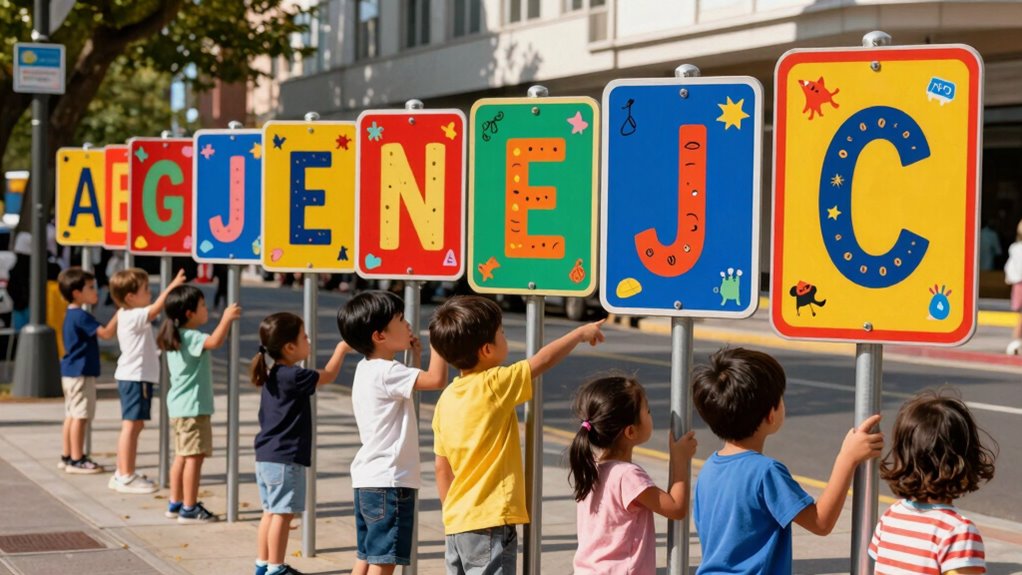
Imagine turning your neighborhood into a lively classroom, where colorful alphabet road signs encourage children to engage with letters while they walk or drive. These signs aren’t just static markers; they serve as interactive tools that transform everyday trips into fun learning experiences. When kids see these signs, they’re naturally drawn to recognize shapes, sounds, and patterns—building their visual recognition skills effortlessly. Instead of passively observing street signs, children actively participate by identifying letters, connecting them with sounds, and even spelling simple words. This process turns the neighborhood into a dynamic space for early literacy, making learning feel like a game rather than a chore.
Interactive games become a key part of this approach. For example, you can challenge your child to spot a specific letter on a sign or to find all the words starting with a certain letter. These activities turn routine drives into opportunities for quick thinking and letter recognition. As your child searches for the letter “A,” they’re strengthening their ability to recognize it among other symbols, reinforcing their visual recognition skills. Plus, they’re learning to associate letters with sounds in a natural, intuitive way. The more they engage with these signs, the more confident they become in identifying letters in different contexts, paving the way for reading fluency.
The beauty of alphabet road signs is how they seamlessly integrate literacy into daily life. Instead of sitting at a desk, children are actively observing, comparing, and making connections between symbols and sounds in their environment. You can make it a game by asking questions like, “Can you find the letter ‘B’ on that sign?” or “What sound does the letter on this sign make?” This encourages kids to think critically and develop their phonemic awareness. Over time, these little interactions add up, helping children recognize letters quickly and with ease, which is essential for early reading success. Incorporating visual recognition skills into everyday routines can significantly boost early literacy development. Using automated grammar tools to identify passive voice can support teachers and parents in creating clear, engaging educational content that promotes active learning strategies.
Products Worth Considering

LEGO Boost Creative Toolbox 17101 Fun Robot Building Set and Educational Coding Kit for Kids
Chicco Cortina Together Double Stroller for Infants and Toddlers

Graco Magnum Project Painter Plus Paint Sprayer
As an affiliate, we earn on qualifying purchases.
Frequently Asked Questions
How Do Alphabet Road Signs Improve Long-Term Literacy Skills?
Alphabet road signs improve your long-term literacy skills by boosting visual recognition and phonemic awareness. As you frequently see and read these signs, you reinforce letter shapes and sounds, making it easier to recognize words quickly. This active engagement helps you develop stronger decoding skills, which are essential for reading fluency and comprehension. Over time, these signs create a familiar environment that encourages continuous learning and literacy growth.
Are These Signs Effective for Children With Learning Disabilities?
Research shows that 20% of children have learning disabilities, making inclusive strategies essential. Alphabet road signs can be effective for children with special needs by providing visual cues that reinforce letter recognition. These signs serve as engaging learning strategies, helping children with learning disabilities connect symbols to sounds more actively. By incorporating such signs, you create an accessible environment that supports diverse learning needs and encourages early literacy development.
What Age Group Benefits Most From Alphabet Road Signs?
You’ll find that early elementary children benefit most from alphabet road signs, as they’re developing alphabet recognition and visual learning skills. These signs engage young learners actively, helping them connect letters with sounds in a fun, practical way. By seeing and identifying letters in everyday environments, kids strengthen their literacy foundation. This hands-on approach makes learning more memorable and encourages ongoing interest in alphabet recognition and early reading skills.
How Can Parents Incorporate These Signs Into Daily Routines?
You can incorporate alphabet road signs into daily routines by turning outdoor walks into engaging adventures. Imagine pointing to each sign like a treasure chest, playing interactive games such as “find the letter” or “sound it out,” making learning lively and fun. Use these signs during errands or park visits, transforming mundane moments into active learning sessions. This approach sparks curiosity and helps your child associate letters with real-world experiences.
Are There Any Recommended Materials for Creating DIY Alphabet Signs?
Yes, you can use simple DIY materials like cardboard, paint, markers, and adhesive letters for sign design. Recycled items such as bottle caps or foam sheets also work well. Focus on bright colors and clear letter shapes to make the signs engaging. You might also add pictures or symbols to enhance recognition. The key is to keep the sign design straightforward and durable, so they’re easy to create and last outdoors.
Conclusion
By using alphabet road signs, you turn a simple walk into an exciting adventure, helping kids learn letters in a fun, active way. It’s like bringing the magic of a storybook to life right outside your door. Think of it as a modern-day knight’s quest, where every sign sparks curiosity and confidence. So, embrace these signs and watch early literacy grow—because, in this digital age, hands-on learning is the true treasure.