For most families, I’d start with the Strider 12 Sport: its broad age range and adjustability make it a strong all-around choice. The Strider 12 Classic is a simpler alternative, while the Ridego 14-Inch stands out for older or taller children who may benefit from a larger frame and air-filled tires. The main tradeoffs are fit versus room to grow, lightweight simplicity versus extra features, and solid tires versus added cushioning. A bike that fits your child now is usually easier to control than one bought oversized for longer use. Read on for how the 15 options compare and which type of rider each suits best.

Turn the school run and nap time into listening time
- Thousands of audiobooks, podcasts and originals
- Listen on your phone, tablet or Echo — also offline
- Cancel anytime
Complete the kit


Key Takeaways
- Strider’s two models fill different roles: the 12 Sport is the more adaptable pick, while the 12 Classic suits families who want a simpler balance-bike setup.
- Age labels alone do not settle fit: measure your child’s inseam and compare it with the seat’s minimum height before choosing among the many toddler-focused models.
- The Ridego’s 14-inch wheels and air-filled tires set it apart from the many 12-inch options, but that larger format is a poor match for a child who cannot reach the ground comfortably.
- Most of the lineup favors straightforward balance-bike use: the JMMD 6-in-1 is the outlier for buyers who want a push handle and later riding configurations, at the cost of a more involved setup.
- Several listings are near-duplicates or color variants, including multiple SEREED, Youthkkee, and JOVA/ZIFFY options, so compare specifications and fit rather than assuming a new name means a different riding experience.
| ZIFFY JOVA 12-Inch Balance Bike for Kids Ages 2–5 |  | Best for Gliding Practice | Age range: 2–5 years (24–60 months) | Wheel size: 12 inches | Frame material: Carbon steel | VIEW LATEST PRICE | See Our Full Breakdown |
| SEREED Toddler Balance Bike with Adjustable Seat and Handlebars |  | Best for a Growing Fit | Age range: Toddler | Wheel size: 11 inches | Seat height: 11.8–16.5 inches | VIEW LATEST PRICE | See Our Full Breakdown |
| Youthkkee Toddler Balance Bike, Tool-Free Adjustable |  | Best for Paved-Path Comfort | Frame material: Aluminum | Wheel material: Aluminum | Seat material: Polyurethane (PU) | VIEW LATEST PRICE | See Our Full Breakdown |
| SEREED Baby Balance Bike for Toddlers, 12–24 Months |  | Best for First-Time Riders | Age range: 12–24 months | Wheel size: 10 inches | Frame material: Aluminum alloy | VIEW LATEST PRICE | See Our Full Breakdown |
| Youthkkee Toddler Balance Bike, Tool-Free Adjustable, Pink |  | Best Lightweight Adjustable Pick | Age range: 1–3 years | Wheel size: 12 inches | Weight: 3.23 kg | VIEW LATEST PRICE | See Our Full Breakdown |
| JOVA ZIFFY 12-Inch Kids Balance Bike, No Pedals, Ages 2–5 |  | Best for Low-Maintenance Gliding | Age range: 2–5 years (24–60 months) | Wheel size: 12 inches | Frame: Carbon steel | VIEW LATEST PRICE | See Our Full Breakdown |
| Umatoll Toddler Balance Bike, Adjustable No-Pedal Bike for Ages 18 Months to 5 Years |  | Best for a Growing Beginner | Recommended age: 18 months to 5 years | Wheel size: 10.6 inches | Frame: Carbon steel | VIEW LATEST PRICE | See Our Full Breakdown |
| JMMD 6-in-1 Foldable Toddler Bike with Push Handle, 12-Inch Wheels, Training Wheels, Pedals and Hand Brake |  | Best Convertible Setup | Recommended age: 18–60 months | Wheel size: 12 inches | Frame: Aluminum alloy | VIEW LATEST PRICE | See Our Full Breakdown |
| Ridego 14-Inch Kids Balance Bike with Adjustable Seat and Air-Filled Tires |  | Best for Bigger Kids and Mixed Surfaces | Recommended age: 3–6 years | Wheel size: 14 inches | Frame: Glass-reinforced nylon | VIEW LATEST PRICE | See Our Full Breakdown |
| KRIDDO Toddler Balance Bike with Adjustable Seat and Handlebars, Customizable Plate, Ages 18 Months to 5 Years |  | Best for Personalization | Age range: 18 months to 5 years | Frame: Carbon steel | Tires: Puncture-resistant, never-flat | VIEW LATEST PRICE | See Our Full Breakdown |
| Strider 12 Classic Balance Bike for Toddlers |  | Best for First-Time Riders | Recommended age: Ages 1–3 | Wheel size: 12 inches | Frame material: Alloy steel | VIEW LATEST PRICE | See Our Full Breakdown |
| SEREED Toddler Balance Bike with Adjustable Seat and Handlebars, Pink |  | Best for Tool-Free Adjustments | Recommended age: 2–5 years | Wheel size: 11 inches | Frame material: Carbon steel | VIEW LATEST PRICE | See Our Full Breakdown |
| SEREED Toddler Balance Bike with Adjustable Seat and Handlebars |  | Best for Customizable Fit on a Budget of Features | Recommended age: 2–5 years | Wheel size: 11 inches | Frame material: Carbon steel | VIEW LATEST PRICE | See Our Full Breakdown |
| SEREED Baby Balance Bike for Toddlers, Ages 12–24 Months |  | Best for the Youngest Beginners | Recommended age: 12–24 months | Wheel count: 4 | Wheel size: 6.7 inches | VIEW LATEST PRICE | See Our Full Breakdown |
| Strider 12 Sport, No Pedal Balance Bike for Kids Ages 1–4 Years, Pink |  | Best Lightweight Pick for a Wider Fit Range | Recommended age: Ages 1–4 | Wheel size: 12 inches | Frame material: Steel | VIEW LATEST PRICE | See Our Full Breakdown |
| kids balance bike | Wheel size | Frame material | Recommended age |
|---|---|---|---|
| ZIFFY JOVA 12-Inch Balance Bik | 12 inches | Carbon steel | — |
| SEREED Toddler Balance Bike wi | 11 inches | Carbon steel | — |
| Youthkkee Toddler Balance Bike | — | Aluminum | — |
| SEREED Baby Balance Bike for T | 10 inches | Aluminum alloy | — |
| Youthkkee Toddler Balance Bike | 12 inches | — | — |
| JOVA ZIFFY 12-Inch Kids Balanc | 12 inches | — | — |
| Umatoll Toddler Balance Bike | 10.6 inches | — | 18 months to 5 years |
| JMMD 6-in-1 Foldable Toddler B | 12 inches | — | 18–60 months |
| Ridego 14-Inch Kids Balance Bi | 14 inches | — | 3–6 years |
| KRIDDO Toddler Balance Bike wi | — | — | — |
| Strider 12 Classic Balance Bik | 12 inches | Alloy steel | Ages 1–3 |
| SEREED Toddler Balance Bike wi | 11 inches | Carbon steel | 2–5 years |
| SEREED Toddler Balance Bike wi | 11 inches | Carbon steel | 2–5 years |
| SEREED Baby Balance Bike for T | 6.7 inches | Aluminum alloy | 12–24 months |
| Strider 12 Sport | 12 inches | Steel | Ages 1–4 |
More Details on Our Top Picks
ZIFFY JOVA 12-Inch Balance Bike for Kids Ages 2–5
The ZIFFY JOVA is a good fit for children ready to practice pushing off and coasting, thanks to its built-in footrests. Its puncture-proof foam tires also avoid the upkeep of air-filled tires, making it simpler to move between indoor floors and outdoor paths. Compared with the smaller SEREED Baby Balance Bike, this 12-inch model is aimed at older, larger riders and supports a higher maximum weight; it is not the better choice for a child just learning to walk. The tradeoff is a rigid frame with no suspension cushioning, which may feel less comfortable over rough ground. It also has only one speed, though that is typical for a balance bike. I’d choose it for gliding practice on relatively smooth surfaces, not for bumpy trail rides.
Pros:- Built-in footrests give riders a place to rest their feet while gliding.
- Puncture-proof foam tires do not need inflation.
- Non-slip grips and a cushioned PU seat support comfort.
- Carbon steel frame has a stated 110-pound maximum supported weight.
Cons:- Rigid suspension offers little cushioning on uneven ground.
- Single-speed design is not suited to changing gears on varied terrain.
Best for: Families with children ages 2–5 who are ready to practice coasting and want airless tires for low-maintenance riding.
Not ideal for: Parents of very young first-time riders or children who will regularly ride over rough, uneven trails.
- Age range:2–5 years (24–60 months)
- Wheel size:12 inches
- Frame material:Carbon steel
- Wheel material:Foam rubber
- Maximum supported weight:110 lbs
- Item weight:6.8 lbs
- Brake style:Foot brake
- Suspension:Rigid
Our verdict“Choose the ZIFFY JOVA for a 2–5-year-old ready to practice gliding on a low-maintenance, airless-tire bike.”
SEREED Toddler Balance Bike with Adjustable Seat and Handlebars
For families who want to fine-tune fit as a toddler grows, this SEREED’s tool-free seat and handlebar adjustments are its clearest advantage. The stated adjustment ranges—11.8–16.5 inches for the seat and 19.6–22.5 inches for the handlebars—make it easier to adapt the riding position without reaching for tools. Its airless EVA tires also skip inflation, while the footrest pad gives a child somewhere to place their feet during glides. Compared with the SEREED Baby Balance Bike, this model suits a wider stage of riding and allows more fit adjustment, but it is heavier at 7.8 pounds. It has no brakes, so it depends on the rider’s feet for stopping, and its rigid frame will not soften bumps. The included plate and stickers add personalization, rather than changing how it rides.
Pros:- Tool-free quick-release adjustments for both seat and handlebars.
- Airless EVA tires avoid inflation and are described as quiet and anti-slip.
- Footrest pad supports gliding practice.
- Includes a customizable plate and three stickers.
Cons:- No brakes; children must stop with their feet.
- Rigid suspension provides no added cushioning over rough surfaces.
- At 7.8 pounds, it is heavier than the 3.6-pound SEREED Baby Balance Bike.
Best for: Caregivers seeking a toddler bike with tool-free fit adjustments to accommodate growth and airless tires for simple upkeep.
Not ideal for: Buyers who want a hand brake, suspension cushioning, or the lightest bike for frequent carrying.
- Age range:Toddler
- Wheel size:11 inches
- Seat height:11.8–16.5 inches
- Handlebar height:19.6–22.5 inches
- Frame material:Carbon steel
- Tires:Airless EVA foam
- Weight:7.8 pounds
- Brakes:None
- Warranty:2 years
Our verdict“Pick this SEREED if adjustable fit matters more than having brakes, suspension, or a very light frame.”
Youthkkee Toddler Balance Bike, Tool-Free Adjustable
The Youthkkee ZB-SEP-BE pairs adjustable seat and handlebars with a padded PU seat, non-slip grips, and puncture-resistant tires, giving beginner riders a comfort-focused setup for paved roads. Its aluminum frame and wheels distinguish it from the carbon-steel ZIFFY JOVA, while the listed dual suspension suggests more cushioning than the rigid options in this group. The limits matter, though: its stated intended terrain is paved roads, and the instructions warn against streets and uneven surfaces, so I would keep rides to suitable paved areas with adult supervision. Adult assembly is required, unlike the tool-free setup described for the pink Youthkkee model. Product details give conflicting age guidance—ages 1–3 in the title and 2–5 elsewhere—so buyers should check the fit rather than rely on the age label alone.
Pros:- Adjustable seat and handlebars can accommodate changes in rider fit.
- Aluminum frame and wheels provide a lightweight construction.
- Padded PU seat and non-slip grips support comfort and control.
- Listed dual suspension offers more cushioning than rigid models in this group.
Cons:- Intended for paved roads, with warnings against streets and uneven surfaces.
- Adult assembly and supervision are required.
- Age guidance conflicts between the title and product details.
Best for: Families looking for adjustable fit and a padded seat for a beginner riding on paved paths under adult supervision.
Not ideal for: Riders needing a bike for trails or uneven ground, or caregivers who want a clearly stated age range and tool-free assembly.
- Frame material:Aluminum
- Wheel material:Aluminum
- Seat material:Polyurethane (PU)
- Age guidance:Title suggests ages 1–3; product details mention ages 2–5
- Maximum weight capacity:110 lbs
- Suspension:Dual
- Brakes:Coaster
- Intended terrain:Paved roads
- Assembly:Adult assembly required
Our verdict“Choose this Youthkkee for a beginner who needs adjustable fit and comfort on paved paths, after checking the sizing guidance.”
SEREED Baby Balance Bike for Toddlers, 12–24 Months
The SEREED Baby Balance Bike is the most age-specific option here, designed for toddlers from 12 to 24 months who are learning to walk, steer, and move on a bike. At 3.6 pounds, it is easy for an adult to carry and less imposing for a very young rider than the 12-inch ZIFFY JOVA. Its widened enclosed wheels are designed to help keep feet from getting caught, and the 135-degree turning limit restricts how sharply the front wheel can turn. Those features make it a focused starter bike, not a longer-use choice: it has 10-inch wheels and a 55-pound maximum recommendation, well below several other options in this roundup. There is no brake, and the rigid setup offers no suspension cushioning. I’d choose it for early practice, then expect to move up as the child grows.
Pros:- Light 3.6-pound build is easy to carry and maneuver.
- Widened enclosed wheel design helps keep feet away from moving wheels.
- 135-degree turning limit restricts sharp turns.
- Non-slip EVA wheels are described for indoor and outdoor use.
Cons:- Limited to a 12–24-month age range and a 55-pound maximum weight recommendation.
- No brake for rider-controlled stopping.
- Rigid suspension does not cushion bumps.
Best for: Families introducing a 12–24-month-old to steering and balance who want a very light, compact starter bike.
Not ideal for: Parents seeking a bike with a longer age range, a higher weight limit, or a brake for older and faster riders.
- Age range:12–24 months
- Wheel size:10 inches
- Frame material:Aluminum alloy
- Wheel material:EVA
- Weight:3.6 pounds
- Maximum weight recommendation:55 pounds
- Minimum user height:26 inches
- Turning limit:135 degrees
- Brake:No brake
Our verdict“This SEREED is a sensible first bike for a very young toddler, but its narrow age and weight range limits how long it will fit.”
Youthkkee Toddler Balance Bike, Tool-Free Adjustable, Pink
This pink Youthkkee balance bike centers on easy fit changes and a low-weight build: its seat and handlebars adjust without tools, and the bike weighs 3.23 kg. That makes it easier to tailor the riding position as a young child grows than the ZIFFY JOVA, whose product details do not list adjustable seat or handlebar ranges. Puncture-resistant tires and non-slip grips suit everyday paved-path practice, while the ergonomic frame is intended to support a comfortable posture. Its use case is narrower than the broader terrain claims for the ZIFFY JOVA, however; Youthkkee specifies paved roads, and rough surfaces may not suit it. The product data also lists a coaster brake, while the description emphasizes supervision and assembly, so I would check the supplied instructions for setup and operation. It remains a single-speed bike, with no gearing for varied inclines.
Pros:- Tool-free seat and handlebar adjustment makes fit changes straightforward.
- At 3.23 kg, it is relatively easy to carry and maneuver.
- Puncture-resistant tires and non-slip grips support regular paved-path riding.
- Low-center-of-gravity design is intended to help young riders feel stable.
Cons:- Listed for paved roads, limiting its suitability for rough or uneven terrain.
- Single-speed design has no gearing for inclines.
- Adult supervision and assembly are specified.
Best for: Families wanting a lightweight pink bike with tool-free fit changes for a young rider using paved paths.
Not ideal for: Buyers whose children will ride on gravel or trails, or who want gears for hills and varied terrain.
- Age range:1–3 years
- Wheel size:12 inches
- Weight:3.23 kg
- Maximum rider weight:110 lbs
- Brake style:Coaster
- Terrain:Paved roads
- Adjustability:Tool-free adjustable seat and handlebars
- Assembly:Tool-free
- Color:Pink
Our verdict“Choose the pink Youthkkee if you want a light, easily adjusted bike for a young child riding on paved paths.”
JOVA ZIFFY 12-Inch Kids Balance Bike, No Pedals, Ages 2–5
The JOVA ZIFFY suits families who want a straightforward bike for practicing balance without tire upkeep. Its puncture-proof foam rubber tires need no inflation, and the built-in footrest gives children a place to put their feet once they’re gliding. At 6.8 pounds, it is also relatively manageable to lift and carry. Compared with the Umatoll Toddler Balance Bike, the JOVA has a larger 12-inch wheel size, while Umatoll offers tool-free seat and handlebar adjustments and a stated age range starting at 18 months. The tradeoff is a rigid ride, which may feel less forgiving on bumpy ground. Its listing also specifies a foot brake, but the single-speed, no-pedal design keeps this focused on basic balance practice rather than a broader riding setup.
Pros:- Puncture-proof foam rubber tires require no inflation.
- Built-in footrest supports feet-up gliding practice.
- Cushioned PU seat and non-slip rubber grips are designed for comfort and control.
- 6.8-pound listed weight makes the bike easier to carry than many heavier-frame options.
Cons:- Rigid suspension offers less cushioning over rough surfaces.
- Single-speed, no-pedal setup is limited to balance-bike practice.
- No adjustable seat or handlebar dimensions are provided in the supplied specs.
Best for: Families seeking a simple, air-free-tire balance bike for children ages 2–5 who will mostly ride on smoother paths.
Not ideal for: Families whose child needs fit adjustments as they grow or who expect regular rides over rough, uneven terrain.
- Age range:2–5 years (24–60 months)
- Wheel size:12 inches
- Frame:Carbon steel
- Tire material:Foam rubber; puncture-proof
- Brake:Foot brake
- Maximum weight capacity:110 lbs
- Item weight:6.8 pounds
- Dimensions:34.25 x 12 x 22.05 inches
Our verdict“Choose the JOVA ZIFFY for low-maintenance gliding on smoother routes, but pick the Umatoll if adjustable fit is a higher priority.”
Umatoll Toddler Balance Bike, Adjustable No-Pedal Bike for Ages 18 Months to 5 Years
The Umatoll stands out for accommodating a child’s changing fit: its seat and handlebars adjust without tools, so caregivers can make quick changes as a young rider grows. The 10.6-inch wheels and beginner focus suit smaller children, while the footrest gives them a target for practicing feet-up gliding. Its puncture-resistant EVA tires need no air and are described as shock-absorbing, a practical contrast with the JOVA ZIFFY’s foam tires and fixed fit details. There is an important limitation for new riders: this model has no brake, so stopping relies on a child’s feet. The rigid frame also won’t soften uneven ground as much as a more cushioned setup might. I’d favor it for supervised early practice, not fast riding or rough trails.
Pros:- Tool-free quick-release seat and handlebar adjustments support changing rider fit.
- Puncture-resistant EVA tires do not require inflation.
- Footrest helps beginners practice gliding with their feet raised.
- Non-slip TPE handlebars and PU seat are designed for a secure, comfortable grip and seat.
Cons:- No brake is specified, leaving young riders to stop with their feet.
- Rigid suspension provides limited cushioning on uneven surfaces.
- 10.6-inch wheels may be less suited to older or taller children than the Ridego’s 14-inch wheels.
Best for: Caregivers of beginners from 18 months upward who want quick, tool-free fit adjustments as their child grows.
Not ideal for: Families who want a built-in brake or expect frequent riding on rough, uneven trails.
- Recommended age:18 months to 5 years
- Wheel size:10.6 inches
- Frame:Carbon steel
- Tire material:EVA
- Seat height:11–15.7 inches
- Handlebar height:19–20.9 inches
- Adjustments:Tool-free, quick-release seat and handlebars
- Brake:No brake
- Warranty:2-year manufacturer warranty
Our verdict“Pick the Umatoll for an adjustable first balance bike, provided you are comfortable supervising a child on a model without a brake.”
JMMD 6-in-1 Foldable Toddler Bike with Push Handle, 12-Inch Wheels, Training Wheels, Pedals and Hand Brake
The JMMD is the most adaptable choice here: it can shift among parent-guided tricycle, balance-bike, and other riding configurations, rather than remaining a dedicated no-pedal bike. Its push handle gives caregivers a way to guide a young child, while adjustable seat and handlebars help tune the fit. Folding capability, a kickstand, and 95% pre-assembly also make storage and setup less demanding than a basic bike may be. Compared with the KRIDDO Toddler Balance Bike, JMMD offers pedals and training wheels as part of its convertible design; KRIDDO is lighter and simpler for balance practice alone. The tradeoff is a 55-pound maximum recommendation, well below the 110-pound capacities listed for KRIDDO and Ridego. Its rigid suspension also favors smoother routes over bumpy terrain.
Pros:- Multiple riding configurations let the bike serve beyond balance-bike practice.
- Adjustable push handle, seat, and handlebars support caregiver guidance and fit changes.
- Folds for storage or transport and arrives 95% pre-assembled.
- Includes a hand brake, puncture-proof rubber wheels, and a steering limiter.
Cons:- 55-pound maximum weight recommendation is lower than the 110-pound capacities listed for KRIDDO and Ridego.
- Rigid suspension offers limited cushioning on uneven ground.
- A convertible design has more components and setup choices than a straightforward no-pedal bike.
Best for: Families with a child ages 18–60 months who want parent-guided riding now and multiple configurations as skills develop.
Not ideal for: Families seeking a lightweight, dedicated balance bike for an older or heavier child, or a cushioned ride on rough trails.
- Recommended age:18–60 months
- Wheel size:12 inches
- Frame:Aluminum alloy
- Maximum weight recommendation:55 pounds
- Brake:Hand brake
- Drivetrain:Chain-free, gear-driven system
- Adjustments and features:Adjustable seat and handlebars, push handle, training wheels, foldable design
- Assembly:95% pre-assembled
Our verdict“Choose JMMD if you want one adaptable, parent-guided setup; choose KRIDDO for a lighter, simpler bike focused on balance practice.”
Ridego 14-Inch Kids Balance Bike with Adjustable Seat and Air-Filled Tires
With 14-inch wheels and a stated age range of 3–6 years, Ridego is aimed at children who may feel cramped on smaller toddler bikes. Its air-filled rubber tires are designed to absorb some surface bumps and grip paved or unpaved routes, unlike the JOVA ZIFFY’s puncture-proof foam tires, which trade that cushioning for less tire maintenance. The adjustable padded seat and 110-pound capacity also give this model room to serve a broad range of riders. It remains a no-pedal bike, so it is for balance practice rather than a child ready to pedal. One detail needs checking before purchase: the supplied data lists its weight as both 8.16 pounds and 4.23 kg, figures that do not match. I would not choose it if precise carry weight is a deciding factor.
Pros:- 14-inch wheels suit older or taller riders better than the Umatoll’s 10.6-inch wheels.
- Air-filled rubber tires are designed for grip and cushioning across varied surfaces.
- Adjustable padded seat provides a 14.2–18.3-inch height range.
- Lightweight glass-reinforced nylon frame is listed with a 110-pound capacity.
Cons:- Air-filled tires require more upkeep than the JOVA ZIFFY’s puncture-proof foam tires.
- Listed weights conflict: 8.16 pounds in the description and 4.23 kg in the specifications.
- No pedals or drivetrain are included, so the bike remains limited to balance practice.
Best for: Families with a taller child ages 3–6 who want larger wheels and air-filled tires for paved paths and some unpaved riding.
Not ideal for: Buyers who want maintenance-free tires or need a reliable, clearly stated bike weight before choosing.
- Recommended age:3–6 years
- Wheel size:14 inches
- Frame:Glass-reinforced nylon
- Tires:Air-filled rubber
- Seat height:14.2–18.3 inches
- Maximum weight capacity:110 lbs
- Minimum user height:36 inches
- Brake:Coaster
- Listed weight:8.16 lbs in description; 4.23 kg in specifications
Our verdict“Choose Ridego for a bigger child who needs larger wheels and tire cushioning, but skip it if air-free tires or a confirmed weight matter most.”
KRIDDO Toddler Balance Bike with Adjustable Seat and Handlebars, Customizable Plate, Ages 18 Months to 5 Years
KRIDDO makes the most sense for families who want a simple balance bike that children can make their own. The removable plate and three sticker sets add a personal touch, while quick-release adjustments for the seat and handlebars help caregivers adapt the fit without a complicated setup. Its 6.6-pound listed weight is lighter than the JOVA ZIFFY’s 6.8 pounds, though both use frames designed for substantial weight capacity. Unlike the JMMD, KRIDDO stays focused on no-pedal balance practice instead of converting into a tricycle or pedal configuration. That simplicity is a benefit if balancing is the goal, but it also means there are no pedals to extend its use as riding skills change. The supplied specs do not state wheel size or seat-height range, so fit should be checked against the child before buying.
Pros:- Quick-release seat and handlebar adjustments accommodate a growing rider.
- 6.6-pound listed weight is lighter than the JOVA ZIFFY’s 6.8-pound listing.
- Removable plate and three sticker sets let children personalize the bike.
- Puncture-resistant tires are designed for grass and sidewalks.
Cons:- No pedals are described, so the bike is limited to foot-powered balance practice.
- Supplied specs do not state wheel size or seat-height range, making fit harder to verify.
- A child may outgrow the bike after the stated age range ends at 5 years.
Best for: Families seeking a lightweight, adjustable first balance bike for a child ages 18 months to 5 years who will enjoy customizing it.
Not ideal for: Buyers wanting a convertible bike with pedals, or those who need confirmed wheel and seat-height measurements before choosing.
- Age range:18 months to 5 years
- Frame:Carbon steel
- Tires:Puncture-resistant, never-flat
- Seat:Soft PU, adjustable
- Handlebars:Adjustable with rubber grips
- Maximum weight capacity:110 lbs
- Item weight:6.6 lbs
- Included customization:Removable plate and 3 sticker sets
- Warranty:2-year manufacturer defect warranty
Our verdict“Choose KRIDDO for a lightweight, adjustable balance bike with a personal touch, but pick JMMD if you want pedals and multiple riding configurations.”
Strider 12 Classic Balance Bike for Toddlers
I’d shortlist the Strider 12 Classic for families introducing a toddler to a pedal-free bike, especially when low weight and a low starting seat matter more than extras. At 6.5 pounds, it is lighter than the 7.8-pound SEREED toddler models, so a new rider has less bike to manage and an adult has less to carry. Its seat adjusts from 11 to 16 inches, with a stated inseam range of 12 to 17 inches, giving buyers useful fit guidance. Flat-free foam tires and a built-in footrest keep maintenance simple and give a child a place to rest their feet while gliding. The tradeoff is a basic, rigid setup: it has no suspension, and its pedal-free format will not serve a child ready for pedals. The listed coaster brake also merits a check against the seller’s specifications before purchase.
Pros:- 6.5-pound listed weight makes it relatively easy for a toddler to handle and an adult to carry.
- 11–16-inch seat range and stated 12–17-inch inseam range help guide fit.
- Flat-free foam tires do not require inflation.
- Built-in footrest gives riders a place to position their feet while gliding.
Cons:- Rigid frame has no suspension for absorbing bumps.
- Pedal-free design is not suited to children already ready for a pedal bike.
- Coaster-brake listing should be verified, since the description emphasizes a beginner pedal-free setup.
Best for: Families starting a toddler on a lightweight, low-seat balance bike for paved paths and everyday beginner practice.
Not ideal for: Buyers seeking a bike with suspension, air-filled tires, or pedals for a child ready to move beyond balance-bike practice.
- Recommended age:Ages 1–3
- Wheel size:12 inches
- Frame material:Alloy steel
- Tire type:Flat-free foam rubber
- Seat height range:11–16 inches
- Recommended inseam:12–17 inches
- Item weight:6.5 pounds
- Maximum rider weight:60 pounds
- Warranty:2 years
Our verdict“Choose the Strider 12 Classic if a light frame, low seat adjustment, and simple flat-free tires matter more than suspension or pedals.”
SEREED Toddler Balance Bike with Adjustable Seat and Handlebars, Pink
The pink SEREED is the pick I’d favor when a family wants to change fit quickly as a child grows. Its tool-free quick-release seat and handlebar adjustments make height changes less of a project than on a bike without that feature. Compared with the Strider 12 Classic, it also includes a customizable plate and stickers, which may make the bike more inviting to a child who likes personal touches. The 11-inch wheels and stated 2–5-year age range place it in a different fit bracket from the Strider’s 12-inch wheels and toddler-focused age range, so measurements matter more than age labels alone. EVA foam tires avoid inflation chores, but this model has no brake and is listed for paved roads. At 7.8 pounds, it is heavier than the Strider, a noticeable compromise for very young riders or frequent carrying.
Pros:- Quick-release adjustments let adults change seat and handlebar height without tools.
- Airless EVA foam tires avoid puncture and inflation maintenance.
- Customizable plate and stickers offer a personal touch.
- Listed maximum weight recommendation is 110 pounds.
Cons:- At 7.8 pounds, it is heavier than the Strider 12 Classic.
- No brake is listed, limiting braking features for riders who need them.
- Paved-road terrain guidance and rigid suspension offer little support for rougher routes.
Best for: Families with a child in the stated 2–5-year range who want quick, tool-free fit changes and a personalized bike for paved riding.
Not ideal for: Buyers prioritizing the lightest bike, a hand brake, suspension, or regular riding on rough terrain.
- Recommended age:2–5 years
- Wheel size:11 inches
- Frame material:Carbon steel
- Wheel material:EVA foam
- Seat height:12.6–17.1 inches
- Handlebar height:19.6–22.5 inches
- Weight:7.8 pounds
- Maximum weight recommendation:110 pounds
- Warranty:2 years
Our verdict“Pick this pink SEREED for growing beginners who value tool-free adjustments and personalization over lower weight or a brake.”
SEREED Toddler Balance Bike with Adjustable Seat and Handlebars
This white SEREED has the same core appeal as its pink counterpart: tool-free seat and handlebar adjustments, airless EVA tires, and a customizable plate. I’d choose between the two SEREED versions mainly by color and seller listing rather than by ride features; the supplied specifications are nearly identical. Against the Strider 12 Sport, this bike offers the stated 110-pound capacity and included personalization pieces, while the Strider is lighter at 6.7 pounds and has 12-inch wheels rather than 11-inch wheels. That difference can matter when a young rider is pushing or lifting the bike, and when checking wheel size against the child’s proportions. This model has no brakes and rigid suspension, so its appeal is straightforward fit adjustment rather than braking equipment or bump comfort.
Pros:- Seat and handlebar adjust without tools as the child grows.
- EVA foam tires are airless and designed for quiet riding.
- Customizable plate and stickers are included.
- Listed maximum weight recommendation is 110 pounds.
Cons:- No brakes are listed.
- At 7.8 pounds, it is heavier than the Strider 12 Sport.
- Rigid suspension offers no cushioning on uneven ground.
Best for: Families choosing a white, adjustable starter bike for a child aged 2–5 who will ride on smoother routes.
Not ideal for: Buyers who need a brake, want a lighter bike like the Strider 12 Sport, or expect to ride regularly on bumpy terrain.
- Recommended age:2–5 years
- Wheel size:11 inches
- Frame material:Carbon steel
- Tire material:EVA foam
- Seat height:12.6–17.1 inches
- Handlebar height:19.6–22.5 inches
- Weight:7.8 pounds
- Maximum weight recommendation:110 pounds
- Warranty:2 years
Our verdict“Choose this SEREED if tool-free adjustment and the white finish matter more than a lighter frame, brakes, or suspension.”
SEREED Baby Balance Bike for Toddlers, Ages 12–24 Months
Unlike the two-wheel Strider and SEREED models, this SEREED is a four-wheel starter bike for toddlers aged 12–24 months. That makes it the clearest choice here for a child who is still practicing steering and coordination rather than gliding on a conventional balance bike. Its 3.5-pound listed weight is far below the 6.5-pound Strider 12 Classic, while enclosed wheels and a 135-degree turning limit are intended to help keep early practice controlled. The tradeoff is a narrow age window and a 55-pound maximum capacity, so it is not a bike to buy for years of growth. There is no brake, and the compact 6.7-inch wheels and rigid design suit beginner, short-distance practice better than the larger-wheel options for older children.
Pros:- Four-wheel layout offers a distinct early-learning format for very young toddlers.
- 3.5-pound listed weight is lighter than the two-wheel bikes in this batch.
- Enclosed wheels are designed to help prevent foot pinching.
- 135-degree turning limit is intended to reduce sharp turns and tipping.
Cons:- Recommended age is limited to 12–24 months, giving it a shorter use window than the Strider models.
- No brake is listed.
- The four-wheel design is not the same riding experience as a two-wheel balance bike for gliding practice.
Best for: Caregivers of 12–24-month-old toddlers who want a very light, four-wheel bike for early steering and balance practice.
Not ideal for: Families buying for an older child, seeking a two-wheel glide bike, or wanting a brake and a longer usable age range.
- Recommended age:12–24 months
- Wheel count:4
- Wheel size:6.7 inches
- Frame material:Aluminum alloy
- Handle material:TPU
- Maximum weight capacity:55 pounds
- Turning limit:135 degrees
- Item weight:3.5 pounds (also listed as 3.6 pounds)
- Warranty:2 years
Our verdict“Choose this SEREED for a very young toddler beginning to practice steering, but move to a two-wheel model as their skills and fit advance.”
Strider 12 Sport, No Pedal Balance Bike for Kids Ages 1–4 Years, Pink
The Strider 12 Sport is the strongest fit here for families who want a light two-wheel bike with a broader seat range than the Classic. Its seat adjusts from 11 to 17 inches, and the stated inseam range reaches 18 inches, compared with the Classic’s 16-inch maximum seat height and 17-inch inseam limit. That extra adjustment can keep the bike usable as a child grows, while its 6.7-pound steel frame remains lighter than either 7.8-pound SEREED two-wheel model. Flat-free 12-inch foam tires reduce upkeep, and the listing says assembly tools are included. The compromises are a rigid frame and no braking system listed; buyers wanting a brake should not assume one is included. Compared with the four-wheel SEREED baby bike, this is for children ready to practice balancing on two wheels, not the earliest steering stage.
Pros:- 6.7-pound frame is lighter than the two SEREED 11-inch models.
- 11–17-inch seat range offers more adjustment than the Strider 12 Classic.
- 12-inch flat-free foam tires do not need inflation.
- Listing says assembly tools are included.
Cons:- No braking system is listed.
- Rigid frame has no suspension for absorbing bumps.
- Pedal-free design is not intended for children ready to ride a pedal bike.
Best for: Families seeking a lightweight two-wheel bike for a beginner aged roughly 1–4, with room to adjust the seat as the child grows.
Not ideal for: Caregivers of toddlers who still need a four-wheel starter bike, or buyers who require a listed brake or suspension.
- Recommended age:Ages 1–4
- Wheel size:12 inches
- Frame material:Steel
- Tire type:Flat-free foam rubber
- Seat height range:11–17 inches
- Recommended inseam:12–18 inches
- Item weight:6.7 pounds
- Maximum rider weight:60 pounds
- Suspension:Rigid
Our verdict“Pick the Strider 12 Sport for a lightweight two-wheel starter with a wider seat adjustment range, provided a brake is not a requirement.”
How We Picked
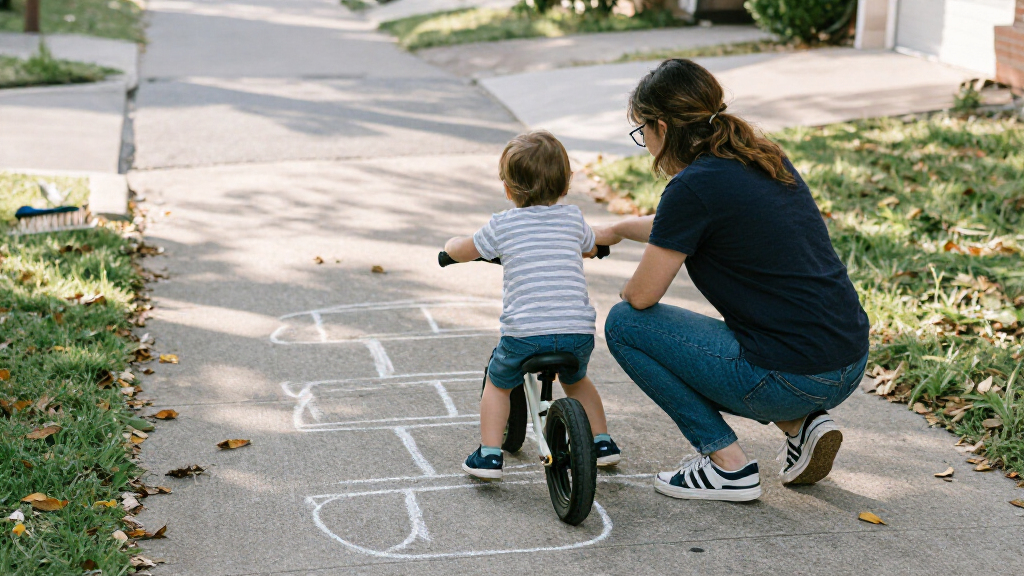
I ranked these kids balance bikes around the factors that most affect real-world choice: whether a child can sit with feet flat, how easily the bike can be adjusted, whether the wheel and tire setup suits the intended terrain, and how simple the design is to use and maintain. I also weighed portability and feature complexity against the core purpose of a balance bike: letting a child propel, steer, and stop with their feet. Product names and age ranges provide useful starting points, but they do not replace checking the manufacturer’s fit measurements.
The ranking favors models with a clear use case and a balance of fit, usability, and useful adjustability. Simpler models remain strong choices when they suit a child’s size, while extra features earn their place only when they solve a specific need. The Strider 12 Sport leads as the most broadly adaptable pick; the Classic is a more basic alternative, and the Ridego serves a different, larger-wheel niche. The JMMD ranks for versatility rather than simplicity, while duplicate listings and color versions are grouped by their practical differences instead of being treated as wholly distinct designs.
| kids balance bike | Frame material |
|---|---|
| ZIFFY JOVA 12-Inch Balance Bik | Carbon steel |
| SEREED Toddler Balance Bike wi | Carbon steel |
| Youthkkee Toddler Balance Bike | Aluminum |
| SEREED Baby Balance Bike for T | Aluminum alloy |
| Youthkkee Toddler Balance Bike | — |
| JOVA ZIFFY 12-Inch Kids Balanc | — |
| Umatoll Toddler Balance Bike | — |
| JMMD 6-in-1 Foldable Toddler B | — |
| Ridego 14-Inch Kids Balance Bi | — |
| KRIDDO Toddler Balance Bike wi | — |
| Strider 12 Classic Balance Bik | Alloy steel |
| SEREED Toddler Balance Bike wi | Carbon steel |
| SEREED Toddler Balance Bike wi | Carbon steel |
| SEREED Baby Balance Bike for T | Aluminum alloy |
| Strider 12 Sport | Steel |
Factors to Consider When Choosing Kids Balance Bikes
Before choosing from this roundup, I’d settle fit and intended use first. Those decisions can matter more than a long feature list: a well-sized bike that is easy to control gives a beginner a clearer path to practicing balance.
Match the Seat to Your Child, Not Just Their Age
Age ranges are broad guides, not a fit guarantee, since children of the same age can have very different leg lengths. Measure your child’s inseam and compare it with the bike’s minimum seat height, leaving enough room for both feet to rest flat on the ground. That contact helps a new rider push off, slow down, and steady the bike without relying on pedals or hand controls. A common mistake is buying a bike that will fit next year but feels unwieldy today. Check the adjustment range as well as the starting height, so the bike can grow with your child without starting too tall. If a listing does not provide clear fit measurements, verify them with the manufacturer before choosing.
Choose Wheel Size Around Control and Riding Space
Wheel size affects the bike’s overall proportions, but a larger wheel is not automatically better for a growing child. The 14-inch Ridego is a distinct option for riders who are already comfortable on a bike and need a larger format; many other picks here use 12-inch wheels aimed at smaller riders. Look at the whole bike’s weight and seat range alongside wheel diameter, because a child must manage the frame as well as reach the ground. For tight paths, short practice sessions, or a first ride, easy steering and stable foot contact can matter more than covering ground quickly. Match the bike to the places your child will actually ride, such as smooth sidewalks, paths, or uneven park surfaces. Avoid moving up a wheel size solely to extend ownership if the child cannot control the bike now.
Think About Tires and the Surfaces You Ride
Tire construction changes both ride feel and upkeep. The Ridego’s air-filled tires can offer more cushioning over rougher surfaces, but they require inflation checks and can lose air or puncture. Solid tires reduce routine maintenance and suit families who mostly ride on smooth, predictable ground, though they may feel firmer over bumps. Consider where the bike will be stored and whether you want to keep a pump and repair supplies on hand. For occasional pavement use, low-maintenance tires may be the practical choice. If regular rides include uneven paths, the comfort tradeoff of pneumatic tires may be worthwhile.
Prioritize Adjustments You Can Actually Use
Adjustable seats and handlebars can extend a bike’s useful fit, but the range and ease of adjustment matter more than the word “adjustable” on a listing. Check whether the seat height can be changed without special tools and whether the handlebar position still feels natural at both ends of its range. Tool-free adjustment is particularly handy when caregivers share bike setup or a child grows quickly. At the same time, avoid paying attention to adjustment features while overlooking the minimum seat height: a large growth range does not help if the bike is too tall at the start. Look for secure clamps and follow the maker’s setup instructions after each change. A simple, correctly sized model may serve a beginner better than a feature-heavy bike with a complicated fit.
Decide Whether Extra Modes Help or Distract
A basic balance bike keeps the learning task clear: push with the feet, steer, and practice lifting them as confidence grows. A multi-mode model such as the JMMD 6-in-1 adds options like a push handle, training wheels, and pedals, which may appeal to families wanting one product for several stages. The tradeoff is more parts, more setup choices, and a less focused first-riding experience. Consider whether your child will use those modes and whether you have room to store the bike and accessories. Do not assume a push handle replaces adult supervision or that training wheels teach the same balance skills as a pedal-free bike. Choose added versatility for a specific household need, not simply because more features sound like better value.
Factor in Weight, Storage, and Ongoing Care
Caregivers often carry a balance bike between home, car, and practice spot, so the bike’s weight matters even if a child can ride it comfortably. Check the listed weight and folded dimensions where available; a foldable design can help with storage, but only if its locking and setup process suits your routine. Inspect the frame, fasteners, grips, and wheel attachments during assembly, then recheck them periodically as the bike is used. Solid tires generally need less attention than air-filled ones, while more complex models can mean more parts to maintain. If the bike will live in a small apartment or travel often, portability may outweigh an extra feature or a larger frame. Keep the purchase decision tied to how the bike will be stored and transported, not just how it looks on paper.
Frequently Asked Questions
How do I know if a balance bike fits my child before ordering?
Measure your child’s inseam while they stand in bare feet or the shoes they’ll usually ride in, then compare it with the bike’s minimum seat height. Your child should be able to sit on the saddle with both feet flat on the ground and knees slightly bent. That position makes it easier to start, stop, and recover balance. Do not rely on the age range alone, since children’s proportions vary. If the listing does not show a minimum seat height, ask the seller or manufacturer before ordering.
Should I choose a 12-inch or 14-inch balance bike?
Choose based on your child’s fit and control rather than wheel size as a measure of progress. The 12-inch models in this roundup suit many younger or smaller riders, while the Ridego’s 14-inch format is aimed at children who can manage a larger bike and still reach the ground. Compare inseam, minimum seat height, overall bike weight, and handlebar reach together. A larger wheel can be harder to steer and manage if the frame is too big. If your child is between sizes, a bike that fits comfortably now is usually the safer learning choice.
Are air-filled tires worth the extra maintenance?
They can be, if your child often rides on uneven paths where extra cushioning may improve comfort. The Ridego is the air-filled-tire option in this lineup, so it stands apart from families seeking a more cushioned ride. Pneumatic tires need periodic pressure checks and can puncture, which adds upkeep. Solid tires are simpler for smooth sidewalks and families who want fewer maintenance tasks. Choose based on your regular riding surface and willingness to handle basic tire care, not on the assumption that one tire type suits every child.
Is a multi-mode bike a better first bike than a simple balance bike?
Not automatically. A straightforward pedal-free bike keeps a beginner focused on pushing, steering, and balancing, while the JMMD 6-in-1 offers additional configurations that may suit a family seeking one product for several stages. Those added modes can bring extra assembly, storage, and setup decisions. Think about whether your child will use the push handle, training wheels, and pedal configuration, or whether those features will stay unused. If the immediate goal is learning balance, a simpler bike that fits well may be easier to manage.
How should I choose between the Strider 12 Sport and Strider 12 Classic?
Start by comparing the exact fit range and included features on the listings you are considering, since model details can vary by version. In this roundup, the 12 Sport is the stronger pick for families who value adjustability and a broader fit, while the 12 Classic is better suited to buyers who want a more straightforward option. Neither model is the right choice if its minimum seat height is too tall for your child. Also check whether the bike’s weight and setup fit your storage and transport routine. Choose the Sport for added adaptability, or the Classic when a simpler configuration meets your needs.
Conclusion
For the broadest range of families, I recommend the Strider 12 Sport as best overall, with the Strider 12 Classic as a simpler value-minded alternative when its fit and configuration match your child. For a young beginner, prioritize a low enough seat and easy foot contact; among these options, compare the SEREED and Youthkkee toddler models by their exact measurements and adjustment range rather than picking by age label or color. The Ridego 14-Inch is my pick for a larger, more confident rider who can manage its size and will benefit from air-filled tires. Choose the JMMD 6-in-1 for specific needs such as wanting several riding configurations in one product, but skip it if a simple first balance bike is the goal. Before ordering, verify seat height, bike weight, and tire type against your child’s size and usual riding surface.