
TL;DR
Ride-on toys boost toddlers’ confidence and motor skills. Pick age-appropriate models with safety features, and always supervise outdoor play. Properly fitted helmets are a must.
Imagine the sound of tiny wheels rolling over smooth floors or gravel paths — a little explorer, full of giggles, steering confidently. Ride-on toys aren’t just fun; they’re a vital part of your child’s early development. But with so many options, how do you pick the right one? This guide will help you navigate the world of toddler ride-ons, highlighting safety, growth benefits, and practical tips.
Whether your child is a tentative beginner or eager to zoom around, understanding what makes a good, safe ride-on can turn playtime into a rewarding experience. Ready to find the perfect match for your little adventurer? Let’s get started.
Choose ride-on toys that match your child’s size and abilities for safer, more confident play.
Prioritize safety features like a low center of gravity, wide wheels, and certified standards.
Mix indoor and outdoor models to maximize play options and environment suitability.
Regularly inspect and maintain the toy to ensure lasting safety and durability.
Always supervise outdoor ride-ons, especially electric models, and use helmets for added protection.
How to Pick a Ride-On That Fits Your Toddler Like a Glove
The first step to a happy ride is choosing a toy that matches your child’s size and skills. A ride-on that’s too tall or heavy can lead to frustration or even falls, which might cause injuries or discourage your child from playing. Proper fit ensures your child can control and maneuver the toy confidently, which is essential for developing coordination and independence. When a toy fits well, it also reduces the risk of accidents caused by tipping or slipping.
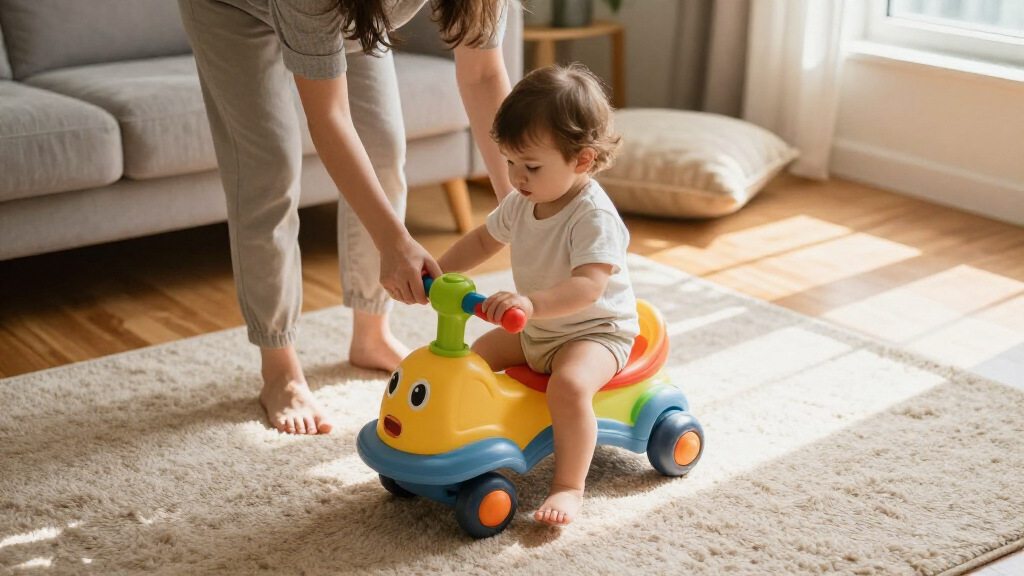
For example, a 15-month-old just learning to sit steadily benefits from a low, stable push car that allows them to push off the ground easily, fostering confidence and balance. Conversely, a 2-year-old with improved coordination can handle a slightly higher tricycle that challenges their skills without overwhelming them. The goal is to select a ride-on that encourages active engagement without causing strain or instability. This balance between size, weight, and control directly influences how effectively your child can practice new skills and enjoy play safely.
Here’s a quick checklist:
- Can your child sit and balance without wobbling?
- Are their feet flat on the ground when seated?
- Can they reach the handles or steering comfortably?
- Is the toy lightweight enough for your child to handle without difficulty?
Matching the toy’s size and weight to your child’s ability will make playtime safer, more enjoyable, and more conducive to skill development. An ill-fitting ride-on can hinder progress and increase safety risks, so take the time to evaluate these factors carefully.
As an affiliate, we earn on qualifying purchases.
Understanding the Developmental Impact of Ride-On Toys
Ride-on toys are more than just entertainment; they are powerful tools that support critical developmental milestones. When children push, pedal, or steer these toys, they are actively strengthening their muscles, improving coordination, and enhancing spatial awareness. These skills are foundational for more complex activities like running, jumping, and riding a bike later on.
Furthermore, engaging with ride-on toys promotes independence. As toddlers learn to control their movement and navigate their environment, they develop confidence that extends beyond play. This sense of mastery encourages curiosity and problem-solving abilities, which are essential cognitive skills.
However, it’s important to recognize that the type of ride-on toy and the way children interact with it can influence their development. For instance, toys that require pushing and steering help develop upper-body strength and coordination, while pedal-powered models promote leg strength and endurance. Balancing these different types can provide a well-rounded developmental benefit.
Tradeoffs exist, too. A toy that is overly challenging might frustrate a child, diminishing their motivation to play, while an overly simple toy might not stimulate growth sufficiently. Therefore, selecting age-appropriate options that gradually increase in difficulty can optimize developmental progress and keep children engaged.
In essence, the right ride-on toy acts as a catalyst for physical and cognitive growth, making play both fun and educational.
Safety First: What Makes a Ride-On Safe for Toddlers?
Safety is the foundation of enjoyable play. A toddler’s ride-on should be designed with features that prioritize stability and minimize hazards. For instance, a low center of gravity prevents tipping over during turns or sudden movements, which is vital since toddlers are still developing their balance and coordination. Wide wheels provide a broader base, reducing the chance of tipping and offering better traction on various surfaces. Rounded edges and secure, small parts prevent cuts, choking hazards, or breakage. The materials used should be durable and free from toxic substances, ensuring that the toy remains safe even during rough play.
Understanding why these features matter helps you make better choices. For example, a sturdy plastic push car with large rubber wheels and a broad wheelbase resists tipping and provides stability, which is crucial for your child’s safety and confidence. Avoid models with loose parts, exposed wiring, or fragile components that could break or cause injuries. Safety certifications and recalls are indicators of quality and adherence to standards, so always verify these before purchasing.
Helmets and other protective gear are essential when your child rides balance bikes, tricycles, or motorized vehicles. They serve as an extra safety layer, especially since toddlers are still mastering their motor skills. Supervision remains critical; no safety feature can replace attentive adults. Always watch your child closely, especially near roads, pools, or stairs, to prevent accidents. A well-designed toy combined with vigilant supervision creates a safe environment where your child can explore and learn without undue risk.
Recognizing that safety features are not just add-ons but integral to the design helps you select toys that truly protect your child. This awareness also underscores the importance of ongoing supervision and proper safety gear, which together form a comprehensive safety net during play.
Conclusion
Picking the right ride-on toy isn’t just about fun; it’s about fostering your child’s growth safely. With thoughtful choices and vigilant supervision, your toddler can zoom, scoot, and explore confidently — setting the stage for lifelong motor skills and independence.
Remember, a well-chosen ride-on isn’t just a toy. It’s a tiny vehicle that helps your child take big steps toward confidence and coordination. So, choose wisely, stay vigilant, and watch your little one thrive on wheels.