
Graphing favorite routes is a fun and simple way for you to help preschoolers learn about their daily journeys. By asking questions like “How do you get to the park?” and marking locations on a large map, kids can visually see their routines. They can use symbols or stickers to show how often they visit each place. This activity builds their understanding of spatial relationships and patterns — keep going to discover more tips to make it engaging.

Turn the school run and nap time into listening time
- Thousands of audiobooks, podcasts and originals
- Listen on your phone, tablet or Echo — also offline
- Cancel anytime
Key Takeaways
- Use simple maps and visual cues to help preschoolers identify and mark their favorite routes.
- Collect data by asking children about their routines, such as trips to the park or store.
- Create a visual graph using symbols like stars or dots to represent trip frequency or destinations.
- Reinforce understanding of spatial relationships and routine patterns through interactive mapping activities.
- Develop early data interpretation skills by comparing and analyzing their route graphs visually.
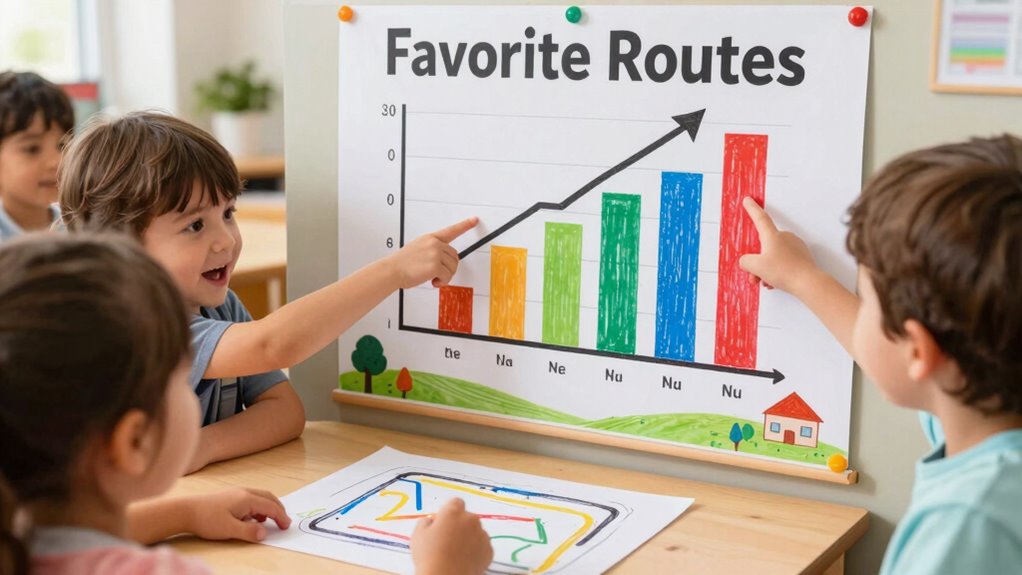
When you want to better understand your most traveled routes, graphing them offers a clear and visual way to analyze your patterns. This simple activity introduces preschoolers to the basics of route mapping and data collection, making it both educational and fun. As you guide your little one through the process, they start to see how their daily journeys—whether to the park, grandma’s house, or school—can be turned into colorful, easy-to-understand graphs. It’s a hands-on way to help them grasp the idea of organizing information visually.
Begin by encouraging your preschooler to think about their favorite routes. You can ask questions like, “How do you get to the playground?” or “What path do you take to get to grandma’s house?” Then, help them identify key points along the way, such as the house, park, or store. This step involves simple data collection—gathering information about the different places they visit regularly. It’s a basic introduction to how we gather and record data, which is a fundamental part of route mapping.
Encourage your child to identify key places on their favorite routes for simple data collection and learning.
Next, you can draw a large blank sheet of paper or use a board to create a simple map of your neighborhood or a familiar route. Have your preschooler help you mark important locations with colorful stickers or drawings. These markers serve as visual cues, making the map engaging and easy to understand. As they place each sticker, talk about what the location is and how they traveled there. This reinforces their understanding of the route and the concept of spatial relationships. Understanding spatial relationships is an essential skill that helps children develop a sense of scale and position. Additionally, learning about spatial relationships can support their overall cognitive development and problem-solving abilities.
Once the map is ready, it’s time to create a graph. Use simple symbols, like dots or stars, to represent each trip or visit to a location. For example, if they visit the park three times a week, they can put three stars next to the park on the map. This activity turns raw data into a visual representation, illustrating how frequently they visit each spot. It also teaches basic graphing concepts, such as counting and comparing quantities.
Throughout the process, you’re fostering skills in observation, categorization, and data interpretation—all while keeping it playful. Your preschooler will start recognizing patterns in their routines and understand how data collection and route mapping help us visualize information. Understanding visual data and how it is organized is an important part of developing early math and analytical skills. It’s a straightforward activity that builds foundational skills in a way that’s accessible and engaging for young children. Plus, it encourages curiosity about how their daily world is connected, making learning both meaningful and enjoyable.
As an affiliate, we earn on qualifying purchases.
Frequently Asked Questions
How Can Parents Encourage Preschoolers to Participate in Graphing Activities?
You can encourage your preschooler to participate in graphing activities by actively engaging in their interests and making it fun. Use parental engagement by asking questions about their favorite routes or activities, and encourage their creativity by helping them draw or color the graphs. Show enthusiasm and praise their efforts, which boosts their confidence. Keep activities simple and interactive, making learning a playful experience that they look forward to.
What Materials Are Best for Creating Simple Route Graphs?
Creating simple route graphs is like building a colorful map for your little explorer. Use sturdy paper or poster boards as your base, and gather bright route markers to clearly show different paths. Drawing tools like washable markers or crayons work best for vivid, easy-to-see routes. These materials make the activity engaging and manageable, helping preschoolers understand routes and directions while having fun mapping out their favorite journeys.
How Does This Activity Support Early Math Skills Development?
This activity boosts your child’s early math skills by enhancing visual pattern recognition and spatial awareness. As they chart their favorite routes, they compare and identify patterns, recognizing sequences and differences. Moving along routes helps develop spatial awareness, understanding how objects relate in space. These skills lay a strong foundation for future math concepts like sorting, classifying, and understanding shapes, making learning engaging and interactive.
What Are Some Fun Ways to Expand on This Activity?
Did you know that integrating storytelling can boost engagement and understanding? To expand on this activity, try a creative extension where children create stories about their favorite routes, using their graphs as visual aids. You can also incorporate storytelling by asking kids to imagine adventures along each route. This approach makes learning fun, fosters creativity, and deepens their connection to data, making math both exciting and meaningful for preschoolers.
How Long Should a Preschool Route-Graphing Activity Typically Last?
You should aim for a preschool route-graphing activity to last about 15 to 20 minutes, considering their attention span and activity timing. This duration allows kids to enjoy exploring their favorite routes, gather enough data, and complete their graphs without getting bored. Keep the activity engaging and interactive, and be ready to adjust the time if they seem enthusiastic to continue or need a break.
Conclusion
By engaging preschoolers in graphing their favorite routes, you help them understand data collection and comparison early on. Did you know that research shows children who participate in hands-on activities like this develop stronger problem-solving skills? When they see their own preferences charted visually, it makes learning fun and meaningful. Keep encouraging their curiosity and observation skills—these early experiences lay a strong foundation for future learning adventures.
Halloween Picks
halloween
As an affiliate, we earn on qualifying purchases.