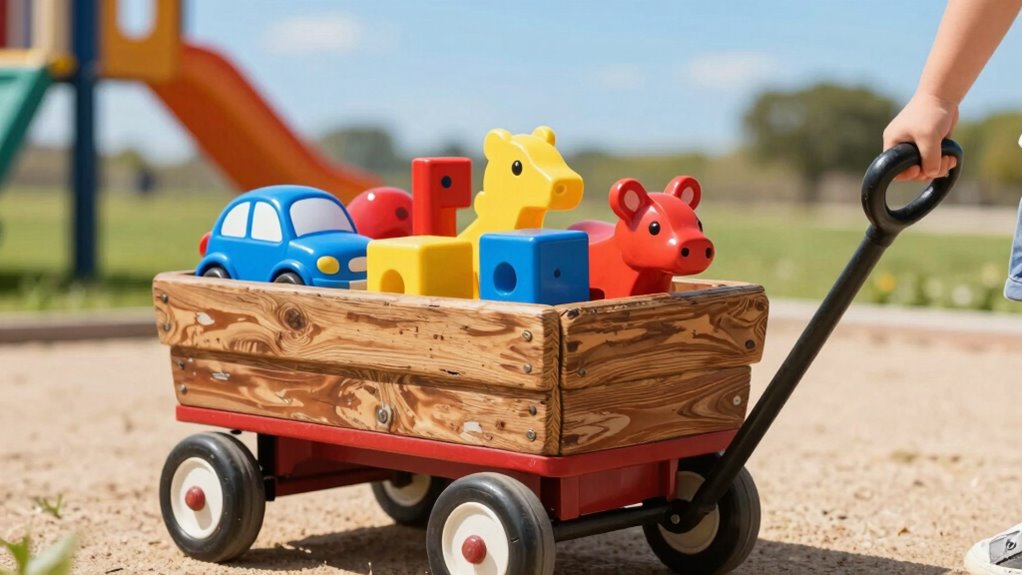

To conduct cargo weight experiments with wagons and ride-on toys, you’ll add weight incrementally while observing how the toys handle the load. Pay close attention to wheel performance, stability, and signs of stress like cracking or tipping. These tests help you find safe weight limits, ensuring durability and safety during use. If you’re curious about how to interpret these results and improve toy design, there’s more to discover below.
Key Takeaways
- Conduct incremental loading tests to determine maximum weight capacity and ensure safety during use.
- Monitor wheel performance and stability under different loads to identify potential failure points.
- Assess material responses like cracking or deformation to evaluate durability limits.
- Use experimental data to establish safe usage thresholds for various age groups.
- Apply findings to improve toy design, safety features, and extend product lifespan.
Have you ever wondered how the weight of cargo affects transportation and safety? When it comes to wagons and ride-on toys, understanding how much weight they can handle is essential for both safety and longevity. That’s where cargo weight experiments come into play, helping you determine the limits of these toys and transport devices. By systematically testing how different weights impact their performance, you can avoid accidents and extend the lifespan of your equipment.
Toy durability is a significant aspect of these experiments. You want to know whether a ride-on toy or wagon can withstand the strains of carrying heavy loads without breaking or malfunctioning. This is where material testing becomes critical. Manufacturers often conduct rigorous material testing to guarantee their products can endure the stress of real-world use. During these tests, they load the toys with various weights, observing how the materials respond—do they bend, crack, or deform? These insights help you understand the physical limits of the toys and whether they are suitable for your intended use. Additionally, understanding the impact of weight on material strength can help inform safer design improvements.
Material testing reveals toy durability and safety limits for real-world use.
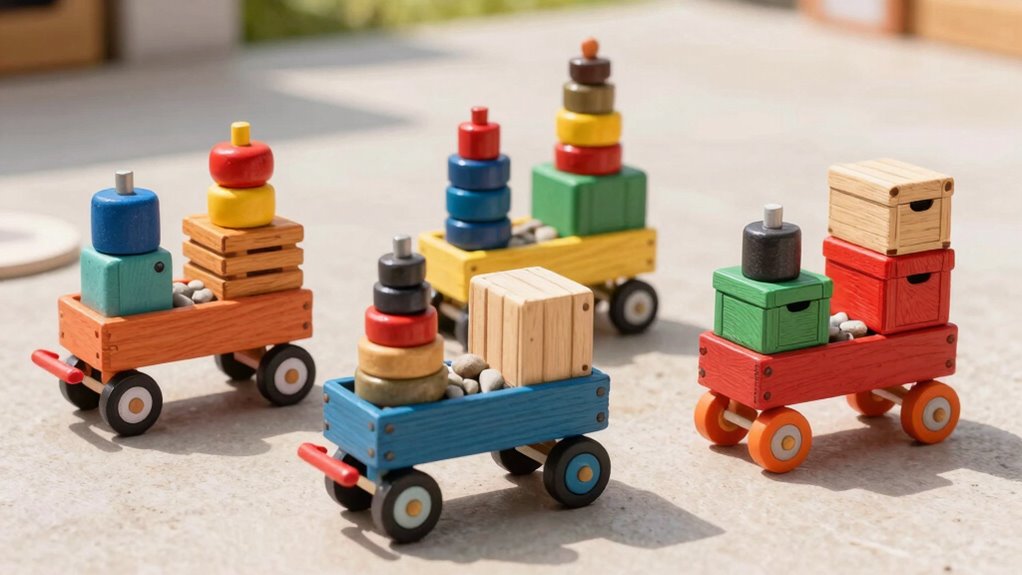
Performing cargo weight experiments involves incrementally adding weight to the wagons or ride-on toys and monitoring their behavior. For example, you might start with a light load and gradually increase the weight, paying close attention to how the wheels roll, the stability of the toy, and whether any parts show signs of stress. It’s important to record these observations to identify the maximum safe load each toy can handle. This process not only highlights toy durability but also reveals potential safety hazards, such as tipping over or parts breaking under excessive weight.
Understanding the results of these experiments helps you make informed decisions. If a toy starts to show signs of strain at a certain weight, you’ll know to stay below that threshold. This knowledge is especially critical if kids are involved, as safety is always the top priority. Furthermore, knowing the weight limits can guide you in choosing the right toy for different age groups or purposes, ensuring that the toy remains safe and functional over time.
In the end, cargo weight experiments are about more than just pushing toys to their limits—they’re about ensuring safety, extending toy lifespan, and making smarter choices. By combining hands-on testing with thorough material analysis, you gain a clear picture of what each toy can handle. This process highlights the importance of material testing in understanding toy durability and safety. This way, you can enjoy the fun of riding or hauling with confidence, knowing that your equipment is built to last and safe to use.
heavy-duty kids' wagon for outdoor use
As an affiliate, we earn on qualifying purchases.
As an affiliate, we earn on qualifying purchases.
Frequently Asked Questions
How Do Different Terrains Affect Cargo Weight Capacity?
Different terrains considerably impact cargo weight capacity because terrain variability affects how load distributes across your wagon or ride-on toy. On smooth surfaces, you can carry more weight comfortably, while uneven or rough terrains reduce capacity due to increased strain and potential instability. You need to adjust load distribution accordingly, ensuring the weight is balanced to prevent tipping or damage. Always consider terrain when planning how much cargo to load for safe, effective transport.
What Safety Precautions Are Necessary During Weight Experiments?
During weight experiments, you should prioritize safety by wearing proper safety gear like gloves and goggles. Guarantee correct load distribution to prevent tipping or imbalance. Keep the testing area clear of obstacles, and never exceed recommended weight limits. Always monitor the wagon or toy during the experiment to quickly address any issues. By following these precautions, you protect yourself and ensure accurate, safe results in your cargo weight testing.
How Do Cargo Weights Influence Wagon and Toy Longevity?
You might be surprised to learn that uneven cargo distribution can reduce a wagon’s lifespan by up to 30%. Cargo weights directly impact wagon and toy longevity by stressing components unevenly, which accelerates wear and tear. When you distribute weight evenly, you guarantee the weight impact on parts like axles and wheels, helping your toys last longer. Proper cargo management ensures safer, more durable rides for your kids.
Can Cargo Weight Experiments Improve Children’s Understanding of Physics?
Yes, cargo weight experiments can improve your child’s understanding of physics. By observing how gravity principles affect movement and stability, children learn about weight distribution and its impact on balance. When they experiment with different cargo weights, they see firsthand how heavier loads influence a toy’s behavior. This hands-on approach helps them grasp fundamental physics concepts, making learning engaging and practical while developing critical thinking skills.
What Materials Are Best for Constructing Durable Cargo Wagons?
You should choose construction materials that prioritize material durability for building durable cargo wagons. Steel or high-quality aluminum are excellent options because they withstand heavy loads and rough handling. Strong plastics like polycarbonate can also work well for lightweight, durable parts. Avoid fragile materials that may crack or bend under pressure. By selecting the right construction materials, you guarantee your cargo wagons last longer and handle weight safely during experiments or play.
Conclusion
As you’ve seen, understanding how weight affects wagons and ride-on toys is like revealing a secret of the universe—much like Galileo’s experiments revealing the laws of motion. When you test different loads, you discover what your toy can handle, just as explorers chart new worlds. So keep experimenting, stay curious, and remember: every challenge is an invitation to learn, much like the great pioneers who dared to push boundaries and expand horizons.