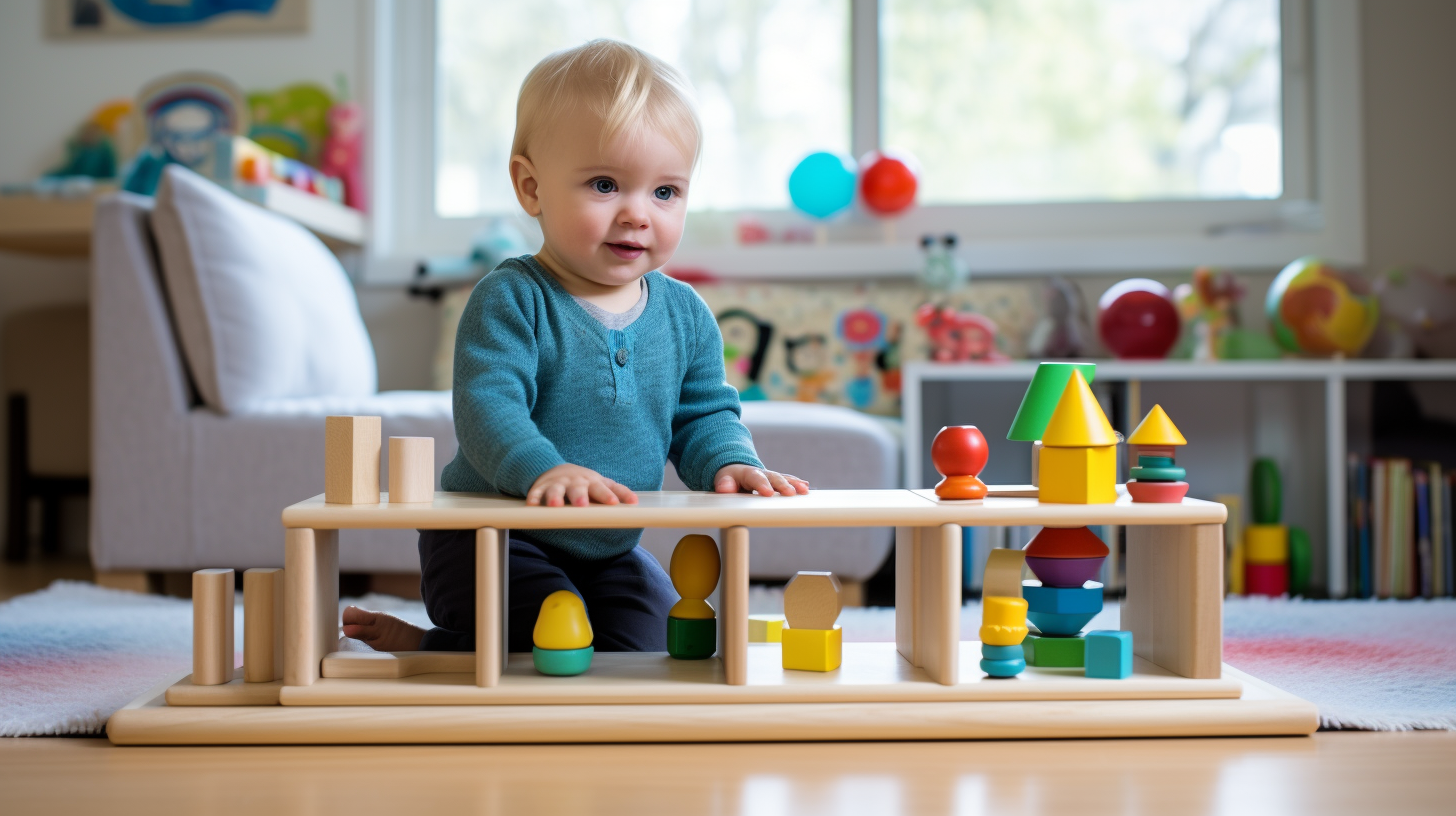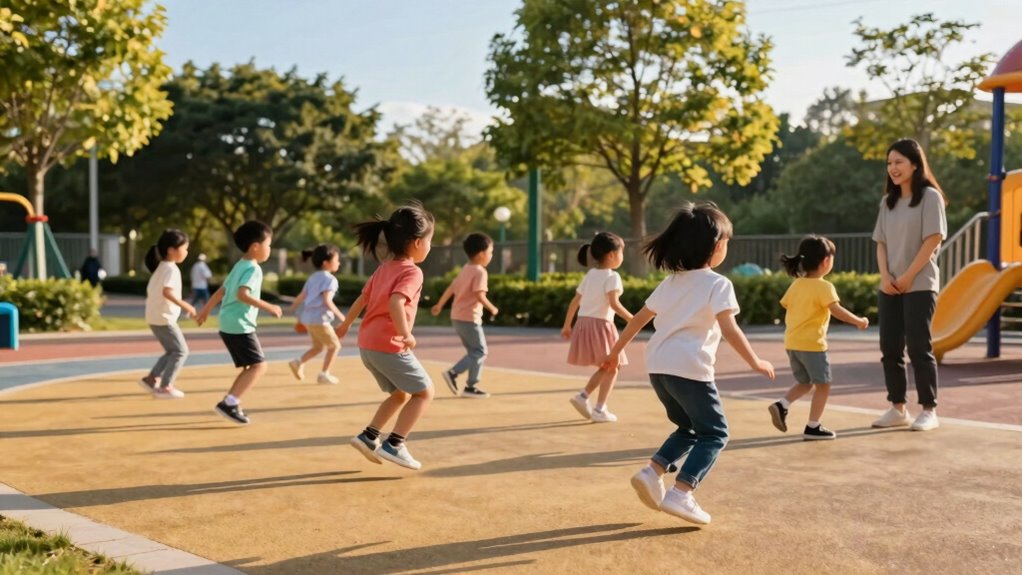

Engaging in rhythm-based outdoor play helps children feel secure and focused by providing predictable movement patterns they can anticipate. This structure encourages confidence, improves coordination, and nurtures social bonds through activities like clapping games and dance routines. These routines also support emotional regulation, making kids feel calmer and more ready to explore. When movements are consistent, children trust their environment and gain a sense of mastery. Keep exploring how these rhythms boost growth in many areas of childhood development.
Key Takeaways
- Predictable movements create a sense of safety, reducing anxiety and allowing children to focus on enjoying play.
- Consistent rhythms help children anticipate actions, enhancing confidence and reducing uncertainty during outdoor activities.
- Structured movement patterns foster emotional regulation and provide a calming effect in dynamic outdoor environments.
- Repetition of predictable routines improves concentration and sensory processing, making play more engaging and manageable.
- Familiar, rhythmic activities promote social bonding and cooperation through shared, harmonious movement.
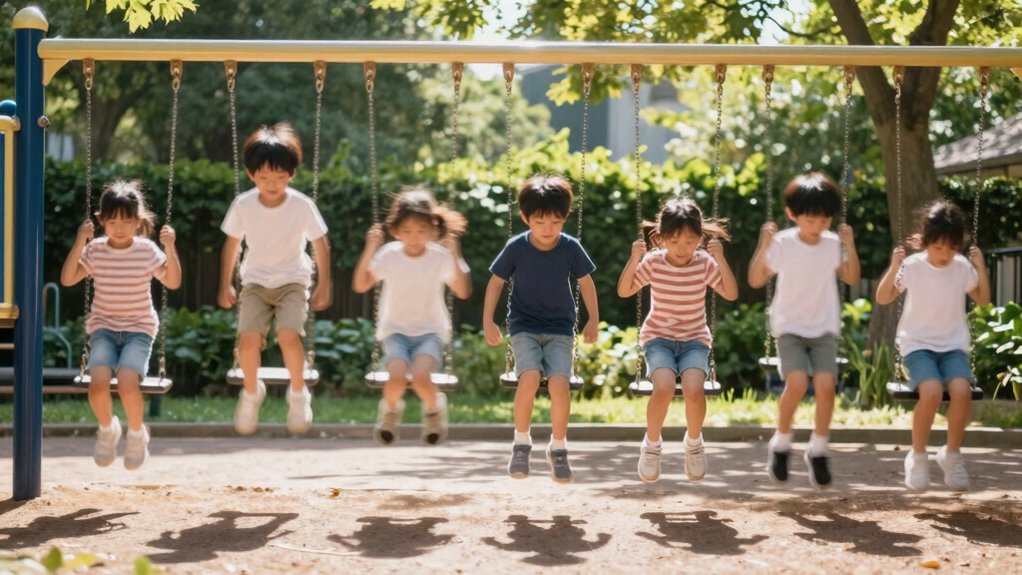
Incorporating rhythm into outdoor play offers a dynamic way to boost children’s physical activity and creativity. When you introduce predictable movement patterns—like clapping, stomping, or jumping in time—you help children develop their sensorimotor coordination. This coordination is essential for mastering how their bodies move in relation to their environment, fostering confidence as they learn to control their limbs and synchronize their actions. Such rhythmic activities also serve as a foundation for complex motor skills, making everyday movements smoother and more intentional.
Beyond individual physical benefits, rhythm-based play enhances social interaction. When children participate in shared activities that follow a predictable beat, they learn to anticipate each other’s actions, which fosters cooperation and communication. For example, clapping games or group dance routines require children to listen carefully and respond appropriately, strengthening their ability to read social cues. As they synchronize their movements with peers, they experience a sense of connection and belonging, making outdoor play more engaging and inclusive. Incorporating predictable movement patterns provides children with a sense of structure and stability, which is particularly important for their emotional development. This sense of consistency can also help children develop a sense of trust and safety in their play environment.
Predictable movement patterns are especially effective because they provide a sense of structure that’s comforting for children. When routines are consistent, children feel more secure and willing to explore. This predictability also helps them focus on refining their skills without the distraction of unpredictable variables. As they become more comfortable with the rhythm, they can experiment with variations that challenge their sensorimotor skills further, like changing tempo or introducing new movements. These adjustments encourage adaptability and problem-solving, key components of healthy development. Additionally, the use of rhythmic activities can help children regulate their emotions and behaviors by providing a calming structure.
Furthermore, rhythm-based outdoor activities encourage children to listen actively and stay attentive. This heightened focus improves their overall concentration, which can translate into better performance in school and other areas of life. When you create opportunities for children to move in predictable, rhythmic ways, you support their ability to process sensory information efficiently, making it easier for them to adapt to new tasks and environments. Engaging in such activities not only bolsters physical development but also enhances their ability to focus attention, which is vital for lifelong learning.
Engaging children in rhythm-based play also supports the development of sensorimotor coordination, a key factor in their overall growth. In essence, predictable movement in outdoor play isn’t just about fun; it’s a powerful tool for developing core skills. It nurtures sensorimotor coordination, promotes positive social interactions, and provides a stable framework that helps children feel confident and motivated. By integrating rhythm into their playtime, you give children a structured yet flexible way to grow physically, socially, and emotionally—all while enjoying the natural environment around them.

Kids Musical Instruments, 33Pcs 18 Types Wooden Percussion Instruments Tambourine Xylophone Toys for Kids Children, Preschool Education Early Learning Musical Toy for Boys and Girls
- Complete 33-Piece Musical Set: Includes 18 types of instruments for kids
- Safe Non-Toxic Materials: Made with lead-free, CPC and ASTM certified paint
- Educational and Fun: Encourages children to explore sounds, rhythm, and music
As an affiliate, we earn on qualifying purchases.
As an affiliate, we earn on qualifying purchases.
Frequently Asked Questions
How Does Rhythm Influence Children’s Social Interactions Outdoors?
You’ll notice that rhythm helps children coordinate their movements during outdoor play, making group activities smoother and more enjoyable. When kids follow a predictable beat, it enhances group coordination, fostering cooperation and shared goals. This rhythmic structure also boosts social bonding, as children feel more connected when they move together harmoniously. Overall, rhythm creates a sense of unity, encouraging children to interact more positively and confidently in outdoor settings.
Can Rhythm-Based Play Help Children With Sensory Processing Issues?
Imagine a gentle tide guiding your child’s sensory waves—rhythm-based play can indeed help kids with sensory processing issues. It supports sensory integration by providing predictable patterns that soothe their nervous system. As they engage in rhythmic movements, their motor coordination improves, like dancers finding their groove. This structured play creates a calming environment, helping children feel more in sync with their bodies and the world around them.
What Are Some Beginner-Friendly Rhythm Outdoor Activities?
You can start with simple activities like clapping or stomping to music, focusing on beat synchronization. Encourage children to follow a steady rhythm while walking or jumping in time with tunes. Using drums or percussion instruments outdoors helps develop music coordination naturally. Keep activities playful and easy, gradually increasing complexity. These beginner-friendly rhythm outdoor activities boost confidence, improve coordination, and make movement feel predictable and enjoyable for kids.
How Does Predictable Movement Affect Children’s Focus and Attention?
You’ll notice that predictable movement helps children improve focus and attention, with studies showing sustained engagement increases by up to 30%. When movements follow a clear pattern, kids develop better motor coordination and cognitive skills. This consistency reduces confusion, making it easier for children to anticipate actions and stay engaged. As a result, they can concentrate longer, boosting their overall learning and development through structured, rhythmic outdoor play.
Are There Specific Age Groups That Benefit Most From Rhythm-Based Play?
You’ll find that preschoolers and early elementary children benefit most from rhythm-based play due to their developmental stages. During these ages, they develop motor skills, coordination, and timing, making age-specific benefits clear. For younger kids, predictable movement helps build confidence and focus, while older children refine their skills and social interactions through these activities. Overall, rhythm-based outdoor play supports growth at key developmental stages, enhancing their physical and cognitive development.
Conclusion
As you watch children naturally find their rhythm in outdoor play, it’s no coincidence how predictable movement brings comfort and joy. When you encourage these moments, you tap into a universal pattern that resonates deeply within us all. It’s as if the universe subtly aligns, reminding you that simple, rhythmic activities aren’t just play—they’re a reflection of our innate need for harmony. Embrace this coincidence, and let it guide your approach to outdoor fun.