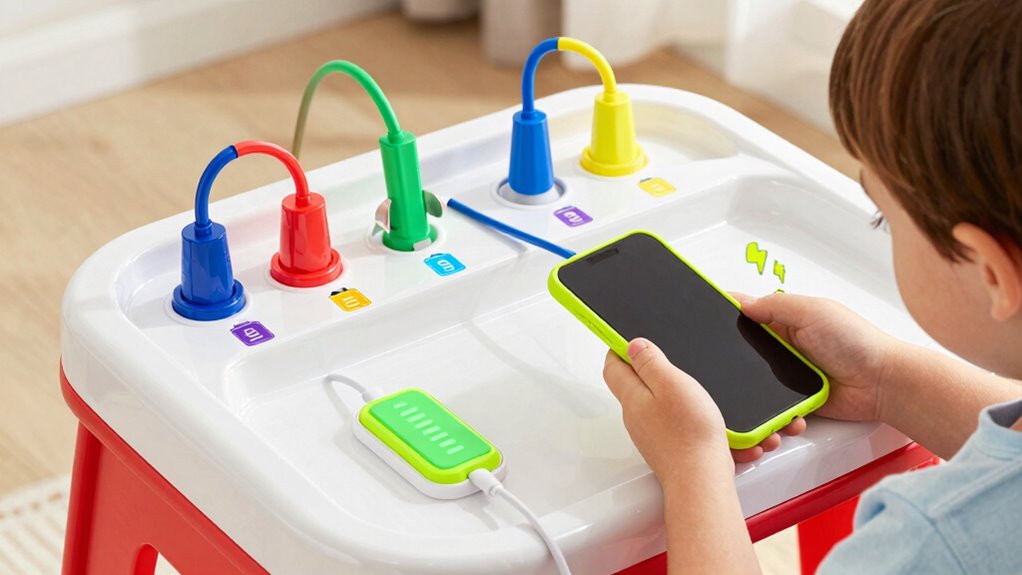
To build a pretend charging station, gather toy devices, labeled batteries, and symbols like lightning bolts or charging icons. Encourage kids to connect devices, explain energy transfer, and practice safety rules like gentle handling. Use visual cues to show different charging states, fostering understanding of systems and safety. Invite children to create their own symbols, boosting creativity and communication skills. Keep exploring how props and symbols can turn play into a rich STEM learning experience.
Key Takeaways
- Incorporate visual symbols like lightning bolts and charging icons to teach energy flow and device status.
- Use labeled toy devices or homemade batteries to demonstrate safe handling and battery safety concepts.
- Create prompts for children to invent their own charging symbols, fostering creativity and understanding of visual communication.
- Explain basic electrical principles such as energy transfer and the role of circuits through interactive play.
- Connect play activities to real-world systems, emphasizing how energy, safety, and symbols relate to actual technology.

Creating a pretend charging station is a fun way to boost STEM learning during playtime. When you set up a pretend station, you give kids an opportunity to explore essential concepts like electricity, safety, and technology in a hands-on way. As they pretend to charge devices, they become familiar with ideas like battery safety—understanding that batteries need careful handling to avoid leaks or accidents. You can introduce simple rules, such as not overcharging or mishandling batteries, which lays the groundwork for responsible tech use. Using charging symbols, like the familiar lightning bolt or the charging icon, helps children recognize visual cues associated with power sources and charging status. These symbols aren’t just fun decorations; they’re universal signs that help kids connect the idea of energy flow with everyday devices.
As you build your pretend station, you can incorporate basic props like toy phones, tablets, or even homemade “batteries” from craft supplies. Label them with charging symbols or icons that show when a device is “charging” or “full.” This encourages children to identify and understand these symbols, which are essential language for digital literacy. When kids pretend to plug in devices or press buttons marked with charging symbols, they learn that these symbols signal different states—such as low power, charging, or full battery. Explaining the meaning behind these symbols helps them develop visual literacy and understand how technology communicates status. Incorporating visual symbols in play also helps children grasp how information is communicated visually in many contexts. Additionally, understanding basic electrical concepts can help children appreciate how energy moves within devices and systems.
You can also talk about the importance of battery safety during play. For example, you might say, “Just like real batteries, our toy batteries need gentle handling so they don’t leak or get damaged.” This introduces the concept that batteries aren’t just objects; they’re sources of energy that require care. You could include safety rules, such as not forcing connectors or pretending to “disconnect” devices gently, emphasizing safe handling practices. These lessons about battery safety translate into real-world awareness, encouraging children to treat batteries and electronic devices with respect and caution. Incorporating energy transfer concepts helps children understand how electricity flows and how devices operate. Encouraging children to come up with their own charging symbols or labels promotes creativity and critical thinking. They can draw their own icons or invent new ones that represent different charging states. By doing so, they’re engaging in visual communication and expanding their STEM vocabulary. Throughout play, reinforce the idea that charging stations are part of larger systems—just like real-world electrical systems—helping them connect imaginative play with real scientific and technological principles. Additionally, discussing visual communication concepts helps children understand how information is conveyed through symbols and icons. Ultimately, building a pretend charging station makes learning about energy, safety, and symbols engaging and memorable, sparking curiosity that can grow into a lifelong interest in STEM.

Hot Wheels City Track Set, Super Recharge Fuel Station Playset with EV Chargers & 1:64 Scale Toy Car
- Interactive Fuel Station Playset: Drive into Hot Wheels City station
- Pretend EV Charging Hose: Insert into 4 charging stations
- Activated Play Features: Launchers, car lift, sign flip
As an affiliate, we earn on qualifying purchases.
As an affiliate, we earn on qualifying purchases.
Frequently Asked Questions
What Materials Are Safest for Young Children to Use?
You should choose safe, non-toxic materials for young children, like wood, silicone, or soft fabric, to guarantee safety. Safety precautions include avoiding small parts that pose choking hazards and selecting durable, washable options. Material alternatives like BPA-free plastic or rubber are also excellent. Always check labels for safety certifications, and supervise play to prevent accidents, making sure the pretend charging station is both fun and safe for kids.
How Can I Customize the Station for Different Ages?
Think of your station as a chameleon, changing colors to fit every age’s needs. To customize, add interactive components like knobs, lights, or sound effects for older kids, making it feel like a real tech hub. For younger children, focus on age-appropriate themes with simple buttons and soft textures. Adjust complexity and themes to keep their curiosity sparked while ensuring safety and engagement across all age groups.
What Are Some Troubleshooting Tips if the Station Isn’t Working?
If your pretend charging station isn’t working, first check the power source to verify it’s connected and functioning. Inspect all connection points for loose or broken links, as connection issues often cause problems. Replace batteries or reconnect cables as needed. Make sure all parts fit snugly, and test the station again. If it still doesn’t work, reset or restart the station, and verify that any electronic components are properly assembled.
How Long Does It Typically Take to Set Up?
Setting up your pretend charging station usually takes about 15 to 30 minutes, depending on complexity. Think of it as a mini adventure where charging station setup involves gathering materials and ensuring safety considerations are met. You’ll want to double-check connections and secure all parts before play begins. With a little patience, your station will be ready in no time, creating a safe, engaging environment for STEM-inspired fun and learning.
Can This Activity Be Adapted for Outdoor Play?
Yes, you can adapt this activity for outdoor play. Just make sure you consider outdoor safety by choosing a safe, flat area away from hazards. Weather considerations are important—avoid windy or rainy days that could damage materials or make the setup unsafe. Use weather-resistant materials or bring everything inside if the weather turns bad. With these precautions, your kids can enjoy building and learning outdoors comfortably and safely.
Conclusion
Creating a pretend charging station sparks your child’s imagination while seamlessly integrating STEM language into play. Kids learn valuable concepts like circuits, energy, and technology through hands-on activities. Did you know that early STEM play can boost problem-solving skills by up to 25%? By building this fun station, you’re not only encouraging creativity but also setting a strong foundation for future learning. Keep exploring and inventing—your child’s curiosity is the key to their success!