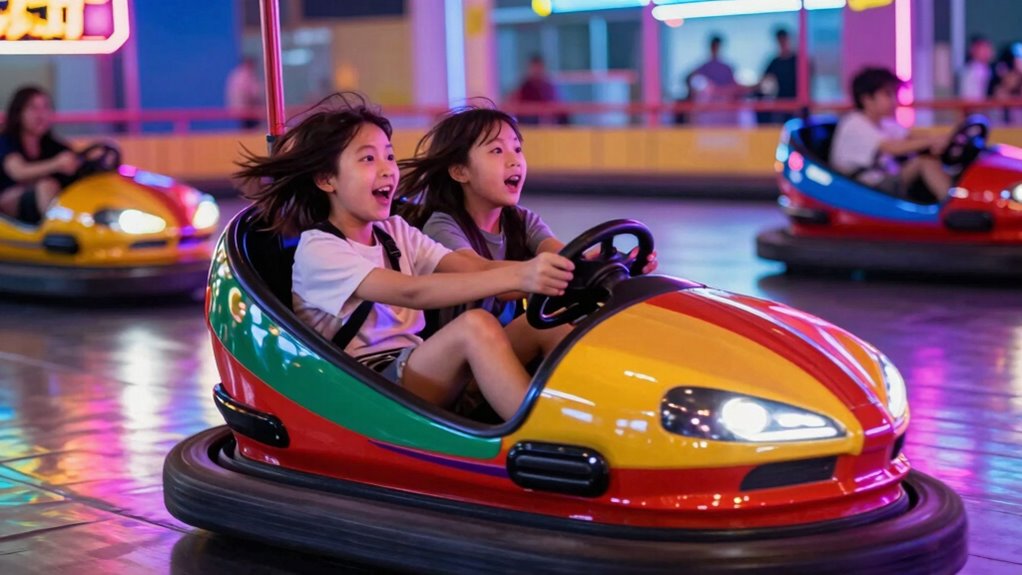

Bumper cars give you a unique, intense burst of sensory input through collisions, vibrations, and bright lights that feel completely different from everyday life. They involve active movement and quick reactions, offering both tactile and proprioceptive feedback. This controlled environment helps you enjoy stimulation safely while maintaining a sense of stability. If you keep exploring, you’ll discover why this exciting experience resonates so deeply for sensory seekers like you.
Key Takeaways
- Bumper cars provide controlled, predictable sensory input through collisions, vibrations, and bright lights that appeal to sensory seekers.
- The active motor engagement in maneuvering bumper cars offers purposeful movement and real-time feedback.
- The environment offers tactile and proprioceptive stimulation, grounding sensory seekers and enhancing feelings of stability.
- The predictable structure and routine of bumper car rides help prevent sensory overload while offering intense stimulation.
- The combination of physical contact, movement, and sensory input creates an exhilarating yet safe experience for sensory seekers.
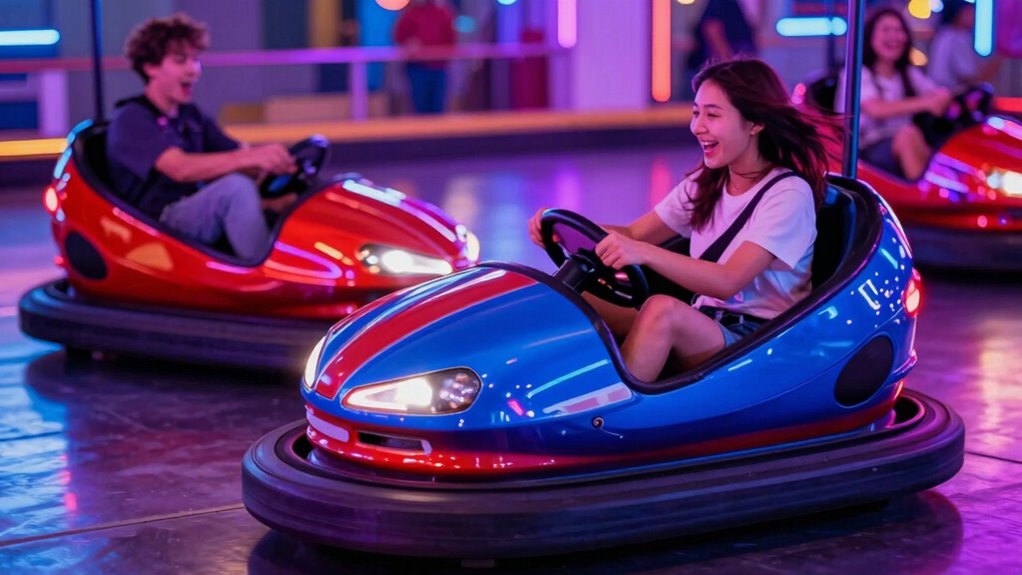
Bumper cars are more than just a fun amusement park activity—they can also serve as an engaging sensory experience for those who seek stimulation. When you’re behind the wheel, the rush of colliding with other cars, the vibrations, and the bright lights all create a multi-layered sensory input. For sensory seekers, this experience can feel incredibly different from everyday life. Instead of feeling overwhelmed, it often provides a controlled way to enjoy stimulation without the chaos that sometimes leads to sensory overload elsewhere. The constant motion, sound, and tactile sensations can satisfy your need for sensory input in a way that feels exciting and manageable.
One reason bumper cars feel so distinct is because they engage your motor planning skills. As you maneuver around the arena, you’re actively strategizing, adjusting your movements, and responding to the environment in real time. This active engagement helps you channel your energy into a specific activity, giving your brain clear feedback about your actions. Unlike passive forms of sensory input, bumper cars require you to think about where you’re going, how fast you need to turn, and when to accelerate or brake. This focus on motor planning not only keeps you engaged but also helps regulate your sensory system by providing consistent, predictable input that you can control. Motor planning plays a crucial role in sensory regulation and overall coordination. Additionally, the predictable nature of the activity can help provide a sense of sensory stability for those who thrive on routine and structure.
Bumper cars engage motor planning, providing controlled, predictable sensory input that helps regulate and focus the sensory system.
The sensation of hitting the bumpers or feeling the vibrations of the car adds to the sensory richness of the experience. For some sensory seekers, these tactile and proprioceptive inputs help ground them and provide a sense of stability. But it’s important to recognize that this stimulation can be a double-edged sword. If the environment becomes too loud or chaotic, you might experience sensory overload, where the cumulative input becomes overwhelming rather than enjoyable. That’s why controlled environments like bumper car arenas, where you can decide how much to engage, often work well for sensory seekers. You can set your pace, take breaks when needed, and still enjoy the thrill of the activity.
In the end, the way bumper cars feel so different to sensory seekers is rooted in how they provide a unique blend of sensory stimulation and motor planning. The activity offers a safe space to experience intense input without the unpredictability or overstimulation that can occur in other settings. By actively controlling your movements and experiencing the vibrations, sounds, and physical contact, you’re satisfying your sensory needs in a way that feels both exhilarating and manageable. This deliberate control over sensory input aligns with the importance of sensory regulation in maintaining overall well-being. That’s why bumper cars aren’t just fun—they’re a powerful tool for sensory regulation and enjoyment.

ELEMARA Bumper Car, 1.9MPH Max, 12V Electric Car for Kids W/Parent Remote, Bluetooth Ride on Toys, Ride on Car W/2-Speed, 2 Driving Mode, 360°Spin, Music,5 Lighting Mode, DIY Stickers, Blue
- Maximum Speed: Up to 1.9mph for kids
- Built-in Music & Bluetooth: Enjoy tunes while riding
- LED Light Modes: 5 colorful lighting options
As an affiliate, we earn on qualifying purchases.
As an affiliate, we earn on qualifying purchases.
Frequently Asked Questions
How Do Bumper Cars Stimulate Sensory Seekers Differently From Others?
You experience bumper cars differently because they provide intense sensory input that stimulates your sensory integration and motor coordination. The crashing movements and vibrations engage your tactile and proprioceptive senses, helping you feel more grounded. This active environment allows you to process sensory information more effectively, satisfying your need for stimulation. Unlike others, you thrive on this high-energy, multisensory experience that helps regulate your sensory system and boost motor skills.
Can Sensory Seekers Experience Discomfort Despite the Excitement of Bumper Cars?
You might find that, despite the excitement, sensory overload can cause discomfort during bumper car rides. Sometimes, the intense sensory input triggers unexpected emotional responses, making you feel overwhelmed rather than exhilarated. It’s a coincidence that the thrill can turn into distress, as your heightened senses amplify the chaos around you. Recognizing this helps you manage your experience better, understanding that excitement and discomfort can coexist even in seemingly fun situations.
Are There Age Restrictions for Sensory Seekers in Bumper Car Attractions?
Yes, there are often age restrictions for sensory seekers in bumper car attractions. You should check the specific ride’s safety guidelines, which usually include age and height limits. Wearing safety gear is essential to guarantee safety, especially for younger or more sensitive riders. Also, pay attention to ride duration; shorter rides can help prevent sensory overload, making the experience more enjoyable and manageable for sensory seekers.
How Can Parents Support Sensory Seekers During Bumper Car Rides?
You can support sensory seekers during bumper car rides with parental reassurance, reminding them it’s okay to take breaks or step away if overwhelmed. Sensory preparation helps too—explain what to expect and set boundaries beforehand. Ironically, while bumper cars are designed for fun, they can be intense for sensory seekers. Your calm presence and clear communication make the experience more manageable and enjoyable, fostering confidence and comfort.
Do Bumper Cars Help Improve Sensory Processing Skills Over Time?
Bumper cars can help improve sensory processing skills over time by promoting motor skill development and encouraging social interaction. As you participate, you refine your coordination, balance, and spatial awareness. The playful environment also fosters social skills like taking turns and communicating with others. Over repeated experiences, these activities can strengthen sensory integration, making the input feel more manageable and helping you build confidence in various sensory situations.
Conclusion
Just like bumper cars collide and bounce with unpredictable energy, sensory seekers crave that vibrant input to feel alive. Their world is a whirlwind of sensation, not chaos but a unique rhythm only they understand. When you recognize this, you see that their need for stimulation isn’t a puzzle to solve but a dance to join. After all, isn’t life just a series of bumps and turns—each one shaping who we are?