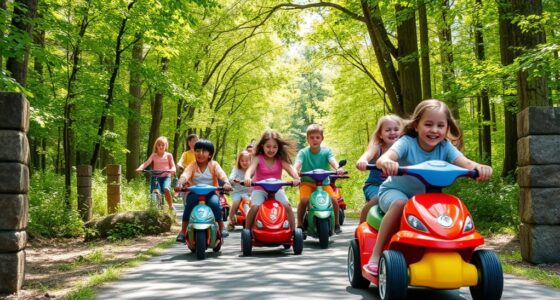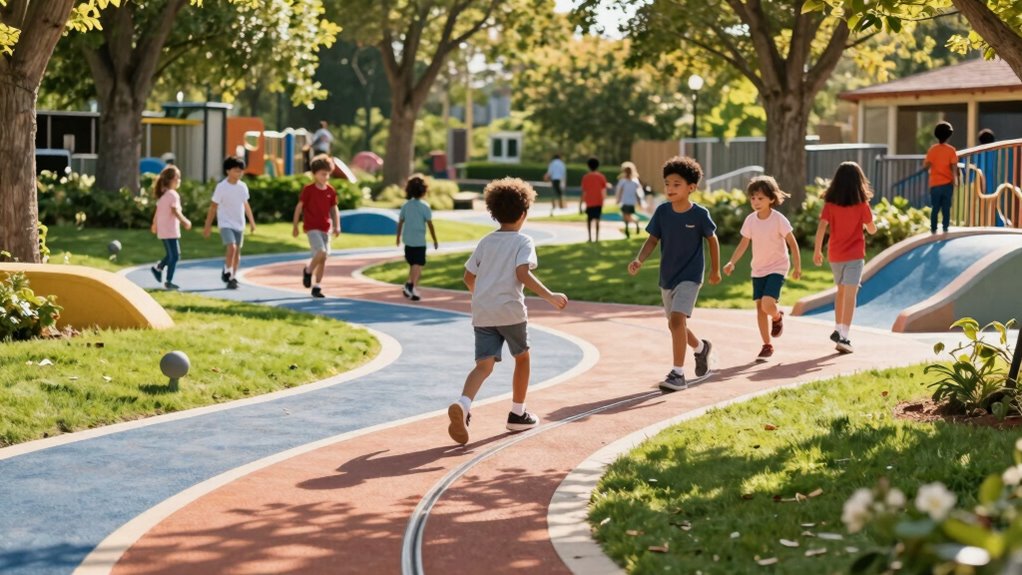

To prevent crashes and chaos during outdoor activities with multiple children, choose familiar, well-marked routes with clear boundaries and predictable paths. Use designated landmarks and communicate rules before starting. Assign supervision roles like leaders and watchers, and keep close watch on all kids. Equip children with safety gear and bright clothing for visibility. Planning these safe routes helps keep everyone organized and secure, and if you keep exploring, you’ll find more tips to make outings even smoother.

Turn the school run and nap time into listening time
- Thousands of audiobooks, podcasts and originals
- Listen on your phone, tablet or Echo — also offline
- Cancel anytime
Key Takeaways
- Choose familiar, well-marked trails with clear boundaries to reduce confusion and prevent children from wandering off.
- Assign specific roles like leader and rear watcher to maintain order and monitor all children consistently.
- Use visual cues, landmarks, or markers to help children stay on designated routes and avoid unpredictable paths.
- Ensure all children wear safety gear and high-visibility clothing to enhance safety and easy supervision.
- Plan routes that avoid narrow, busy, or uneven terrain to minimize accidents and maintain smooth group flow.

Planning outdoor routes for multiple children can be challenging, but with some careful preparation, it becomes much easier to keep everyone safe and engaged. The key is to focus on effective route planning and making certain each child has the right safety gear. When you map out your route, consider the terrain, traffic, and potential hazards. Stick to familiar paths or safe, designated trails where you can easily monitor all kids. Avoid narrow, busy streets or uneven ground that could lead to trips and falls. By choosing a route that’s predictable and safe, you reduce the chances of chaos and crashes.
Carefully plan safe, familiar routes and avoid hazards to keep children secure and prevent chaos during outdoor outings.
Safety gear is vital. Make sure each child wears a helmet, especially if they’re riding bikes, scooters, or skateboards. Bright-colored clothing or reflective accessories help keep children visible, particularly during low-light conditions. If your route involves water or uneven terrain, equip kids with appropriate safety gear like life jackets or kneepads. Having all children wear properly fitted gear not only minimizes injuries but also keeps them feeling confident and secure during the outing. Additionally, understanding outdoor route safety can help you better prepare for unexpected situations. Being aware of gadget reviews and reliable safety equipment options can enhance your gear choices.
Effective route planning also involves setting clear boundaries and expectations. Before heading out, explain the route and rules to the children. Designate specific stopping points or landmarks, so they know what to look out for and stay within designated areas. Using visual cues or simple markers can help children understand the boundaries and stay together. Establishing a routine, such as always turning back at a certain point, helps prevent children from wandering off or getting lost. Incorporating communication devices, like walkie-talkies, can also improve coordination and safety on the route. It’s also helpful to familiarize yourself with local outdoor safety regulations to ensure compliance and additional safety. Being aware of potential hazards specific to your location can further help in planning safer outings.
Keeping the group organized is essential. Assign roles such as a leader and a tail-end watcher. The leader can set the pace, while the watcher keeps an eye on the rear, making sure no one falls behind or strays from the group. This structure simplifies supervision and minimizes the chances of crashes caused by kids darting in different directions. Proper supervision strategies are crucial for maintaining a safe environment during outdoor activities.
Lastly, plan for emergencies. Carry a basic first aid kit and ensure everyone knows what to do if someone gets hurt. Keep a charged phone nearby for quick communication. Regularly checking in with the kids, reminding them to stay alert, and maintaining close proximity during the route can greatly reduce chaos. When you prioritize safety gear and detailed route planning, your outdoor adventures become safer, more organized, and much more enjoyable for everyone involved.
children's safety helmets for outdoor activities
As an affiliate, we earn on qualifying purchases.
As an affiliate, we earn on qualifying purchases.
Frequently Asked Questions
How Can I Keep Children Entertained on Long Outdoor Routes?
To keep children entertained on long outdoor routes, engage them with fun activities like nature scavenging. Give each child a list of things to find, like specific leaves or rocks, which encourages exploration. Incorporate wildlife spotting to add excitement—teach them to identify birds or insects. These activities keep their minds active, foster curiosity, and make the journey enjoyable, reducing boredom and keeping chaos at bay.
What Safety Gear Is Essential for Multi-Child Outdoor Adventures?
Imagine you’re a knight preparing for battle—your safety gear is your armor. Essential protective gear includes helmets, knee and elbow pads, and sturdy shoes to prevent injuries during outdoor adventures. Don’t forget emergency supplies like first aid kits, water, and snacks. These essentials guarantee you can respond quickly to accidents and keep everyone safe, making your multi-child outings both fun and secure.
How Do I Manage Different Age Groups Simultaneously?
You manage different age groups by planning age-appropriate activities that keep everyone engaged and safe. Encourage sibling cooperation by assigning group tasks suited to each child’s ability, fostering teamwork. Keep a close eye on younger kids while involving older ones in leadership roles. Adjust your route to include varied activities, ensuring each child’s needs are met. This approach minimizes chaos and promotes a harmonious outdoor experience for all ages.
What Are the Best Times of Day for Outdoor Outings?
The best times for outdoor outings are late morning or early afternoon when sunlight is most beneficial, providing ample warmth and light. Consider weather conditions—avoid extreme heat, cold, or rain that could disrupt plans or affect kids’ comfort. Keep an eye on sunlight timing to guarantee shade during peak heat and choose cooler days or overcast weather for a more comfortable experience. Planning around these factors keeps everyone safe and happy.
How Can I Teach Children About Outdoor Safety Effectively?
Think of outdoor safety as planting seeds of awareness. You teach children through clear safety communication, like guiding stars in the sky. Use supervision strategies such as constant eye contact and setting boundaries to keep them grounded. Make safety rules simple and engaging, turning lessons into adventures. Reinforce these habits regularly, creating a protective shield that helps children navigate outdoor spaces confidently and safely, like explorers in a well-charted land.
Conclusion
By planning multi-child outdoor routes thoughtfully, you can minimize crashes and chaos, creating a safer, more enjoyable experience for everyone. Stay flexible, adapt to your kids’ needs, and keep safety a priority. Remember, “A stitch in time saves nine”—address potential issues early to prevent bigger problems later. With patience and preparation, you’ll turn outdoor adventures into precious memories rather than stressful moments. Keep these tips in mind, and chaos will become a thing of the past.
Fall Picks
fall essentials
As an affiliate, we earn on qualifying purchases.