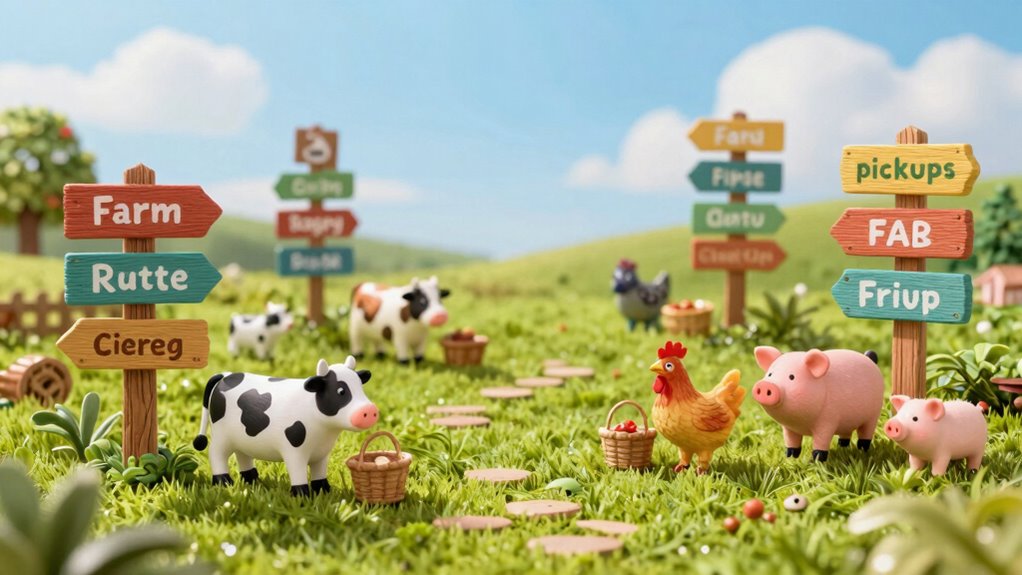

To build a pretend farm route, start by creating colorful, eye-catching signs for stations like “Pig Pen,” “Chicken Coop,” and “Dairy Barn,” using pictures or markers. Map out the route with designated animal pickup points and fun activities like feeding animals or gathering eggs. Make sure to include safety rules and educational stops about sustainable farming. If you keep exploring, you’ll discover how to make this farm adventure both fun and educational for children.
Key Takeaways
- Design colorful, clear signs for each farm station to guide children and enhance immersion.
- Create designated animal care stops like Pig Pen and Chicken Coop with interactive activities.
- Incorporate safety rules and responsible behavior reminders along the route.
- Include educational stops on sustainable farming, soil health, and biodiversity.
- Add engaging activities like pretend market sales to promote learning and fun at the end.
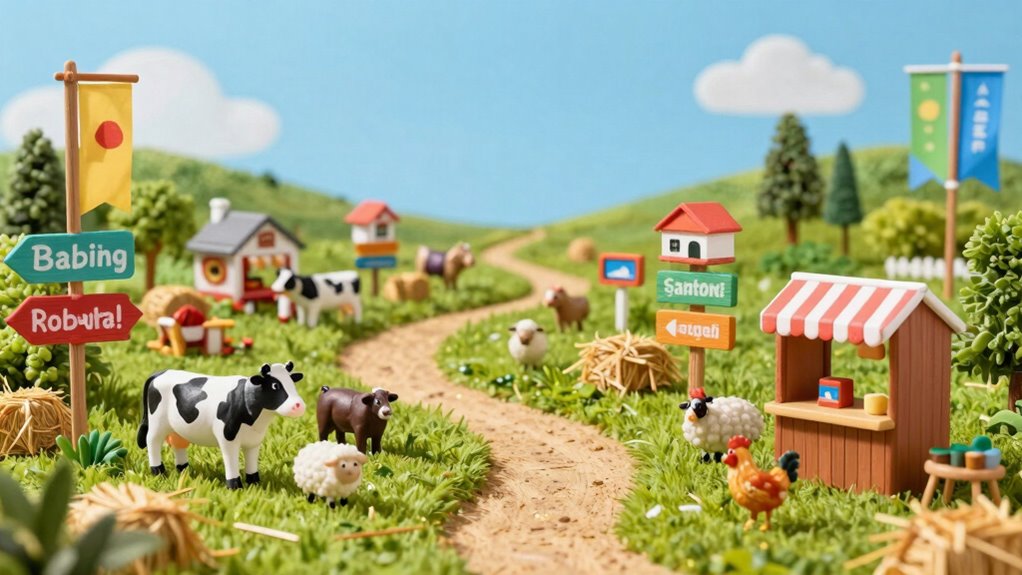
Creating a pretend farm route is a fun way to teach kids about farming and agriculture while sparking their imagination. As they navigate through your homemade farm, they get to experience what it’s like to handle farm animals, follow safety rules, and learn about the different stops along the way. To make it engaging, start by designing simple signs for each station—like “Pig Pen,” “Chicken Coop,” or “Dairy Barn.” Use colorful markers or printed pictures to make these signs eye-catching and easy to understand. When kids see the signs, they instantly know where they’re headed next, making the experience more immersive.
As you set up the route, think about incorporating stops that teach about farm animal care. For instance, at the “Pig Pen,” you could explain how pigs need a clean, dry space and fresh water daily. At the “Chicken Coop,” talk about how hens lay eggs and need protection from predators. These stops are perfect for teaching kids responsibility and empathy for animals. Make sure to include interactive elements—like pretending to feed the animals or gather eggs—to keep them engaged. When handling farm animals, emphasize farm safety tips, such as keeping a safe distance from animals that might get spooked or aggressive, and always washing hands afterward. Reinforce the importance of gentle, calm movements when “interacting” with the animals to prevent accidents.
You’ll also want to create designated pickup points where kids can “collect” farm products, like eggs or milk bottles. These pickups can serve as mini lessons on how farms produce food and why animal care is essential. As they move from stop to stop, remind children about farm safety tips, like staying on the designated path, not climbing fences, and being cautious around equipment or animals. These safety tips help foster respect for farm environments and teach kids to be responsible. Incorporating information about biodiversity and sustainable practices can help deepen their understanding of environmental responsibility on farms as well. Additionally, discussing conservation efforts can inspire children to appreciate and protect natural resources. Including activities that demonstrate soil health and crop rotation can further enhance their understanding of sustainable farming methods.
Incorporate a variety of stops to keep the route lively and educational. You could add a “Farm Equipment” station where kids learn about tractors and tools, always emphasizing safety around machinery. Including activities that highlight sustainable farming methods can also enrich their learning experience. It’s helpful to include hands-on activities that demonstrate crop diversity and how different plants contribute to a healthy ecosystem, making the learning more comprehensive. Wrap up the route with a fun activity, like “selling” farm produce at a pretend market, where kids practice sharing and counting. Throughout the route, encourage questions and curiosity, reinforcing the importance of farm animal care and safety tips. This way, your pretend farm route turns into a memorable adventure that educates children about farming, responsibility, and safety—all while sparking their imagination and love for the countryside.

Blulu Farm Animal Themed Party Decorations, Farm Animal Cutouts Banner, Door Signs for Baby Shower Family Reunion Theme Party Supplies
Package includes: 10 farm animals party decoration signs with 2 ropes and 40 glue points dots, these 10…
As an affiliate, we earn on qualifying purchases.
As an affiliate, we earn on qualifying purchases.
Frequently Asked Questions
What Safety Precautions Should I Take During the Farm Route?
You should always wear safety gear like gloves, closed-toe shoes, and hats to protect yourself during the farm route. Keep an emergency plan handy, including contact numbers and first aid supplies, in case something goes wrong. Stay alert, follow signs and guidelines, and supervise children closely. Regularly inspect your equipment and surroundings to prevent accidents, and make sure everyone knows what to do in an emergency.
How Long Does It Typically Take to Complete the Route?
Imagine a sunny morning on your farm route, the breeze whispering past as you navigate. Typically, it takes about 30 to 45 minutes to complete, depending on stops and pickups. Good farm safety and careful route planning help keep things smooth and efficient. With clear signs and a well-mapped route, you’ll enjoy a safe, timely journey, making sure every animal and station gets the attention they need.
Can the Route Be Adjusted for Different Age Groups?
Yes, you can adjust the route for different age groups by incorporating age-specific adaptations and kid-friendly modifications. For younger kids, simplify signs and reduce the number of stops to keep it engaging without overwhelming them. For older children, add more detailed signs and extra stops to challenge their curiosity. Tailoring the route guarantees everyone enjoys learning about farm life comfortably and safely.
What Materials Are Needed to Create the Signs and Stops?
You’ll need simple materials like sturdy cardboard or foam board for sign making, with colorful markers or paint to bring your signs to life. For stop design, cut out shapes from paper or foam and decorate with fun illustrations. Attach signs to wooden stakes or recycled sticks, making sure they’re weather-resistant. Think of your materials as the brushstrokes that turn your farm route into a lively, inviting adventure for everyone.
How Can I Include Educational Elements in the Farm Route?
You can include educational elements by adding signs that feature farm vocabulary and facts at each stop. Incorporate interactive learning by asking questions or providing prompts related to the animals or crops you encounter. Use visual aids, like pictures or symbols, to reinforce learning. Encourage kids to share what they learn at each station, making the farm route both fun and educational. This approach helps kids connect words with real-world farm experiences.

WAIIW Farm Animal Toys for Toddlers,23 PCS Animal Toys with Realistic Animal Figurines,Tractor Toy and Fence,Farm Playset Educational Learning Toys for Toddlers Kids 3-5
Farm Animal Playset:23 PCS animal toys includes farm animal figurines (Cattle, Horse, Cow, Donkey, Goat, Sheep, Dog, Pig,…
As an affiliate, we earn on qualifying purchases.
As an affiliate, we earn on qualifying purchases.
Conclusion
As you wrap up your pretend farm adventure, remember that every journey helps you discover new ways to learn and have fun. While the farm might rest for now, the memories of signs, stops, and animal pickups will warm your heart and inspire future adventures. Keep your imagination alive, and who knows — someday, your farm route might turn into a real story worth sharing. Until then, enjoy the magic of pretending and dreaming big!

BeYumi Farm Animals Craft Kit – 12Pcs Animal Theme Arts and Crafts for Kids Toddler Paper Cup Craft Kit 12 Cartoon Animal Project DIY Gift for Birthday Party Preschool Classroom Fun Activity Ages 3-6
Complete Paper Cup Farm Animal Kit: This 12pcs craft set includes everything to create 12 adorable farm animals—cock,…
As an affiliate, we earn on qualifying purchases.
As an affiliate, we earn on qualifying purchases.

30-Piece Upgraded Farm Animal Big Barn Playset Gifts for Toddlers Christmas|Montessori Learning Toys for 18 Months Olds Girls Boys|Pretend Animal with Tractor Birthday Gifts for 2 Years
【Interactive Farm Adventures】This toddler toy set includes a big barn,tractor,farmer, and multiple animals.Kids can spin the windmill,lift hay…
As an affiliate, we earn on qualifying purchases.
As an affiliate, we earn on qualifying purchases.