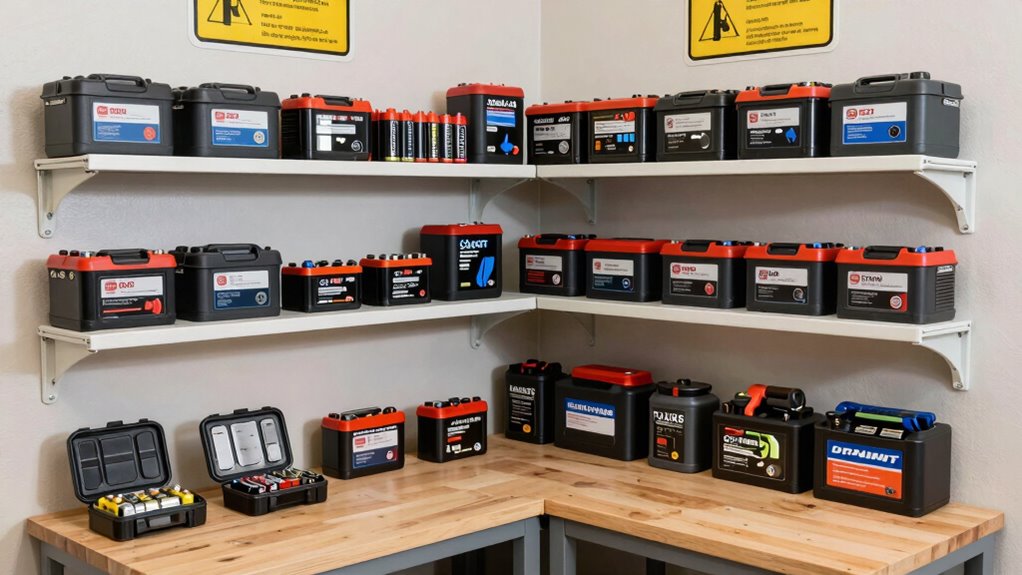

To guarantee safety when storing batteries in your garage, shed, or storage area, keep them in a cool, dry place away from heat, sparks, or flames. Organize storage to prevent physical damage, and regularly inspect batteries for leaks, corrosion, or swelling. Use non-conductive containers for storage and handle damaged batteries carefully. Proper disposal at designated centers and understanding different battery types are also essential. Keep your space safe by following these tips—you’ll discover more ways to prevent hazards and protect your home.
Key Takeaways
- Store batteries in a cool, dry, non-conductive container away from heat sources and flammable materials.
- Regularly inspect batteries for leaks, corrosion, swelling, or damage, and dispose of damaged ones properly.
- Keep batteries separated and organized to prevent short-circuits and physical damage.
- Follow local regulations for battery disposal; take used batteries to designated recycling centers or collection points.
- Educate household members on safe handling, storage, and emergency procedures for batteries.
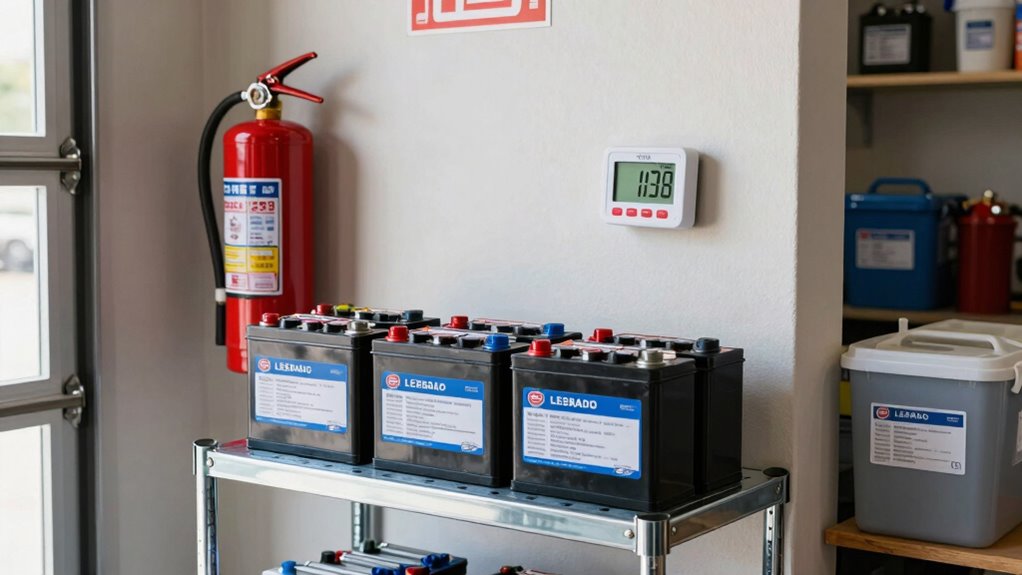
Batteries are common in garages, sheds, and storage spaces, but they can pose serious safety risks if not handled properly. Many people overlook the potential hazards that batteries, especially rechargeable or car batteries, present. Mishandling or neglecting proper storage can lead to leaks, fires, or even explosions. To keep yourself and your family safe, it’s important to understand safe battery disposal and fire prevention measures.
Batteries in storage areas pose safety risks; proper handling, disposal, and fire prevention are essential for safety.
When it’s time to replace or discard batteries, proper battery disposal becomes critical. Never throw batteries into the trash or recycling bins without checking local disposal regulations. Many batteries contain hazardous materials that can leak into the environment or cause fires if not disposed of correctly. Instead, take them to designated recycling centers or collection points. Some stores offer battery recycling services, making it easier to dispose of old batteries responsibly. Proper disposal prevents chemical leaks, reduces environmental impact, and minimizes fire risks associated with corroded or damaged batteries left unattended in storage areas. Additionally, educating yourself about battery types can help you better understand the specific risks and disposal methods associated with each kind.
Fire prevention in garages and sheds is essential, especially because batteries are prone to short-circuiting if damaged or improperly stored. Keep batteries in a cool, dry place away from heat sources, sparks, or open flames. Avoid stacking batteries haphazardly, as physical damage can lead to leaks or sparks that ignite flammable materials nearby. Use non-conductive containers or storage boxes specifically designed for batteries to prevent accidental contact with metal objects or other batteries that could cause a short circuit. Regularly inspect batteries for corrosion, leaks, or swelling. If you notice any signs of damage, handle the battery with care, and dispose of it promptly using proper channels.
Additionally, never attempt to modify or repair batteries yourself, as this can increase the risk of fire or chemical exposure. Proper handling is essential to prevent accidents and injuries. Keep a fire extinguisher nearby that’s suitable for electrical fires, and ensure everyone in your household knows how to use it. Maintaining good housekeeping practices—such as cleaning spills immediately and keeping storage areas organized—further reduces the risk of accidental fires caused by batteries. Remember, safety is a continuous process. Being vigilant about battery disposal and practicing fire prevention measures can considerably decrease the chances of accidents and protect your property and loved ones from harm. Regularly reviewing storage safety guidelines can also help reinforce safe handling practices over time.

Ontel Battery Daddy Storage & Organizer Case w/Tester, Stores & Protects Up to 180 Batteries, Double-Sided, Clear Locking Lid, Secure Latches & Portable Carrying Handle – Red (Batteries Not Included)
- Double-Sided Storage: Holds up to 180 batteries efficiently
- Clear View Cover: Easily see all batteries at a glance
- Compact and Portable: Fits in drawers with a sleek design
As an affiliate, we earn on qualifying purchases.
As an affiliate, we earn on qualifying purchases.
Frequently Asked Questions
How Often Should I Inspect Stored Batteries for Damage?
You should inspect stored batteries monthly for damage. Check for battery corrosion around terminals, which can indicate leaks or deterioration. Also, consider storage humidity; high moisture can accelerate corrosion and damage. Regular inspections help you catch issues early, ensuring safety and prolonging battery life. If you notice corrosion or damage, clean or replace the batteries promptly, and keep storage areas dry to prevent future problems.
Are There Specific Fire Extinguishers Recommended for Battery Fires?
For battery fires, you should use a Class D fire extinguisher, designed specifically for metal fires, or a multipurpose ABC extinguisher if metal-specific options aren’t available. Fire prevention is critical, so always store batteries properly and avoid damage. When it’s time for battery disposal, follow local regulations to prevent accidents. Using the right extinguisher and safe disposal methods helps protect your space and prevents dangerous fires.
Can Batteries Be Stored Near Flammable Liquids Safely?
Storing batteries near flammable liquids is like placing a spark next to a powder keg—it’s risky. You should follow battery storage guidelines carefully, keeping batteries away from flammable liquid risks. Store batteries in a cool, dry place, and guarantee they’re in approved containers. Never keep them close to gasoline, paint, or other combustible substances, as this increases fire hazards and endangers your safety.
What Are Signs of a Failing or Leaking Battery?
You’ll notice signs of a failing or leaking battery through battery corrosion, which appears as white, bluish, or greenish deposits around the terminals. Leaking symptoms include a strange smell, visible fluid, or corrosion buildup. If you see any of these signs, it’s essential to handle the battery carefully, wear protective gear, and replace it promptly to prevent potential hazards or damage.
How Do Temperature Fluctuations Affect Battery Safety?
Temperature fluctuations can substantially impact battery safety by causing thermal expansion, which stresses the internal components. When temperatures rise or fall rapidly, it accelerates battery degradation, leading to leaks or even explosions. You should store batteries in a stable environment, avoiding extreme heat or cold. Proper ventilation and insulation help minimize these risks, ensuring your batteries remain safe and functional over time.
Conclusion
By following these battery safety tips, you keep your garage, shed, and storage spaces as safe as a well-guarded fortress. Always store batteries properly, keep them away from heat and flames, and handle them with care. Think of batteries like tiny firecrackers—fun but dangerous if mishandled. Staying vigilant and cautious guarantees your family and property stay protected, turning your storage areas into safe havens rather than hazards.