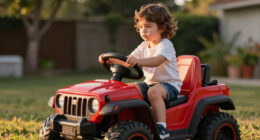
Using ride-on toys for gross motor breaks in your classroom can boost student focus, energy levels, and physical skills like balance and coordination. They provide a fun and safe way for children to release pent-up energy, reducing restlessness during lessons. To guarantee safety, regularly inspect and maintain toys, set clear rules, and create a spacious, hazard-free environment. Keeping these tips in mind helps promote responsible play and a positive learning atmosphere—keep exploring for more ways to make this effective!
Key Takeaways
- Incorporate ride-on toys during scheduled gross motor breaks to boost focus and energy in students.
- Ensure safety by inspecting toys and play areas regularly for damage or hazards before use.
- Set clear rules for responsible play, such as sitting properly and waiting turns, to promote safe use.
- Use ample open space to allow children to move freely, reducing collision risks during activity.
- Maintain toys through routine cleaning and repairs to ensure safety and prolong their lifespan.
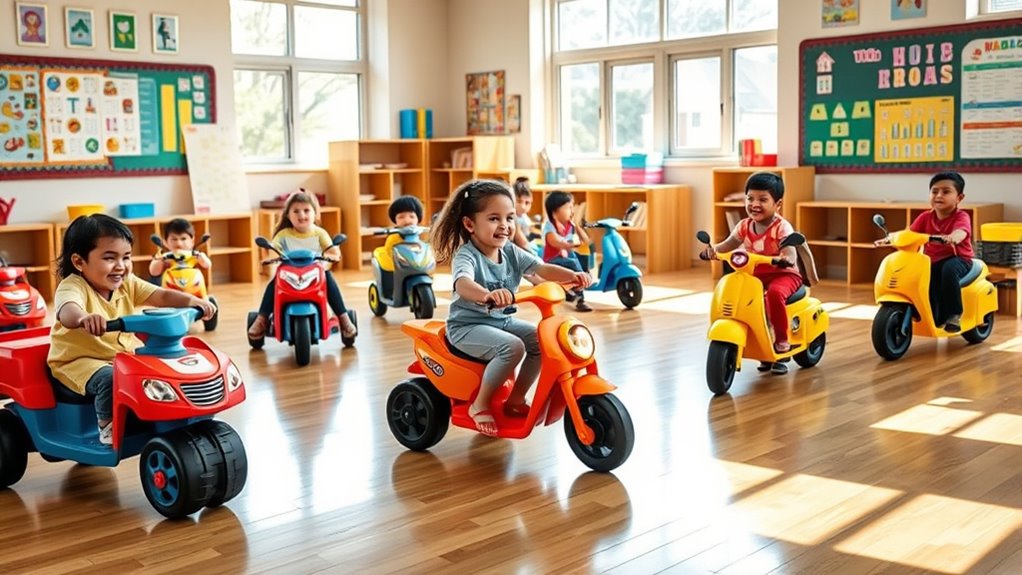
In busy classrooms, incorporating ride-on toys for gross motor breaks can considerably boost student focus and energy. When children get a chance to move around using these toys, they release pent-up energy, which helps them settle back into learning with better attention and reduced restlessness. However, ensuring safety is paramount. Playground safety guidelines are just as relevant indoors; you need to regularly inspect ride-on toys for damage, loose parts, or worn-out wheels. Maintaining these toys properly not only extends their lifespan but also keeps your students safe during play. Check for cracks, loose bolts, and any sharp edges before each use. A well-maintained toy reduces the risk of accidents and contributes to a secure environment where kids feel comfortable exploring and moving freely.
Toy maintenance isn’t just about safety; it’s about promoting consistency and trust in the classroom. When students see that ride-on toys are kept in good condition, they’re more likely to use them confidently and appropriately. Clean the toys regularly to prevent the buildup of dirt and germs, especially since children often put their hands or feet on them. If a toy becomes damaged or unsafe, remove it immediately and either repair or replace it. Keeping a routine for toy maintenance helps you catch issues early and demonstrates to your students that safety is a priority.
Using ride-on toys also encourages children to develop their gross motor skills—balance, coordination, and strength—all while having fun. When you introduce these toys into your routine, make sure the play area is clear of hazards and that the space is large enough for children to move freely without bumping into furniture or each other. Setting clear rules about how to use the toys safely will foster responsible play and prevent accidents. For example, instruct children to sit properly, avoid jumping off the toy while moving, and wait their turn.

hand2mind Red Indoor Scooter Board with Handles, Sit Down Floor Scooter, Gym Activities for Kids, Indoor Sport Recess Games, Physical Education Equipment, Gross Motor Toy
GYM SCOOTERS FOR KIDS: Kids can scoot, glide, and roll around the room while building core strength and…
As an affiliate, we earn on qualifying purchases.
As an affiliate, we earn on qualifying purchases.
Frequently Asked Questions
How Do Ride-On Toys Support Different Developmental Levels?
You’ll find ride-on toys support different developmental levels by promoting gross motor skills and encouraging social interaction. Younger children improve their balance and coordination, while older kids enhance their strength and spatial awareness. These toys also foster peer engagement, helping kids develop social skills. By adapting to each child’s abilities, ride-on toys provide inclusive fun that nurtures their physical and social growth, making every child feel successful and involved.
Are Ride-On Toys Suitable for Children With Specific Physical Disabilities?
Think ride-on toys are just for the able-bodied? Think again! You can adapt these toys with specialized seating and sensory integration features to suit children with physical disabilities. With the right modifications, they become accessible adventures instead of barriers. You empower every child to engage physically, fostering independence and inclusion, turning a simple ride into a gateway for growth and joy. Adaptive seating truly transforms playtime into limitless potential.
How Often Should Gross Motor Breaks With Ride-On Toys Occur?
You should incorporate gross motor breaks with ride-on toys multiple times daily, ideally every 30 to 45 minutes, following the frequency guidelines. This helps maintain children’s engagement and energy levels. The best timing is during natural shifts or when students show signs of restlessness. Regular breaks boost focus, coordination, and overall physical development, making your classroom environment more dynamic and supportive for all learners.
What Safety Measures Are Recommended During Ride-On Toy Use?
During ride-on toy use, you should enforce helmet safety and strict supervision protocols. Make sure children wear properly fitted helmets at all times. Constantly monitor their activity to prevent collisions or falls, and set clear rules for safe riding. Keep the area free of obstacles, and guarantee toys are in good condition. By actively supervising and prioritizing safety, you create a secure environment for kids to enjoy gross motor breaks.
Can Ride-On Toys Be Used in Outdoor Classroom Settings?
Yes, you can use ride-on toys in outdoor classroom settings to enhance learning and gross motor skills. Incorporate them into outdoor playgrounds or designated areas to promote active play and classroom integration. Just make certain the surface is safe and free of obstacles, and supervise children closely. Using ride-on toys outdoors encourages physical activity and helps children develop coordination while enjoying the fresh air and open space.

Radio Flyer Busy Buggy, for Toddlers 1-3, 3-in-1 Push Walker Ride On Car with 17 Sensory Activities, Anti-Tip Feature, Under-Seat Storage, Horn and Gears, 42 lb Capacity, Toddler Ride On Toys
3-IN-1 WALKER & RIDE-ON: The Radio Flyer Busy Buggy is a versatile first vehicle with push walker, ride…
As an affiliate, we earn on qualifying purchases.
As an affiliate, we earn on qualifying purchases.
Conclusion
Just like children in the stories of old who found strength through play, you can empower your students to recharge and refocus with ride-on toys. These playful tools turn classroom breaks into adventures, helping kids develop gross motor skills while having fun. Incorporate them as your secret weapon, much like the magic of a fairy tale, to foster energetic, engaged learners ready to conquer the next lesson. Embrace play, and watch your classroom transform.

Toddler Balance Ride-On Toys, Kids Wiggle Car with Quiet PU Wheels & Anti-Tip Design for Age 1-3
Promotes Balance & Coordination: A toddler balance ride-on toy designed to develop motor skills and encourage active play…
As an affiliate, we earn on qualifying purchases.
As an affiliate, we earn on qualifying purchases.
Radio Flyer Busy Buggy, for Toddlers 1-3, 3-in-1 Push Walker Ride On Car with 17 Sensory Activities, Anti-Tip Feature, Under-Seat Storage, Horn and Gears, 42 lb Capacity, Toddler Ride On Toys
3-IN-1 WALKER & RIDE-ON: The Radio Flyer Busy Buggy is a versatile first vehicle with push walker, ride…
As an affiliate, we earn on qualifying purchases.
As an affiliate, we earn on qualifying purchases.