Using ride-on toys for letter recognition games is a fun way to combine movement and learning. Have children ride from one large, textured letter to another, matching or identifying letters on command. Create obstacle courses with puzzles or letter stations that encourage tactile and visual engagement. These active games reinforce letter shapes, sounds, and recognition while keeping children energized and excited to learn. Keep exploring for more creative ways to make letter learning even more engaging.

Turn the school run and nap time into listening time
- Thousands of audiobooks, podcasts and originals
- Listen on your phone, tablet or Echo — also offline
- Cancel anytime
Key Takeaways
- Incorporate tactile alphabet mats and foam letters on ride-ons to enhance letter shape recognition through movement and touch.
- Design matching games where children ride from one letter to another to find corresponding alphabet cards or stickers.
- Create obstacle courses with textured puzzles and letter stations to combine recognition skills with active play.
- Use large, colorful letters attached to ride-ons for kids to identify and call out during movement activities.
- Incorporate multisensory activities like feeling textured letters before riding to reinforce letter forms and sounds.
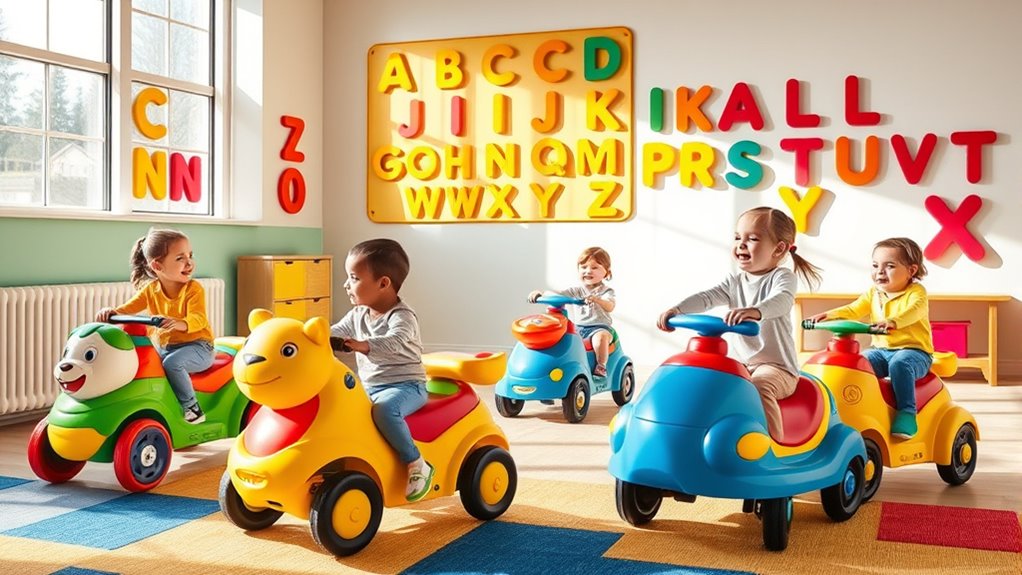
Letter recognition games are engaging tools that help children learn the alphabet in a fun and interactive way. When you incorporate ride-on toys into these activities, you create a dynamic environment where learning and play seamlessly blend. One effective method is to design alphabet matching games that involve your child riding from letter to letter, encouraging them to identify and match alphabet cards or stickers along the way. As they pedal or scoot, they’re actively making connections between the visual letter and its sound, reinforcing their recognition skills through movement and repetition. These games turn a simple ride into an educational adventure, making the learning process feel natural and exciting.
Sensory letter activities become even more engaging when paired with ride-on toys. You can create tactile experiences by adding textured alphabet mats or letter stamps that your child interacts with while riding. For example, place large, colorful letters on the floor or attach foam letters to their ride-on, so they can feel each shape as they move. This multisensory approach helps solidify their understanding of letter forms, making the learning experience more memorable. Kids often learn best when multiple senses are involved, and combining tactile feedback with movement enhances their ability to recognize and remember letters quickly.
To make alphabet matching more fun, introduce games where your child has to find specific letters while riding around a room or outdoor space. Call out a letter, and let them search for it among a set of alphabet cards or foam letters placed strategically around their riding area. When they find the right one, they can hop off or reach out to grab it, then continue riding. This not only improves their letter recognition but also develops their attention and problem-solving skills. Plus, the physical activity keeps them energized and engaged, giving them a healthy outlet for their natural curiosity and energy.
You can also incorporate sensory letter activities into obstacle courses built around their ride-on toys. Create stations where they have to identify a letter before moving on to the next challenge. For instance, at one station, they might find a textured letter puzzle they need to feel and identify, while at another, they match a letter sticker to a corresponding picture. This variety keeps the activity fresh and allows your child to practice recognition skills in different contexts, strengthening their overall alphabet understanding. Additionally, incorporating educational toys that promote multisensory learning can further enhance their letter recognition skills. These interactive, movement-based activities turn learning into an adventure, making letter recognition an exciting part of playtime with ride-on toys.
As an affiliate, we earn on qualifying purchases.
Frequently Asked Questions
What Age Is Best for Letter Recognition Ride-On Games?
You should introduce letter recognition ride-on games to children aged 3 to 5 years. At this age, they’re developing motor skills and cognitive engagement, making it ideal for learning through play. These games help strengthen fine motor skills while keeping kids engaged and excited about learning. By choosing age-appropriate games, you encourage their early literacy skills and support their overall development in a fun, active way.
Are These Games Suitable for Children With Special Needs?
You’ll find that letter recognition ride-on games can be highly suitable for children with special needs, especially when tailored to their sensory integration and motor development needs. Studies show that engaging in physical activities boosts cognitive skills. These games promote motor skills and sensory input, making learning fun and accessible. Just guarantee the game adapts to their individual abilities, providing support to maximize benefits and foster confidence in every child.
How Can I Modify Games for Different Learning Levels?
You can modify games for different learning levels by incorporating multisensory activities, such as tactile letters or auditory cues, to suit each child’s needs. Encourage peer collaboration, allowing children to work together and learn from one another. Adjust the difficulty by simplifying or increasing challenges, ensuring everyone stays engaged and supported. These approaches make the games inclusive, helping children develop letter recognition skills at their own pace.
What Safety Precautions Should I Take During Play?
You should always guarantee helmet safety by having your child wear a properly fitted helmet during play. Supervision tips include staying close, especially on busy or uneven surfaces, and watching for any risky behavior. Make sure the ride-on toy is in good condition, and set clear boundaries. Keep the play environment safe, free of obstacles, and regularly check that your child follows safety rules to prevent accidents.
Can These Games Be Adapted for Outdoor Use?
You bet these games can be adapted for outdoor play—think of it as hitting two birds with one stone. To do so, guarantee the area is safe, free of hazards, and suitable for ride-on toys. You might need to modify the game rules or setup for outdoor conditions, like using chalk for marking or adjusting distances. Always supervise closely to keep outdoor play fun and safe for everyone.
Conclusion
By incorporating letter recognition games with ride-on toys, you turn learning into an exciting adventure. Imagine a preschooler, Emma, who enthusiastically zips around, calling out letters she spots on her toy. This fun approach not only boosts her literacy skills but also keeps her engaged and active. With a little creativity, you can help your child develop essential skills while enjoying the ride—making learning both memorable and joyful.
Halloween Picks
halloween
As an affiliate, we earn on qualifying purchases.